
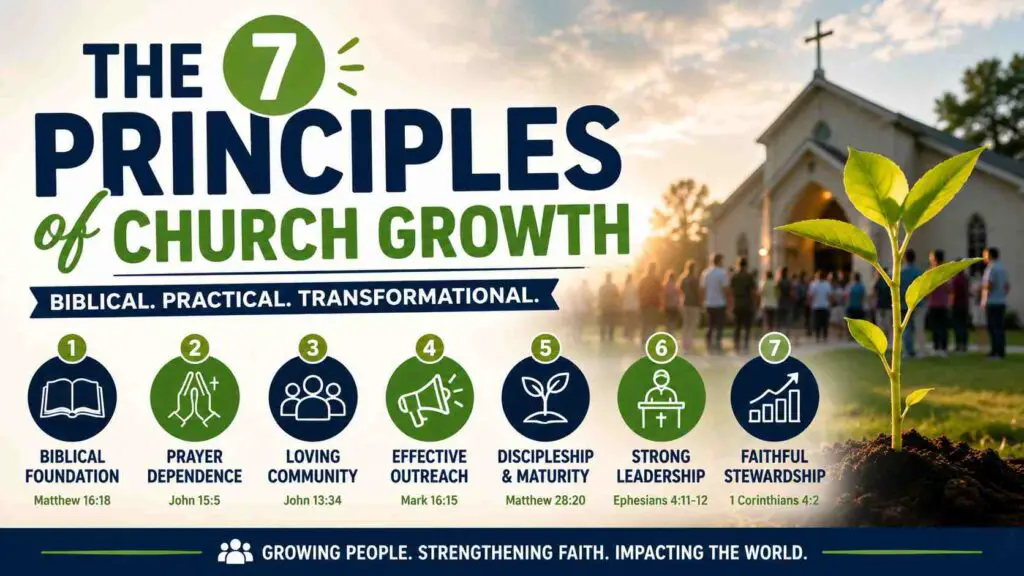
Church growth is more than increasing attendance numbers. True church growth involves spiritual maturity, meaningful discipleship, stronger community impact, and a deeper commitment to the mission of Christ. Throughout history, healthy churches have shared certain characteristics that helped them flourish spiritually and numerically.
While every congregation is unique, there are foundational principles that consistently contribute to long-term growth and effectiveness. Churches that understand and apply these principles are often better equipped to reach people, disciple believers, and create lasting transformation within their communities.
In this article, we will explore the seven most important principles of church growth and why they matter for building a thriving and mission-driven church.
The 7 Principles of Church Growth
#1. Clear Biblical Vision
One of the most important principles of church growth is having a clear biblical vision. Churches that grow effectively understand their purpose and communicate it consistently.
A clear vision answers important questions such as:
- Why does the church exist?
- What mission has God given the church?
- Who is the church trying to reach?
- What kind of spiritual impact does the church want to make?
Without vision, churches often become stagnant and lose focus. Ministries become disconnected, leadership becomes reactive instead of proactive, and members may struggle to understand the church’s direction.
A strong vision creates unity. It aligns leaders, volunteers, and members around a common mission. It also helps the church make wise decisions about ministries, outreach efforts, and future goals.
Biblical vision should always be rooted in Scripture rather than trends or popularity. Healthy churches keep the Gospel at the center of everything they do. Their mission reflects the Great Commission and the call to make disciples.
When a church communicates its vision clearly and repeatedly, people are more likely to become engaged, committed, and passionate about serving.
#2. Strong Spiritual Leadership
Healthy churches require strong spiritual leadership. Leadership influences the culture, direction, and spiritual health of the entire congregation.
Church leaders are responsible for:
- Teaching biblical truth
- Guiding the congregation spiritually
- Equipping believers for ministry
- Protecting the church from false teaching
- Encouraging unity and spiritual maturity
Strong leaders lead by example. They demonstrate integrity, humility, wisdom, and faithfulness in their personal lives and ministries.
Church growth is often connected to leaders who are willing to:
- Develop future leaders
- Embrace necessary change
- Address challenges directly
- Encourage teamwork
- Invest in people
Effective leadership is not about control or personal recognition. It is about serving others and advancing God’s kingdom.
Growing churches usually have pastors and ministry leaders who continually develop their leadership skills while remaining spiritually grounded. They understand that leadership development is essential for long-term church health.
When leadership is weak, unclear, or unhealthy, church growth becomes difficult to sustain. Strong spiritual leadership creates stability and inspires confidence within the congregation.
#3. Passionate Evangelism
Churches grow when they actively reach people with the message of Jesus Christ. Evangelism is not optional for a healthy church. It is part of the church’s core mission.
Passionate evangelism involves creating a culture where sharing the Gospel becomes a normal part of church life. Members are encouraged and equipped to invite others, build relationships, and share their faith naturally.
Healthy evangelism can happen through:
- Personal invitations
- Community outreach events
- Missions programs
- Online ministry
- Service projects
- Acts of compassion and generosity
Many churches stop growing because they become inward-focused. They concentrate only on existing members while neglecting the needs of people outside the church.
Growing churches intentionally create opportunities to connect with their surrounding communities. They seek to understand local needs and respond with love, truth, and practical support.
Evangelism is most effective when it is motivated by genuine care for people rather than pressure or obligation. Churches that prioritize authentic relationships often see stronger long-term growth and deeper community trust.
#4. Intentional Discipleship
Church growth is not only about attracting new people. It is also about helping believers grow spiritually.
Intentional discipleship focuses on developing mature followers of Christ who understand Scripture, live faithfully, and serve others effectively.
Discipleship includes:
- Bible study
- Prayer
- Mentorship
- Accountability
- Spiritual disciplines
- Christian service
Churches that emphasize discipleship create pathways for spiritual growth. Instead of leaving people spiritually disconnected, they provide structured opportunities for learning and development.
This may include:
- Small groups
- Leadership training
- New believer classes
- Mentoring relationships
- Ministry involvement
Discipleship transforms attenders into committed disciples. It also strengthens the church because spiritually mature believers are more likely to serve, lead, and contribute positively to the church community.
A church may experience temporary numerical growth without discipleship, but lasting spiritual health requires intentional investment in people’s spiritual lives.
#5. Authentic Community
People are drawn to churches where they feel welcomed, valued, and connected. Authentic Christian community plays a major role in church growth.
Large worship gatherings alone are not enough. People also need meaningful relationships and emotional support.
Healthy churches create environments where members can:
- Build friendships
- Share struggles
- Pray for one another
- Serve together
- Experience genuine belonging
Authentic community reflects the love and unity described in the early church. It helps people move beyond being spectators and become active participants in church life.
Churches can strengthen community through:
- Small groups
- Fellowship events
- Care ministries
- Volunteer teams
- Hospitality programs
Strong community also improves member retention. Many people stay connected to a church because of the relationships they form there.
When churches become cold, disconnected, or cliquish, growth often slows. In contrast, churches that cultivate warmth, kindness, and inclusion tend to attract and retain people more effectively.
#6. Excellent and Meaningful Worship Services
Worship services are often the primary point of contact between a church and visitors. Churches that grow usually place great importance on creating meaningful worship experiences.
This does not mean pursuing entertainment or performance-driven ministry. Instead, it means offering services that are:
- Biblically sound
- Spiritually engaging
- Well organized
- Relevant to people’s lives
- Focused on honoring God
Important elements of a healthy worship service include:
- Clear preaching
- Genuine worship
- Good communication
- Hospitality
- Effective children’s ministry
- Smooth organization
First impressions matter. Visitors often decide within minutes whether they feel comfortable returning to a church.
Churches that pay attention to details such as friendliness, cleanliness, signage, and follow-up communication often create a more welcoming environment for newcomers.
Meaningful worship services help people encounter God, understand biblical truth, and feel encouraged in their spiritual journey.
#7. Prayer and Dependence on God
Prayer is one of the most essential principles of church growth. Programs, strategies, and leadership are important, but true spiritual growth ultimately depends on God’s power.
Throughout Scripture and church history, periods of revival and church expansion have often been connected to deep prayer and spiritual renewal.
Prayer strengthens the church by:
- Deepening spiritual dependence
- Encouraging unity
- Providing wisdom and guidance
- Strengthening faith
- Empowering ministry efforts
Healthy churches prioritize both personal and corporate prayer. They encourage members to seek God consistently in every aspect of church life.
Prayer ministries may include:
- Prayer meetings
- Intercessory teams
- Fasting
- Prayer chains
- Worship and prayer nights
Churches that rely entirely on human effort may achieve temporary success, but spiritually healthy growth requires dependence on the Holy Spirit.
Prayer keeps the church spiritually focused and aligned with God’s mission.
Closing Thoughts
Church growth involves far more than increasing attendance numbers. Healthy growth occurs when a church faithfully fulfills its mission, disciples believers, serves its community, and remains spiritually grounded.
The seven principles of church growth discussed in this article provide a strong foundation for building a thriving church:
- Clear biblical vision
- Strong spiritual leadership
- Passionate evangelism
- Intentional discipleship
- Authentic community
- Meaningful worship
- Prayer and dependence on God
Churches that consistently apply these principles are often better positioned to experience lasting spiritual impact. While methods may change over time, these foundational principles remain essential for any church seeking to grow in a healthy and God-honoring way.