
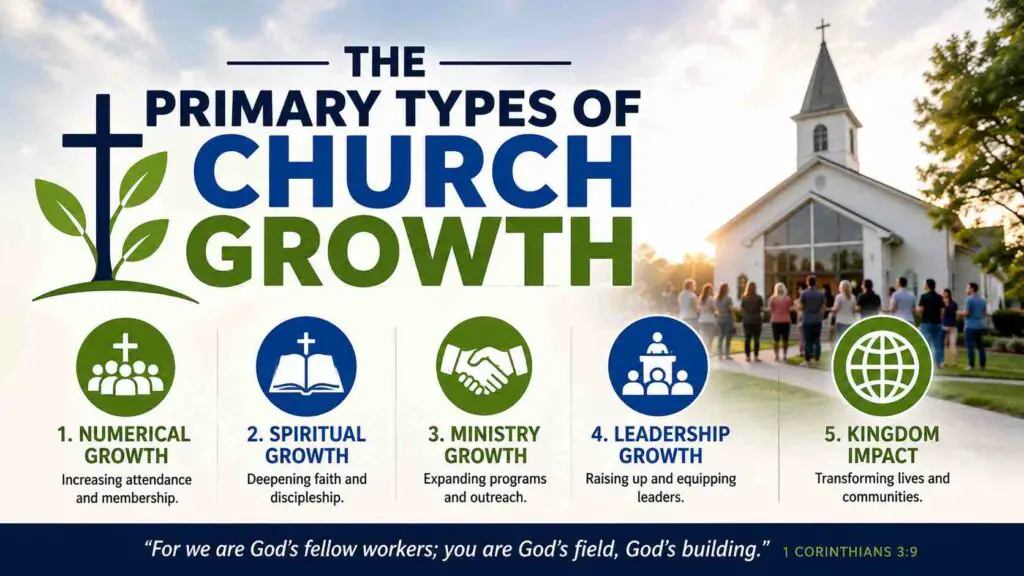
Church growth is one of the most important topics in Christian ministry and leadership. Every church desires to grow, but true church growth involves much more than increasing attendance numbers. A healthy church develops spiritually, expands its outreach, strengthens its leadership, and impacts the surrounding community.
Throughout history, churches have grown in different ways depending on their mission, leadership, culture, and spiritual condition. Some churches grow rapidly through evangelism, while others experience steady development through discipleship, family ministries, or community engagement. Understanding the different types of church growth helps pastors, ministry leaders, and church members build balanced and healthy congregations.
In this article, we will explore the different types of church growth, how they work, and why each one matters for the long-term health and effectiveness of the church.
Different Types of Church Growth
#1. Numerical Growth
Numerical growth refers to an increase in the number of people attending a church. This is the most visible and measurable form of church growth because it can be tracked through attendance records, membership numbers, and participation levels.
Churches may experience numerical growth through:
- Sunday worship attendance
- Midweek services
- Small groups
- Membership classes
- Community events
- Outreach programs
Many churches focus heavily on numerical growth because larger attendance often creates more opportunities for ministry, outreach, and financial stability. However, numbers alone do not always indicate spiritual health. A church may grow quickly while still lacking discipleship, strong leadership, or spiritual maturity.
Healthy numerical growth should be accompanied by deeper spiritual development and meaningful discipleship.
#2. Spiritual Growth
Spiritual growth focuses on the maturity and transformation of believers within the church. This type of growth is centered on helping Christians become more like Christ in their daily lives.
Signs of spiritual growth include:
- Increased prayer and worship
- Greater understanding of Scripture
- Stronger faith
- Repentance and holiness
- Love for others
- Commitment to serving
- Consistent discipleship
A spiritually growing church develops believers who are rooted in biblical truth and actively living out their faith. Spiritual growth often takes time because it involves personal transformation rather than simply increasing attendance.
Churches that prioritize spiritual growth typically emphasize:
- Bible teaching
- Discipleship programs
- Mentorship
- Prayer ministries
- Accountability groups
Without spiritual growth, numerical growth can become shallow and unsustainable.
#3. Biological Growth
Biological growth occurs when children raised within Christian families remain committed to the church as they grow older. This type of growth has played a major role in sustaining churches throughout history.
Strong biological growth usually depends on:
- Healthy family ministries
- Effective youth programs
- Christian parenting
- Strong church culture
- Intergenerational relationships
Churches that invest in children and youth ministries often create long-term stability because younger generations continue the faith and eventually become future leaders.
However, biological growth alone is not enough. Churches must also focus on evangelism and outreach to avoid becoming isolated from the surrounding community.
#4. Transfer Growth
Transfer growth happens when believers move from one church to another. This is common in many communities and can occur for various reasons.
People may transfer churches because of:
- Relocation
- Worship preferences
- Ministry opportunities
- Leadership changes
- Doctrinal differences
- Personal relationships
- Church conflicts
Transfer growth can strengthen a church by bringing experienced believers, volunteers, and leaders into the congregation. However, it does not necessarily increase the overall number of Christians in a community.
Churches should be careful not to rely entirely on transfer growth while neglecting evangelism and discipleship.
#5. Conversion Growth
Conversion growth occurs when nonbelievers come to faith in Jesus Christ and become active members of the church. Many church leaders consider this the most important and healthiest form of growth because it directly advances the mission of evangelism.
Conversion growth may happen through:
- Personal evangelism
- Community outreach
- Mission work
- Revival meetings
- Online ministry
- Youth outreach
- Service projects
Signs of conversion growth include:
- New baptisms
- Salvation testimonies
- Increased discipleship needs
- Growing new believer classes
Churches that experience strong conversion growth often have a clear evangelistic vision and actively engage their communities with the Gospel.
#6. Internal Growth
Internal growth refers to the strengthening and development of the church from within. This type of growth focuses on improving the church’s systems, leadership, culture, and ministry effectiveness.
Examples of internal growth include:
- Leadership development
- Volunteer training
- Improved organization
- Better communication
- Ministry expansion
- Stronger teamwork
A church may not immediately grow numerically while experiencing significant internal growth. However, healthy internal systems often prepare the church for future expansion.
Strong internal growth creates stability and helps churches handle larger congregations effectively.
#7. Expansion Growth
Expansion growth happens when a church extends its influence beyond its current location or ministry structure.
Examples include:
- Church planting
- Launching multiple campuses
- Missionary work
- Starting new ministries
- International outreach
- Community partnerships
Expansion growth allows churches to reach new people and communities that may not otherwise be impacted.
Many growing churches eventually move from addition to multiplication by creating new churches, ministries, and outreach opportunities.
#8. Organic Growth
Organic growth occurs naturally through healthy relationships and authentic church life. Instead of relying heavily on marketing or large events, organic growth develops through personal connections and genuine community.
Organic growth is often fueled by:
- Hospitality
- Authentic relationships
- Strong fellowship
- Healthy church culture
- Personal invitations
- Consistent discipleship
People are naturally drawn to churches where they feel welcomed, loved, and spiritually supported. Organic growth is usually steady and sustainable because it is built on trust and relationships.
#9. Revival Growth
Revival growth happens during periods of spiritual awakening and renewed passion for God. These moments can lead to dramatic increases in church attendance, conversions, prayer gatherings, and spiritual commitment.
Characteristics of revival growth include:
- Deep repentance
- Passionate worship
- Increased prayer
- Public hunger for God
- Widespread conversions
- Renewed commitment to holiness
Throughout church history, revivals have transformed churches, communities, and entire nations. Revival growth is often intense and spiritually transformative.
Churches that desire revival typically emphasize prayer, repentance, and dependence on the Holy Spirit.
#10. Missional Growth
Missional growth occurs when a church actively engages its surrounding community and seeks to serve others beyond its own walls.
Missional churches focus on:
- Community outreach
- Social ministries
- Serving the poor
- Disaster relief
- Evangelistic missions
- Compassion ministries
This type of growth often strengthens the church’s reputation and influence within the community. People are more likely to engage with churches that demonstrate practical love and compassion.
Missional growth reflects the biblical calling for the church to be a light in the world.
#11. Relational Growth
Relational growth takes place through friendships, family connections, and personal networks. Many people first attend church because someone they know personally invited them.
Relational growth may happen through:
- Family invitations
- Friendships
- Workplace relationships
- Neighborhood connections
- Social gatherings
This type of growth is highly effective because trust already exists between the inviter and the guest. Churches that encourage relational evangelism often create welcoming environments where visitors feel comfortable returning.
#12. Multiplication Growth
Multiplication growth focuses on reproducing disciples, leaders, ministries, and churches. Instead of simply adding more people, multiplication growth aims to create ongoing reproduction.
Examples include:
- Training new leaders
- Mentoring disciples
- Launching church plants
- Developing ministry teams
- Equipping volunteers
Multiplication growth creates long-term impact because growth continues through reproduction rather than depending on a single leader or congregation.
Churches with a multiplication mindset often prioritize leadership development and discipleship systems.
#13. Cultural Growth
Cultural growth refers to a church’s increasing influence within society and culture. This happens when churches shape conversations, values, and community life beyond Sunday services.
Cultural growth may involve:
- Educational programs
- Media outreach
- Public speaking
- Community leadership
- Social engagement
- Cultural influence
Churches that experience cultural growth often become respected voices within their communities and help shape ethical, spiritual, and moral discussions.
#14. Online or Digital Growth
Digital technology has created entirely new opportunities for church growth. Online and digital growth occurs when churches expand their reach through internet-based ministry.
Examples include:
- Livestream services
- Social media ministry
- Podcasts
- YouTube sermons
- Online Bible studies
- Digital discipleship
Online growth allows churches to reach people who may never physically attend a church building. It also creates opportunities for global ministry and continuous engagement throughout the week.
Many churches now combine physical ministry with digital outreach to maximize their impact.
#15. Holistic Growth
Holistic growth is balanced church growth that combines multiple forms of development into one healthy ministry strategy.
A holistically growing church focuses on:
- Numerical growth
- Spiritual maturity
- Evangelism
- Discipleship
- Leadership development
- Community impact
- Missions
- Healthy relationships
This type of growth recognizes that churches should not focus on only one area while neglecting others. True church health requires balance between growth in numbers, spiritual depth, organizational strength, and community influence.
Holistic growth creates churches that are healthy, sustainable, and effective in fulfilling their mission.
Closing Thoughts
Church growth is far more complex than simply increasing attendance numbers. Healthy churches grow spiritually, relationally, organizationally, and missionally while remaining faithful to biblical truth and the mission of Christ.
Different churches may experience different types of growth depending on their season, leadership, community, and calling. Some churches may focus on evangelism and conversion growth, while others emphasize discipleship, leadership development, or community outreach.
The most effective churches seek balanced and holistic growth. They prioritize both spiritual maturity and evangelism, both internal health and external outreach. By understanding the different types of church growth, church leaders can better evaluate their ministry and build congregations that are spiritually strong, mission-focused, and prepared for long-term impact.