
Church growth is one of the most discussed topics in modern Christianity. Churches around the world seek to grow spiritually, numerically, and missionally while remaining faithful to Scripture. While strategies, programs, and technology may help support ministry efforts, the Bible makes it clear that true and lasting church growth is rooted in spiritual principles established by God.
The early church in the New Testament experienced extraordinary growth, not because of marketing techniques or cultural influence, but because believers devoted themselves to prayer, biblical teaching, evangelism, fellowship, and obedience to Christ. These same principles continue to shape healthy churches today.
Understanding the biblical principles of church growth helps church leaders and believers focus on what truly matters. It shifts attention away from worldly measurements of success and toward spiritual maturity, faithfulness, and dependence on God.
Biblical Principles of Church Growth
#1. Prayer and Dependence on God
Prayer is one of the foundational principles of church growth. Throughout Scripture, major spiritual breakthroughs happened when God’s people prayed earnestly and sought His guidance.
The early church was deeply committed to prayer before experiencing growth and revival. In Acts 1, believers gathered together in persistent prayer before the coming of the Holy Spirit at Pentecost. Shortly afterward, thousands of people came to faith in Christ.
Prayer affects church growth because it:
- Invites God’s presence
- Produces spiritual power
- Strengthens unity among believers
- Opens hearts to the Gospel
- Provides wisdom for leaders
A church that neglects prayer often becomes spiritually weak and dependent on human effort instead of divine power. Jesus Himself emphasized the importance of abiding in Him, teaching that apart from Him believers can do nothing.
Churches that prioritize prayer meetings, intercessory ministry, personal devotion, and corporate worship often develop deeper spiritual vitality and stronger ministry effectiveness.
#2. Faithful Preaching of the Word
Biblical preaching is essential for healthy church growth. The New Testament church devoted itself to the apostles’ teaching, and the Word of God became the foundation of spiritual maturity and discipleship.
Faithful preaching:
- Teaches sound doctrine
- Strengthens believers
- Corrects error
- Encourages repentance
- Builds spiritual maturity
Church growth cannot be sustained without biblical truth. While entertaining messages may attract temporary attention, lasting transformation comes through Scripture-centered teaching.
Paul instructed Timothy to preach the Word faithfully in every season. This highlights the responsibility of church leaders to teach truth clearly, courageously, and consistently.
Strong churches are built on strong biblical foundations. When people understand God’s Word, they grow spiritually and become equipped to serve others effectively.
#3. Evangelism and the Great Commission
One of the clearest biblical principles of church growth is evangelism. Jesus commanded His followers to go into the world and make disciples of all nations.
The early church actively shared the Gospel wherever they went. Evangelism was not limited to church leaders; ordinary believers also spread the message of Christ daily.
Evangelism contributes to church growth by:
- Reaching unbelievers
- Expanding God’s kingdom
- Bringing new believers into fellowship
- Creating opportunities for discipleship
Churches that lose their evangelistic focus often become inward-centered and stagnant. Healthy churches intentionally equip members to share their faith through personal witness, outreach ministries, missions, and community engagement.
Biblical church growth always involves both proclamation and discipleship. The goal is not merely to increase attendance but to lead people into a life-changing relationship with Jesus Christ.
#4. Love and Unity Among Believers
Christian unity is a powerful testimony to the world. Jesus taught that people would recognize His disciples by their love for one another.
Division, gossip, jealousy, and conflict can severely damage a church’s witness and hinder growth. In contrast, churches characterized by love and unity often create environments where people feel welcomed, supported, and spiritually encouraged.
Biblical unity includes:
- Humility
- Forgiveness
- Patience
- Mutual respect
- Shared purpose
The New Testament repeatedly emphasizes the importance of maintaining peace within the body of Christ. Unity does not mean uniformity, but it does require believers to prioritize relationships and work together for the advancement of the Gospel.
When a church demonstrates genuine love, it reflects the character of Christ and becomes attractive to those searching for hope and community.
#5. The Work of the Holy Spirit
Church growth ultimately depends on the work of the Holy Spirit. Human wisdom and organizational skill alone cannot produce spiritual transformation.
The Holy Spirit:
- Convicts people of sin
- Draws individuals to Christ
- Empowers believers for ministry
- Produces spiritual fruit
- Distributes spiritual gifts
The book of Acts repeatedly connects church growth with the activity of the Holy Spirit. After Pentecost, believers preached boldly, miracles occurred, and thousands were added to the church.
Churches that depend on the Holy Spirit seek spiritual guidance rather than relying solely on human plans. They remain sensitive to God’s leading and cultivate environments where spiritual gifts can operate biblically and effectively.
Without the Spirit’s power, ministry becomes mechanical rather than transformational.
#6. Discipleship and Spiritual Maturity
Numerical growth alone does not define a healthy church. Biblical church growth also involves spiritual maturity and discipleship.
Jesus commanded His followers not only to make converts but to make disciples who obey His teachings. This means helping believers grow in:
- Faith
- Knowledge of Scripture
- Prayer
- Obedience
- Service
- Christian character
Discipleship creates strong believers who can disciple others in return. This process of multiplication strengthens the church over time.
Healthy churches intentionally invest in:
- Bible studies
- Mentorship
- Leadership training
- Small groups
- Spiritual accountability
When believers mature spiritually, they become more effective in ministry and better equipped to impact their communities.
#7. Servant Leadership
Biblical leadership is based on service rather than power or status. Jesus taught that true greatness comes through serving others.
Effective church leaders:
- Shepherd the congregation
- Teach faithfully
- Lead with humility
- Model integrity
- Care for people spiritually
Leadership greatly affects church health and growth. Poor leadership can create division, confusion, and discouragement, while godly leadership provides stability, vision, and encouragement.
Church leaders should focus on building people rather than promoting themselves. Servant leadership creates trust within the congregation and reflects the example of Christ.
A healthy leadership culture often influences every area of church life, from discipleship to outreach.
#8. Holiness and Obedience
Spiritual compromise weakens the church’s witness and hinders growth. Scripture consistently calls believers to live holy and obedient lives.
Holiness involves:
- Repentance from sin
- Pursuing righteousness
- Living with integrity
- Honoring God in daily conduct
In Acts 5, the story of Ananias and Sapphira demonstrated God’s concern for purity within the church. Their hypocrisy brought serious consequences and reminded believers that God desires sincerity and holiness among His people.
Churches that uphold biblical standards while extending grace and restoration often maintain stronger spiritual credibility and effectiveness.
Obedience to God strengthens both individual believers and the church as a whole.
#9. Fellowship and Community
The early church was marked by strong fellowship and shared life together. Believers worshiped, prayed, served, and supported one another consistently.
Biblical fellowship includes:
- Encouragement
- Hospitality
- Accountability
- Compassion
- Shared burdens
People are naturally drawn to authentic community. In a world filled with loneliness and isolation, the church can become a place of belonging and spiritual support.
Strong fellowship helps believers remain faithful during difficult seasons and encourages long-term commitment to the church.
Church growth is often strengthened when people feel genuinely connected rather than merely attending services anonymously.
#10. Generosity and Stewardship
Generosity is another important biblical principle affecting church growth. The early believers shared resources freely and supported ministry efforts with joyful hearts.
Biblical stewardship includes:
- Financial giving
- Serving with time and talents
- Supporting missions
- Helping those in need
Generous churches are often able to:
- Expand ministry opportunities
- Support outreach programs
- Care for struggling families
- Invest in discipleship and missions
Scripture teaches that giving should be cheerful and motivated by love rather than obligation. Churches that cultivate generosity often experience greater unity, compassion, and ministry impact.
#11. Worship That Honors God
Worship plays a major role in spiritual growth and church health. Biblical worship is centered on God rather than entertainment or performance.
True worship involves:
- Reverence
- Gratitude
- Sincerity
- Truth
- Spiritual devotion
When believers gather to worship God wholeheartedly, spiritual renewal often follows. Worship strengthens faith, encourages believers, and creates opportunities for people to encounter God’s presence.
Healthy worship services should focus on glorifying Christ and teaching biblical truth while creating an atmosphere of genuine spiritual engagement.
#12. Using Spiritual Gifts
Every believer has been given spiritual gifts to serve the church. Healthy churches encourage members to discover and use their gifts effectively.
Spiritual gifts help:
- Strengthen the church body
- Meet ministry needs
- Encourage believers
- Advance the Gospel
Church growth accelerates when ministry responsibilities are shared among many people rather than concentrated in a few leaders.
Believers who actively serve often develop stronger spiritual commitment and deeper relationships within the church community.
A church where members are engaged in ministry tends to become healthier, more vibrant, and more effective.
#13. Perseverance Through Trials
Churches often face opposition, challenges, and difficult seasons. However, Scripture shows that perseverance through trials can actually strengthen the church.
In the book of Acts, persecution scattered believers across different regions, leading to the spread of the Gospel.
Trials can:
- Deepen faith
- Strengthen dependence on God
- Produce spiritual maturity
- Refine church priorities
Churches that remain faithful during difficult times often emerge stronger and more spiritually focused.
Perseverance demonstrates genuine faith and builds resilience within the congregation.
#14. Vision and Mission Focus
Healthy churches maintain a clear biblical mission. Without direction and purpose, churches can become distracted by less important priorities.
A strong church vision helps:
- Unite the congregation
- Guide ministry decisions
- Clarify goals
- Maintain focus on evangelism and discipleship
Biblical vision should always align with God’s Word and the mission of making disciples.
Churches that consistently communicate their purpose often experience stronger unity and more effective ministry involvement.
#15. Compassion and Service
Jesus consistently demonstrated compassion toward people who were hurting, poor, sick, and marginalized. Churches that follow His example often have a powerful impact on their communities.
Compassionate ministry includes:
- Helping the needy
- Visiting the sick
- Supporting families
- Encouraging the discouraged
- Serving the community
Practical acts of love demonstrate the Gospel in visible ways. While good works do not replace evangelism, they often open doors for meaningful ministry and outreach.
A church known for compassion reflects the heart of Christ and becomes a source of hope to many people.
Closing Thoughts
Biblical church growth is far more than increasing attendance numbers or expanding programs. According to Scripture, true church growth involves spiritual maturity, faithful discipleship, obedience to God, and dependence on the Holy Spirit.
The New Testament church grew because believers devoted themselves to prayer, biblical teaching, evangelism, fellowship, worship, and service. These same principles remain essential for churches today.
While methods and ministry styles may vary across cultures and generations, God’s foundational principles for church growth never change. Churches that remain rooted in Scripture and centered on Christ are better equipped to grow in both spiritual health and kingdom impact.
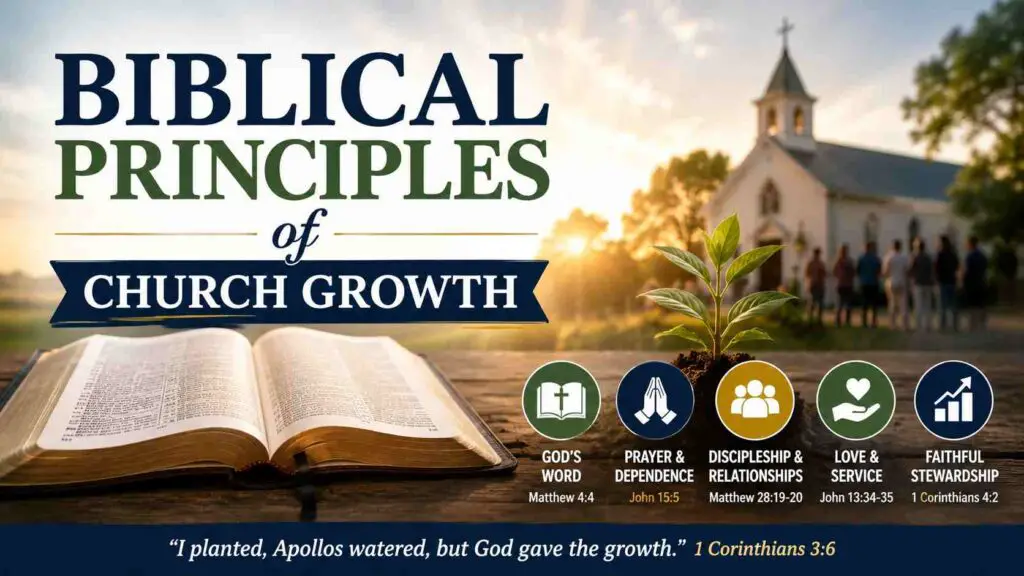
Ultimately, church growth is God’s work. Believers are called to plant, water, serve faithfully, and trust God to bring the increase.