
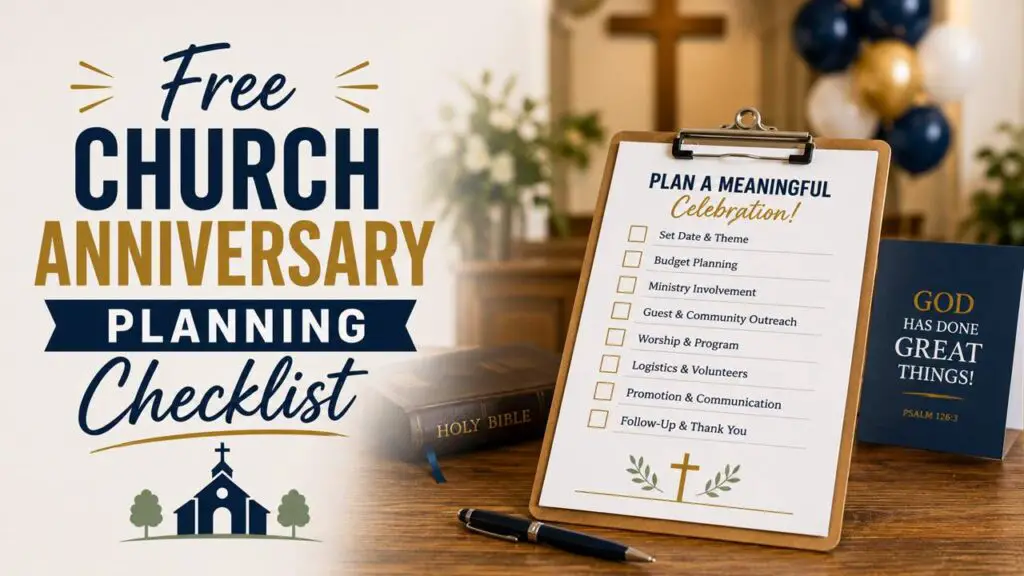
A church anniversary is more than simply celebrating another year of ministry. It is an opportunity to reflect on God’s faithfulness, honor the sacrifices of church leaders and members, strengthen fellowship within the congregation, and renew the church’s vision for the future. A well-planned anniversary celebration can inspire spiritual growth, encourage unity, and create lasting memories for everyone involved.
Because church anniversaries often involve large gatherings, special guests, multiple activities, and important presentations, careful planning is essential. Churches that begin preparing early are better equipped to handle budgeting, scheduling, hospitality, worship planning, and event coordination without unnecessary stress.
This comprehensive Church Anniversary Planning Checklist will help churches organize every stage of preparation while ensuring the celebration remains meaningful, spiritually uplifting, and professionally coordinated.
Church Anniversary Planning Checklist
12–9 Months Before
#1. Set the anniversary vision
The first step is deciding exactly what the church hopes to accomplish through the anniversary celebration. Church leaders should meet together to discuss the spiritual and practical goals of the event. Some churches may want the celebration to focus on gratitude and worship, while others may emphasize outreach, fundraising, honoring church founders, or strengthening community relationships. Establishing a clear vision early helps guide every decision that follows, including the theme, guest speakers, activities, decorations, and budget priorities. A clear purpose also helps the congregation understand why the celebration matters.
#2. Choose the anniversary theme
Selecting a meaningful anniversary theme creates unity throughout the entire event. The theme should reflect the church’s mission, history, and future direction while also being rooted in Scripture. Church leaders should choose a theme verse and determine how the theme will appear in sermons, worship music, decorations, banners, social media graphics, invitations, and printed materials. A strong theme helps create consistency and gives the anniversary celebration a memorable identity that members and guests can easily connect with.
#3. Form the planning committee
Organizing a successful church anniversary requires teamwork. Church leadership should appoint a planning committee made up of dependable individuals with different skills and ministry experiences. Specific responsibilities should be assigned to subcommittees such as hospitality, worship, finance, media, decorations, food preparation, transportation, guest relations, and communications. Each team leader should clearly understand their responsibilities, deadlines, and reporting structure. Regular meetings should also be scheduled so progress can be monitored and problems addressed early.
#4. Set the anniversary date and schedule
The church should officially select the anniversary date as early as possible to avoid conflicts with holidays, conferences, community events, or denominational gatherings. Once the date is chosen, leaders should decide whether the celebration will take place over one service, an entire weekend, or several days. Churches may include banquets, concerts, youth nights, community outreach events, revival services, or fellowship dinners alongside the main worship service. A tentative master schedule should also be created to outline all planned activities and major deadlines.
#5. Create a detailed budget
Developing a comprehensive budget is one of the most important planning steps. The committee should carefully estimate costs for decorations, food, guest speakers, musicians, printing, media equipment, transportation, photography, security, gifts, accommodations, and facility preparation. Churches should also plan for unexpected expenses by including a contingency fund in the budget. Financial responsibilities should be assigned to trusted individuals who can monitor spending, approve purchases, and maintain accurate records throughout the planning process.
#6. Invite guest speakers early
Many churches invite guest pastors, former leaders, denominational officials, or respected ministers to participate in anniversary celebrations. These invitations should be extended well in advance because many speakers have busy ministry schedules. Church leaders should contact potential speakers, explain the purpose of the event, discuss speaking expectations, and confirm availability. Important details such as honorariums, hotel accommodations, transportation, meal arrangements, and service times should also be clearly communicated early to avoid confusion later.
#7. Reserve all necessary spaces
The planning committee should confirm the availability of all spaces needed for the anniversary celebration. This may include the sanctuary, fellowship hall, classrooms, nursery areas, kitchen facilities, parking lots, outdoor spaces, or off-site banquet venues. If attendance is expected to exceed normal capacity, additional seating, tents, portable restrooms, or rental equipment may need to be secured. Early reservations help prevent scheduling conflicts and provide enough time to coordinate setup requirements.
9–6 Months Before
#8. Plan the anniversary program
The committee should begin designing the overall structure of the anniversary celebration. This includes deciding the order of worship, music selections, guest presentations, testimonies, recognition ceremonies, sermons, offerings, and fellowship activities. Church leaders should discuss how long each segment will last and how transitions between program elements will be handled. The goal is to create a service that flows smoothly while remaining spiritually meaningful and engaging for attendees.
#9. Gather church history materials
One of the most meaningful parts of a church anniversary is remembering the church’s journey and legacy. Assign a team to collect photographs, videos, newspaper clippings, church bulletins, membership records, and historical documents. Long-time members and former leaders can also be interviewed to gather testimonies and stories about important moments in the church’s history. These materials can later be used for videos, memory walls, presentations, anniversary books, or social media content.
#10. Build the guest list
Creating a detailed guest list helps the church estimate attendance and organize invitations properly. The list should include current members, former members, retired pastors, community leaders, neighboring churches, denominational representatives, ministry partners, and special supporters. Churches should also identify VIP guests who may require reserved seating or special accommodations during the celebration.
#11. Begin fundraising efforts if needed
If the anniversary celebration involves major expenses or special ministry projects, fundraising efforts should begin early. Churches may organize special offerings, sponsorship opportunities, fundraising dinners, souvenir journal advertisements, or donation campaigns. The purpose of the fundraising should be clearly communicated to the congregation so members understand how the funds will support the church’s goals and anniversary activities.
#12. Organize worship and music plans
The worship experience should be carefully planned to reflect both celebration and gratitude. Worship leaders should begin selecting songs, choir arrangements, instrumental music, and special performances that align with the anniversary theme. Churches may invite guest choirs, former worship leaders, or youth groups to participate. Rehearsal schedules should also be planned early so musicians and singers have enough time to prepare.
#13. Decide on commemorative items
Many churches choose to create anniversary keepsakes that members and guests can take home. These may include anniversary T-shirts, mugs, plaques, bookmarks, calendars, pens, or souvenir books. The committee should decide which items will be distributed for free and which may be sold as fundraisers. Designs, printing timelines, and ordering deadlines should all be carefully managed to ensure the items arrive before the celebration.
6–3 Months Before
#14. Send invitations to guests
Formal invitations should now be prepared and distributed to invited guests, speakers, churches, and community leaders. Invitations should include clear information about dates, times, locations, dress expectations, RSVP instructions, and contact details. Churches should also follow up with important guests personally to confirm attendance and answer any questions they may have.
#15. Launch promotional efforts
The church should begin actively promoting the anniversary celebration to members and the broader community. Announcements should be made during worship services and shared through newsletters, social media platforms, church websites, flyers, and community bulletin boards. Consistent promotion helps build excitement, increase attendance, and encourage participation from former members and visitors.
#16. Prepare the anniversary booklet
A commemorative anniversary booklet serves both as a keepsake and an informational guide for attendees. The booklet may include the church history, ministry highlights, photographs, pastor’s messages, service schedules, recognition pages, sponsor advertisements, and testimonies from members. A dedicated team should oversee editing, proofreading, layout design, and printing to ensure the final product looks professional and meaningful.
#17. Finalize food and catering arrangements
If food will be served during the celebration, the church should now confirm all catering details. The committee should decide whether the meal will be catered, buffet-style, potluck, banquet service, or simple refreshments. Attendance estimates should guide food quantities, seating arrangements, serving schedules, and cleanup responsibilities. Dietary needs and accommodations should also be considered when planning menus.
#18. Organize hospitality teams
Hospitality plays a major role in creating a welcoming environment during the anniversary celebration. Volunteers should be assigned to greet guests, distribute programs, direct parking, assist elderly visitors, answer questions, and manage registration areas. Ushers and hospitality workers should receive clear instructions and training so they can serve guests confidently and professionally.
#19. Plan decorations and visual displays
The decorations should reflect the anniversary theme while creating an atmosphere of celebration and gratitude. The decoration team should plan floral arrangements, banners, stage backdrops, table centerpieces, lighting, and welcome signs. Historical photo displays and memory walls can also help attendees reflect on the church’s journey and accomplishments over the years.
#20. Plan recognition and appreciation moments
The church should carefully decide who will be honored during the anniversary celebration. Founding members, former pastors, ministry leaders, volunteers, musicians, and longtime servants may all deserve recognition. Certificates, plaques, gifts, or public acknowledgments should be prepared ahead of time so appreciation moments are organized and meaningful rather than rushed.
3–1 Months Before
#21. Finalize the complete program schedule
Every detail of the anniversary schedule should now be confirmed. Speakers, musicians, presenters, readers, and volunteers should all receive finalized schedules that include arrival times, speaking durations, rehearsal times, and seating arrangements. Having a finalized program reduces confusion and helps everyone prepare properly.
#22. Confirm vendors and service providers
The planning committee should reconnect with all vendors to verify reservations, delivery times, payment arrangements, and service expectations. Caterers, decorators, photographers, videographers, rental companies, and sound technicians should all receive updated event schedules and setup instructions.
#23. Rehearse all special presentations
Choirs, worship teams, drama groups, dancers, youth performers, and speakers should begin rehearsing together in the actual event space whenever possible. Rehearsals help participants become comfortable with timing, stage movement, microphone usage, and transitions between performances.
#24. Prepare media and presentation materials
The media team should finalize slideshows, videos, livestream graphics, projection slides, social media graphics, and promotional videos. Historical presentations should be carefully reviewed for accuracy and timing. Backup copies of all media files should also be created to prevent technical problems during the event.
#25. Track RSVPs and attendance estimates
As responses begin arriving, attendance numbers should be tracked carefully. Accurate attendance estimates help the church prepare seating charts, food quantities, parking plans, guest packets, and hospitality arrangements. Special accommodations for elderly guests or disabled attendees should also be noted during this process.
#26. Assemble guest welcome packets
Welcome packets help guests feel appreciated and informed. Each packet may include the anniversary program, church information, welcome letters, visitor cards, maps, commemorative items, and ministry brochures. Volunteers should assemble the packets ahead of time so they can be distributed efficiently upon arrival.
#27. Organize special anniversary offerings
If the church plans to receive a special offering during the celebration, leaders should communicate the purpose clearly to the congregation beforehand. Members are often more willing to give generously when they understand how the offering will support ministry goals, building improvements, missions, or future church projects.
Final Month Before the Anniversary
#28. Hold a comprehensive planning meeting
Church leaders and committee heads should meet to carefully review every aspect of the event. Outstanding tasks, unresolved problems, volunteer assignments, budgets, schedules, and contingency plans should all be discussed. This meeting helps ensure every department is fully prepared for the upcoming celebration.
#29. Reconfirm all guest speaker arrangements
The church should contact every guest speaker again to confirm travel plans, hotel reservations, transportation needs, sermon topics, and arrival times. Clear communication prevents misunderstandings and helps guests feel valued and prepared.
#30. Print all final materials
Programs, signs, banners, certificates, menus, seating charts, and name tags should now be printed and organized. Extra copies should also be prepared in case attendance exceeds expectations or replacements are needed during the event.
#31. Prepare and clean the church property
The church building and surrounding property should receive a thorough cleaning and inspection. Restrooms, classrooms, kitchens, fellowship halls, entrances, and parking areas should all be cleaned, repaired, and organized. Small maintenance issues should also be addressed before guests arrive.
#32. Finalize seating and table arrangements
Reserved seating should be organized for pastors, dignitaries, honorees, elderly guests, musicians, and church leadership. Table arrangements for banquets or fellowship meals should also be finalized to ensure smooth guest flow and comfortable seating.
#33. Train the welcome and usher teams
Hospitality volunteers should receive final instructions regarding guest greetings, parking guidance, seating assistance, emergency procedures, and event schedules. Proper preparation helps volunteers serve confidently and maintain order during busy moments.
Anniversary Week
#34. Decorate all event spaces
The decoration team should install all banners, flowers, table decorations, photo displays, stage backdrops, and welcome signs throughout the church property. Decorations should be inspected carefully to ensure everything looks polished and secure.
#35. Test all audio and technical equipment
Every microphone, speaker, projector, camera, livestream connection, and lighting system should be tested thoroughly. Backup batteries, extension cords, and replacement equipment should also be available in case technical problems occur during the service.
#36. Confirm participation with every volunteer
Committee leaders should personally contact volunteers, musicians, ushers, cooks, media workers, and hospitality teams to confirm schedules and responsibilities. Last-minute absences or scheduling conflicts should be addressed immediately.
#37. Prepare a detailed event run sheet
A detailed run sheet should outline every moment of the event, including music cues, introductions, transitions, presentations, offerings, and closing remarks. Copies should be distributed to key leaders, media teams, ushers, and coordinators.
#38. Hold a prayer meeting with the planning team
Before the celebration begins, church leaders and volunteers should gather together for prayer. This time should focus on unity, spiritual impact, protection, smooth coordination, and gratitude for God’s faithfulness throughout the church’s history.
Anniversary Day
#39. Arrive early for setup and inspection
Volunteers and committee members should arrive several hours before the event begins to inspect decorations, seating, sound equipment, food stations, registration tables, and hospitality areas. Any final problems should be addressed immediately.
#40. Welcome every guest warmly
Greeters and ushers should create a joyful and welcoming atmosphere from the moment guests arrive. Visitors should feel appreciated, informed, and comfortable throughout the celebration experience.
#41. Keep the service and events organized
Designated coordinators should monitor timing and help transitions move smoothly between worship, speeches, performances, and fellowship activities. Staying organized helps maintain energy and prevents unnecessary delays.
#42. Celebrate the church’s history intentionally
The church should intentionally highlight important moments from its history through testimonies, photographs, videos, presentations, and spoken tributes. This helps younger generations understand the church’s legacy and honors those who helped build the ministry.
#43. Highlight current ministries and impact
The anniversary should also celebrate what the church is currently accomplishing. Leaders can showcase ministries, outreach programs, youth activities, missions, and community impact through presentations, videos, or testimonies.
#44. Share vision for the future
Church anniversaries provide an excellent opportunity for leaders to cast vision for the future. Pastors can share upcoming ministry goals, outreach plans, building projects, discipleship initiatives, and spiritual priorities for the next season of ministry.
#45. Capture photos and video memories
Photographers and videographers should document important moments throughout the celebration, including worship, guest speakers, fellowship activities, decorations, choir performances, and group photos. These memories become valuable historical records for the church.
After the Anniversary
#46. Send thank-you messages and letters
The church should express appreciation to everyone who contributed to the success of the celebration. Personalized thank-you letters, emails, or announcements can help volunteers, donors, speakers, and guests feel recognized and valued.
#47. Pay outstanding expenses promptly
All remaining invoices and reimbursements should be processed quickly and accurately. Financial records should also be reviewed carefully to ensure accountability and proper budgeting documentation.
#48. Conduct a post-event evaluation meeting
The planning committee should meet after the celebration to discuss what worked well, what challenges arose, and what improvements could be made in the future. Recording lessons learned helps future planning teams prepare more effectively.
#49. Share event highlights publicly
Photos, videos, testimonies, and recap messages should be shared through social media, newsletters, church websites, and worship announcements. Publicly celebrating the event helps maintain excitement and encourages ongoing engagement.
#50. Preserve historical records and memories
All anniversary materials should be carefully stored in church archives, including videos, programs, photographs, recordings, and printed materials. These items may become valuable resources for future anniversaries and church historians.
#51. Follow up with visitors and guests
Visitors who attended the anniversary should receive follow-up communication thanking them for attending and inviting them to return for future services or ministry opportunities.
#52. Build momentum for future ministry
The energy and unity created during the anniversary celebration should be used to strengthen future ministry efforts. Churches can encourage new volunteers, launch outreach projects, begin fundraising campaigns, or promote discipleship opportunities while enthusiasm remains high.
Closing Thoughts
A church anniversary is a powerful testimony of God’s faithfulness through every season of ministry. It honors the prayers, sacrifices, leadership, and dedication of those who helped establish and sustain the church over the years. With thoughtful planning and careful organization, an anniversary celebration can become a deeply meaningful experience that strengthens the congregation spiritually and emotionally.
Using this Church Anniversary Planning Checklist can help churches stay organized, reduce stress, and ensure every important detail is handled properly. Most importantly, the celebration should always point people back to gratitude, worship, fellowship, and renewed commitment to the mission God has given the church for the years ahead.