
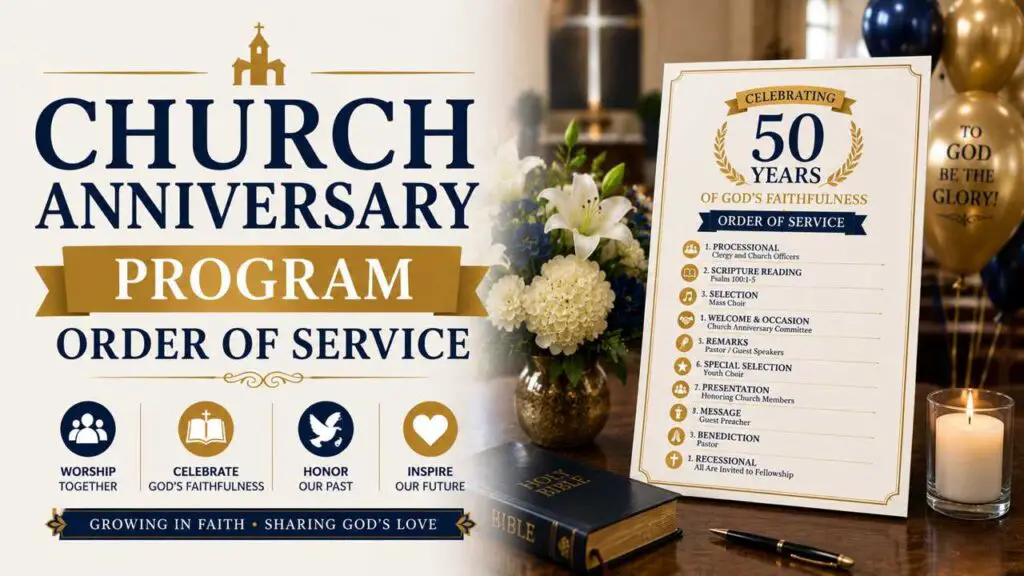
A church anniversary is more than a celebration of years passed. It is a time to reflect on God’s faithfulness, honor the church’s history, recognize spiritual leadership, and inspire the congregation for the future. One of the most important parts of planning this special occasion is creating a well-structured church anniversary program order of service.
A clear and organized program helps guests follow the service smoothly while ensuring every important moment is included. Whether your church is celebrating its 5th anniversary, 25th anniversary, or 100th anniversary, having a thoughtful template can make the event more meaningful and professional.
This guide explores the essential sections every church anniversary program should include and explains how to structure each part effectively.
Church Anniversary Program Order of Service: A Template
#1. Cover Page
The cover page creates the first impression for attendees. It should immediately communicate the purpose and theme of the celebration while reflecting the spirit of the church.
A church anniversary cover page typically includes:
- The church name
- Anniversary theme
- Anniversary year or milestone
- Date and time of the event
- Church logo or image
- Theme scripture
- Guest speaker information
Many churches also include elegant graphics, church colors, or historical photos to make the program visually appealing. A professionally designed cover page adds significance to the celebration and helps guests feel welcomed before the service even begins.
#2. Welcome Message
The welcome message sets the tone for the service. This section is usually written by the pastor, first lady, anniversary committee chairperson, or church leadership team.
The message should:
- Welcome guests and members
- Express gratitude to attendees
- Reflect on God’s faithfulness
- Acknowledge the church’s history and accomplishments
- Encourage fellowship and celebration
A heartfelt welcome message helps create a warm atmosphere and reminds everyone why the anniversary celebration matters.
#3. Theme and Scripture
Most church anniversary celebrations are built around a spiritual theme. This section highlights the focus of the event and provides biblical encouragement to the congregation.
Examples of anniversary themes include:
- “Celebrating God’s Faithfulness”
- “Growing Stronger Through Christ”
- “Rooted in Faith, Reaching the Community”
The accompanying scripture should reinforce the chosen theme. Churches often select verses about endurance, faithfulness, unity, or spiritual growth.
Including the theme and scripture prominently throughout the program creates consistency and helps center the service on God’s purpose.
#4. Prelude and Processional
The prelude and processional formally begin the service. Instrumental music or worship music is often played while church leaders, choir members, clergy, or special guests enter the sanctuary.
This section creates an atmosphere of reverence and anticipation. Depending on church traditions, the processional may include:
- Pastors and ministers
- Choir members
- Ushers
- Anniversary committee members
- Visiting clergy
A carefully planned opening creates a dignified and memorable beginning to the service.
#5. Call to Worship
The call to worship invites the congregation into a spirit of praise and reverence. This section is often led by a pastor, worship leader, or designated church member.
The call to worship may include:
- Responsive readings
- Psalms
- Opening declarations
- Encouraging words of praise
Its purpose is to shift attention toward God and prepare hearts for worship.
#6. Opening Prayer
The opening prayer dedicates the service to God and seeks His presence throughout the celebration.
A strong opening prayer typically includes:
- Thanksgiving for the church’s history
- Prayer for the congregation
- Blessings over leaders and guests
- Guidance for the future
This prayer establishes a spiritual foundation for the anniversary celebration and invites unity among attendees.
#7. Congregational Hymn or Worship
Music plays a central role in church anniversary celebrations. Congregational hymns or worship songs allow the entire church family to participate together in praise.
Churches often choose songs that reflect themes of:
- Gratitude
- Faithfulness
- Victory
- Unity
- Worship
Some churches include traditional hymns, while others prefer contemporary worship music. Lyrics may also be printed in the program for easier participation.
#8. Scripture Reading
The scripture reading reinforces the spiritual message of the anniversary celebration. It is usually assigned to a church leader, youth member, deacon, or guest minister.
Common scripture themes for anniversaries include:
- God’s faithfulness
- Spiritual growth
- Service and ministry
- Unity in Christ
- Endurance through trials
Including scripture readings throughout the service helps keep the focus on biblical principles rather than simply celebrating longevity.
#9. Choir Selections and Special Music
Special music adds joy, energy, and inspiration to the service. Choir performances, soloists, praise teams, and dance ministries often participate during this section.
Churches may include:
- Anniversary choir presentations
- Guest choir performances
- Instrumental selections
- Spoken word ministry
- Worship dance performances
These musical moments create emotional connection and help make the service memorable.
#10. Church History Presentation
A church anniversary is the perfect time to reflect on the congregation’s journey. This section highlights important milestones and honors those who helped build the ministry.
A church history presentation may include:
- Founding date of the church
- Names of founders
- Early challenges and victories
- Building projects
- Ministry growth
- Community outreach accomplishments
- Major historical moments
Many churches include photographs, videos, timelines, or testimonies to make this section more engaging.
#11. Recognition of Leaders and Members
Church anniversaries often include a special time to honor pastors, elders, deacons, ministry leaders, founding members, and longtime congregants.
Recognition may include:
- Certificates or plaques
- Special tributes
- Flowers or gifts
- Public acknowledgments
- Appreciation speeches
Recognizing faithful service strengthens unity within the church and encourages continued dedication.
#12. Anniversary Remarks and Greetings
This section allows invited guests, neighboring churches, civic leaders, or denominational representatives to offer congratulations and encouragement.
Anniversary remarks may include:
- Greetings from sister churches
- Community acknowledgments
- Messages from former pastors
- Video greetings
- Written congratulations
These remarks remind the congregation of its impact beyond its own walls.
#13. Offering and Tithes
Most church anniversary services include a special offering. This section provides an opportunity for members and guests to support the ministry financially.
The offering may be designated for:
- Church renovations
- Ministry expansion
- Community outreach
- Missions
- Anniversary fundraising goals
Many churches include a brief explanation of how the funds will support future ministry efforts.
#14. Introduction of the Guest Speaker
The guest speaker introduction should briefly present the speaker’s background, ministry experience, and connection to the church.
A strong introduction should:
- Remain respectful but concise
- Highlight ministry accomplishments
- Build anticipation for the message
- Welcome the speaker warmly
This section prepares the congregation to receive the sermon.
#15. Sermon or Anniversary Message
The sermon is usually the centerpiece of the anniversary service. The message often focuses on themes such as:
- God’s faithfulness
- Spiritual perseverance
- Vision for the future
- Unity and mission
- Commitment to ministry
The anniversary sermon should inspire, encourage, and challenge the congregation as the church enters a new season.
#16. Invitation or Altar Call
After the sermon, many churches provide an opportunity for spiritual response through an invitation or altar call.
This may include invitations for:
- Salvation
- Church membership
- Prayer
- Rededication
- Spiritual encouragement
Including an invitation reminds attendees that the celebration is ultimately about spiritual transformation.
#17. Communion
Some churches include communion as part of the anniversary service. Communion emphasizes unity in Christ and remembrance of Jesus’ sacrifice.
If communion is included, the program should specify:
- Instructions for participation
- Scripture references
- Communion leaders
- Special music during communion
This sacred moment often becomes one of the most meaningful parts of the service.
#18. Announcements and Acknowledgments
Before the service concludes, churches usually share important announcements and expressions of gratitude.
This section may include:
- Upcoming anniversary events
- Banquet information
- Volunteer acknowledgments
- Thank-you messages
- Visitor appreciation
Clear announcements help attendees stay informed about the rest of the celebration activities.
#19. Closing Remarks
Closing remarks summarize the significance of the anniversary and encourage the congregation moving forward.
Leaders often use this moment to:
- Thank attendees
- Encourage continued faithfulness
- Share future vision
- Invite guests to return
This section should leave attendees feeling inspired and connected to the church’s mission.
#20. Benediction and Recessional
The benediction officially closes the service with a final blessing or prayer.
The recessional may include:
- Choir exit
- Clergy procession
- Instrumental music
- Congregational fellowship
Ending the service with dignity and celebration helps create a lasting impression on attendees.
Closing Thoughts
A well-designed church anniversary program order of service does far more than organize an event. It tells the story of God’s faithfulness through the life of a congregation. Every section, from the welcome message to the benediction, contributes to creating a meaningful and spiritually uplifting experience.
Using a structured template helps churches plan anniversary services with clarity and confidence while ensuring important moments are not overlooked. Whether the celebration is simple or elaborate, the goal remains the same: honoring the past, celebrating the present, and looking forward to the future God has prepared for the church.