
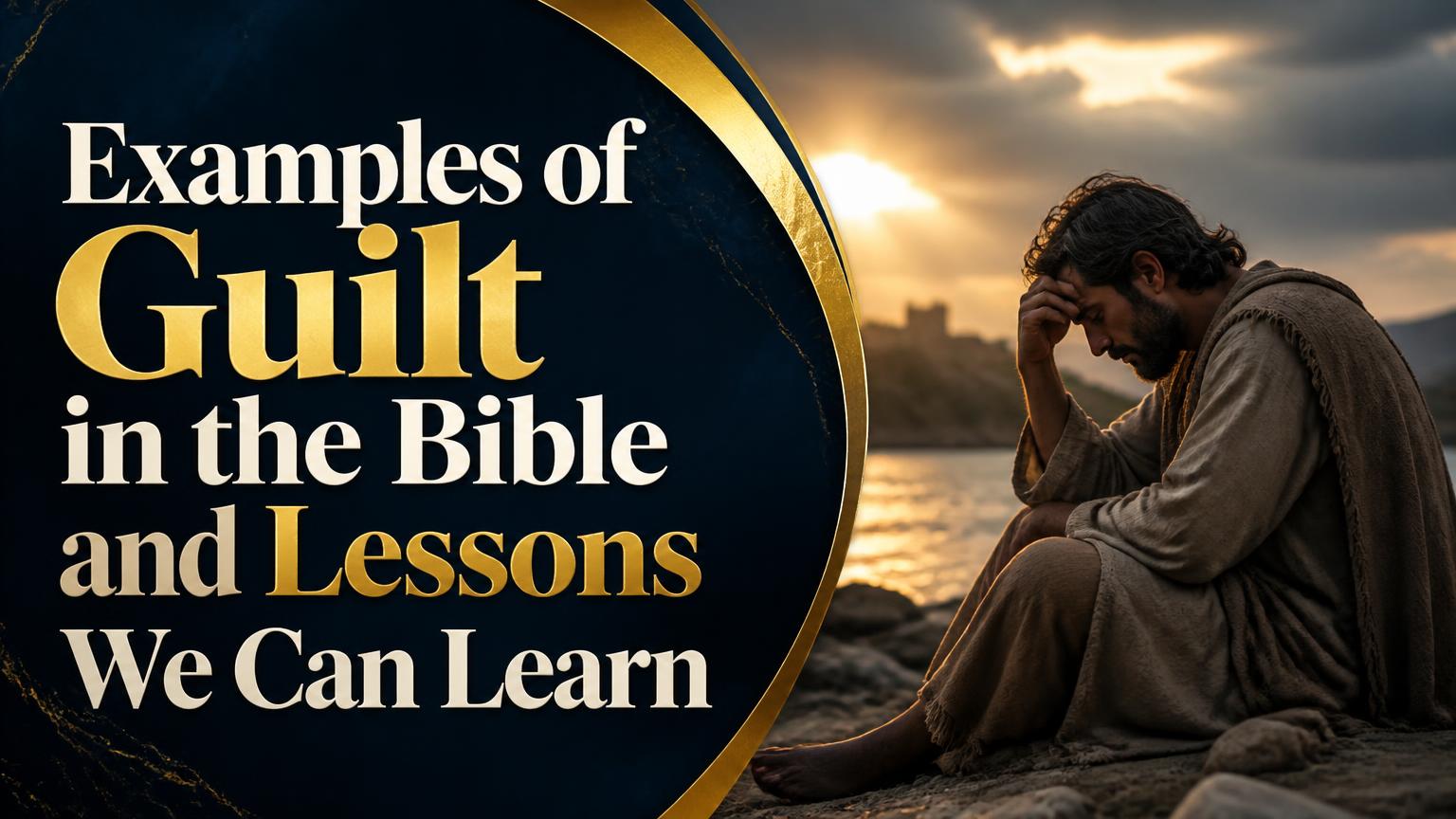
The Bible presents guilt as more than an uncomfortable feeling. It can describe actual moral responsibility before God, the inner awareness that one has done wrong, and the consequences that follow sin. Its examples include murder, deception, sexual sin, betrayal, disobedience, and failure to repent. These accounts do not treat guilt uniformly: some people deny wrongdoing, some confess, some experience destructive remorse, and others receive forgiveness that leads to changed behavior. Together, they show how guilt should be faced honestly rather than hidden, excused, or allowed to become despair.
Examples of Guilt in the Bible
Biblical examples of guilt reveal several recurring patterns. People may try to hide their sin, blame others, or offer only partial admissions. Yet Scripture also shows that confession, repentance, restitution, and God’s mercy can interrupt guilt’s destructive power.
Adam and Eve: Hiding After Disobedience
Adam and Eve provide the Bible’s first example of human guilt. After eating from the forbidden tree, they recognized their nakedness, hid from God, and tried to shift responsibility. Adam blamed Eve, while Eve blamed the serpent (Genesis 3:1–13). Their fear and shame did not create the guilt; they expressed the awareness that they had violated God’s command.
God confronted them directly and explained the consequences of their disobedience. At the same time, He made garments for them, showing that judgment and mercy can appear together. Their story teaches that hiding from God cannot remove guilt, and blaming others cannot restore fellowship. Accountability begins when a person stops managing appearances and acknowledges what actually happened.
Cain: Guilt Hidden Behind Denial
Cain’s guilt arose after he murdered his brother Abel (Genesis 4:1–16). God had warned Cain that sin was “crouching at the door,” but Cain refused to master his anger. After the murder, he responded evasively to God’s question about Abel’s location: “Am I my brother’s keeper?”
Cain’s denial did not prevent judgment. God exposed the crime, described the ground as bearing witness to Abel’s blood, and pronounced consequences on Cain. Cain did express distress over his punishment, but the passage does not present a clear confession or a restored relationship with God. His example distinguishes regret over consequences from repentance over wrongdoing. Feeling unhappy about punishment is not the same as grieving sin itself.
Joseph’s Brothers: Guilt That Awakens Over Time
Joseph’s brothers sold him into slavery and deceived their father into believing that he had died (Genesis 37). Years later, when they faced hardship in Egypt, they connected their suffering with what they had done. Reuben reminded them that Joseph had pleaded with them, and they admitted, “We are being punished because of our brother” (Genesis 42:21–22).
Their guilt eventually led to more honest conduct. In Genesis 44, Judah offered himself in Benjamin’s place, demonstrating a significant change from the brothers’ earlier willingness to sacrifice Joseph for their own advantage. Their story shows that guilt may remain buried for years before circumstances bring it to consciousness. It also shows that genuine change is demonstrated through costly responsibility, not merely emotional language.
Achan: Hidden Sin and Community Consequences
Achan took items from Jericho that Israel had been commanded to devote to God, then hid them in his tent (Joshua 6:17–19; 7:1–26). Israel subsequently suffered defeat at Ai. When confronted, Achan confessed that he had seen, coveted, and taken the forbidden goods.
This account emphasizes that sin can have consequences beyond the individual who commits it. Achan’s actions violated a specific covenant command given to Israel, a nation governed under a unique theocratic arrangement. That setting should not be used to assume that every modern hardship proves the hidden guilt of a particular person or group. Still, the story remains a warning that secrecy does not make wrongdoing harmless and that private choices can damage families, communities, and institutions.
David: Confession, Forgiveness, and Continuing Consequences
King David’s guilt in the matter of Bathsheba was extensive. He committed adultery with her, attempted to conceal her pregnancy, and arranged for her husband Uriah to die in battle (2 Samuel 11). David’s position and power made the injustice worse because he used royal authority to protect himself.
The prophet Nathan confronted David through a carefully constructed story, and David finally acknowledged, “I have sinned against the Lord” (2 Samuel 12:13). Psalm 51 expresses the depth of his repentance: David asks for mercy, cleansing, a pure heart, and a restored relationship with God. Yet forgiveness did not erase every earthly consequence. The child died, and David’s household continued to experience turmoil. His story shows that divine forgiveness removes condemnation and restores fellowship, but it does not always eliminate every result of harmful actions.
Saul: Admitting Sin Without Fully Turning From It
King Saul repeatedly disobeyed God and then attempted to manage the consequences. In 1 Samuel 15, he failed to carry out God’s command concerning the Amalekites. When Samuel confronted him, Saul said, “I have sinned,” but he also blamed the people and explained that he had wanted to preserve the best animals for sacrifice.
Saul’s response illustrates the difference between admitting wrongdoing and embracing repentance. He appears concerned with both God’s judgment and public honor, asking Samuel to honor him before the elders. The narrative presents a pattern of partial confession, excuse-making, and concern about reputation. His example warns that guilt can be acknowledged verbally while the heart still resists surrender, accountability, and obedience.
Judas and Peter: Remorse With Different Outcomes
Judas betrayed Jesus, later regretted what he had done, returned the thirty pieces of silver, and declared that he had sinned by betraying innocent blood (Matthew 27:3–5). Peter also failed Jesus by denying three times that he knew Him. After recognizing what he had done, Peter wept bitterly (Luke 22:54–62).
The two accounts show that remorse can move in different directions. Judas was overwhelmed by despair and did not remain within a community where restoration might occur. Peter, although deeply ashamed, encountered the risen Jesus and was eventually restored to his calling (John 21:15–19). The Bible does not portray Peter’s denial as insignificant. Rather, it shows that guilt must be brought into confession, relationship, and the possibility of grace instead of becoming a reason to surrender to hopelessness.
The Prodigal Son: Confession That Leads Home
In Jesus’ parable of the prodigal son, a younger son demands his inheritance, wastes it, and returns home after recognizing the seriousness of his condition (Luke 15:11–24). He prepares a confession: “Father, I have sinned against heaven and before you.” His return involves both a changed direction and an honest acknowledgment of guilt.
The father’s welcome illustrates God’s readiness to receive the repentant. The son is not told that his choices were harmless, nor is his confession treated as unnecessary. Instead, restoration begins when he returns and speaks truthfully. The parable focuses on the father’s compassion, but it does not remove the importance of repentance. Grace does not require pretending that sin never happened.
What These Examples Reveal About Biblical Guilt
In the Bible, guilt can mean objective liability for wrongdoing, not merely a painful emotion. A person may feel guilty, fail to feel guilty, or deliberately suppress conscience; those emotional differences do not determine whether the action was right or wrong. The Old Testament system of sacrifices recognized this distinction. The guilt offering addressed particular offenses and symbolized the need for atonement and restoration (Leviticus 5:14–6:7).
Biblical guilt is also relational. Sin damages a person’s relationship with God and may injure other people, corrupt communities, or create obligations that must be addressed. David needed forgiveness from God, but Bathsheba and Uriah’s family could not simply be treated as irrelevant. This is why repentance may include confession, restitution, changed conduct, or accepting lawful consequences. Forgiveness is not the same as denying the damage caused.
Scripture also cautions against assuming that every hardship identifies a particular sinner. When people asked Jesus whether a man’s blindness resulted from his own sin or his parents’ sin, Jesus rejected that automatic connection (John 9:1–3). Suffering can result from living in a fallen world without proving personal guilt. Biblical wisdom therefore holds two truths together: real guilt should be confronted, but suffering should not be used as careless evidence against others.
Guilt, Shame, Repentance, and Forgiveness
Guilt and shame are related but different. Guilt concerns what a person has done: “I committed a wrong.” Shame often expands that judgment into an identity claim: “I am beyond hope.” Healthy conviction can lead someone to confess, repair harm, and change. Destructive shame may lead to hiding, defensiveness, self-hatred, or despair. Cain and Judas show how guilt can become isolating when it is not brought into honest relationship and mercy.
Repentance is more than feeling bad. In biblical usage, it involves turning toward God and away from sinful behavior. David’s prayer in Psalm 51 combines confession with a request for inward renewal, while the brothers of Joseph demonstrate change through their willingness to protect Benjamin. For Christians, passages such as 1 John 1:9 and Romans 8:1 express the promise of forgiveness and freedom from condemnation. These promises do not excuse sin; they make truthful confession possible without requiring a person to remain imprisoned by it.
Forgiveness also does not always remove every consequence. A restored relationship with God may exist alongside legal penalties, damaged trust, grief, or the need to make restitution. Zacchaeus’s response to Jesus illustrates this connection: his changed heart led him to repay those he had defrauded (Luke 19:1–10). The practical shape of repentance varies by situation, but genuine grace generally produces a new relationship to the wrong that was committed.
Lessons We Can Learn From These Examples
First, guilt should be named honestly. Adam, Cain, Saul, and David show different forms of evasion: hiding, denial, blaming, minimizing, and partial confession. These responses may protect a person’s image temporarily, but they prevent healing and accountability. Honest confession identifies the action, acknowledges whom it harmed, and stops using circumstances or other people as an excuse.
Second, a person should respond to guilt before it hardens into a pattern. Joseph’s brothers carried the memory of their crime for years, and David’s concealment deepened the damage caused by his original sin. Prompt confession does not guarantee that all consequences will disappear, but it can prevent additional deception and injury. Where appropriate, repentance includes seeking forgiveness, returning what was taken, accepting correction, and changing the conditions that made the wrongdoing easier.
Third, guilt should lead toward God rather than away from Him. Peter’s restoration shows that failure does not have to become a permanent identity. At the same time, the example of Judas warns against confusing despair with repentance. Those burdened by serious guilt may need spiritual guidance, wise pastoral care, accountability, or professional mental-health support, especially when guilt becomes connected with self-harm or hopelessness.
Finally, biblical guilt should produce humility rather than self-righteousness. The same Scriptures that expose David, Saul, Cain, and the brothers of Joseph also insist that all people need mercy. A person who has received forgiveness should become more willing to restore others, confront injustice carefully, and extend compassion without calling evil good.
Conclusion
The examples of guilt in the Bible include Adam and Eve hiding their disobedience, Cain denying murder, Joseph’s brothers recognizing their betrayal, Achan concealing theft, David confessing adultery and murder, Saul offering incomplete repentance, and Peter finding restoration after denying Jesus. These accounts show that guilt is both moral responsibility and an inner response to wrongdoing, but feelings alone do not determine the right outcome.
The biblical path forward is honest acknowledgment, genuine repentance, appropriate restitution, and trust in God’s mercy. Forgiveness does not make sin unimportant or erase every consequence, yet it prevents guilt from having the final word. Scripture presents conviction as an opportunity to return to God, repair what can be repaired, and live differently.