
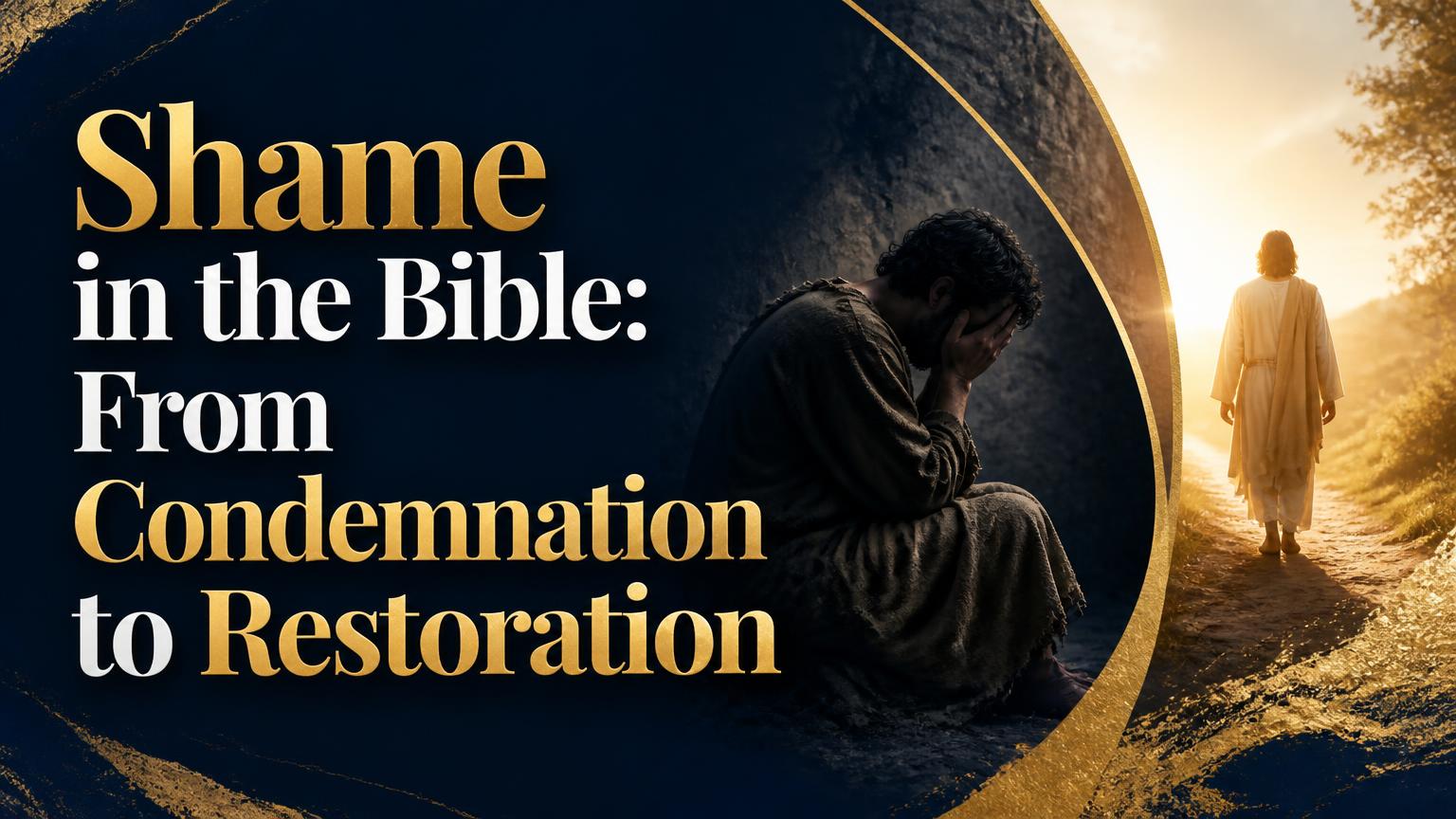
Shame in the Bible is more than an unpleasant emotion. It describes the disgrace, exposure, guilt, alienation, and loss of honor that can result from sin, injustice, defeat, or public humiliation. Scripture also shows that shame is not always evidence of personal wrongdoing: innocent people may be disgraced by others, while guilty people may resist shame altogether. The Bible’s central movement is from shame and hiding toward confession, forgiveness, restored dignity, and freedom before God.
What Does Shame in the Bible Mean?
Biblical shame is the experience of being exposed, dishonored, or separated from right relationship with God and others. The Old Testament uses several related words for shame, disgrace, and reproach, while the New Testament speaks of shame as both a human experience and a consequence of rejecting God. Its meaning depends on context: shame may arise from sin, be imposed unjustly, or describe the humiliation of judgment.
Shame Means More Than an Unpleasant Feeling
Modern discussions often treat shame as an inner feeling of worthlessness, but the Bible presents it as both inward and outward. Shame can involve guilt before God, public disgrace, loss of reputation, or the fear that one’s condition has been exposed. It is therefore personal and relational: the ashamed person feels seen, judged, rejected, or unworthy of belonging.
This explains why biblical passages about shame frequently mention faces, nakedness, reproach, covering, and public honor. Psalm 34:5 says that those who look to God become radiant and “their faces shall never be ashamed.” The verse points beyond temporary embarrassment. It describes the restoration of a person’s confidence and standing before God.
Sin Turns Innocence Into Hiding and Alienation
Genesis 2:25 says that Adam and Eve were naked and felt no shame. Their lack of shame represents openness, innocence, and undivided fellowship. After they disobey God, they recognize their nakedness, hide from God, and attempt to cover themselves in Genesis 3:7–10. Sin does not merely break a rule; it produces fear, self-protection, and alienation.
The sequence is significant. Adam and Eve hide before God speaks a sentence of judgment because their relationship with him has been damaged. Shame makes them want to withdraw from the very presence they once enjoyed. God’s response includes judgment, but it also includes seeking them, questioning them, and clothing them in Genesis 3:21. The passage does not erase the consequences of sin, yet it shows that God’s answer to human shame includes care and covering rather than abandonment.
Scripture Describes Both Moral Shame and Imposed Disgrace
Some biblical shame is connected to genuine wrongdoing. Daniel 9:7–8 speaks of shame and confusion belonging to Israel because the people had been unfaithful to God. Ezra 9:6 similarly expresses humiliation over sin. In these passages, shame can awaken honest confession because people recognize that their actions have violated God’s covenant.
Other shame is imposed on people who have not done what they are accused of doing. The suffering servant in Isaiah 53 is despised and rejected, yet his suffering is not proof of personal guilt. Jesus also endured mockery, false accusations, stripping, and public execution. Hebrews 12:2 says that he endured the cross while “despising the shame,” meaning that he refused to let public disgrace determine the truth about his mission or identity.
The distinction matters today. A person may feel shame because of personal sin, but a victim of abuse, persecution, poverty, illness, or prejudice may also be shamed by others without being morally guilty. The Bible does not require innocent people to confess sins they did not commit.
God’s Goal Is Repentance, Not Permanent Humiliation
When shame exposes real sin, God calls people toward repentance rather than endless self-condemnation. Proverbs 28:13 connects confession and renunciation of sin with receiving mercy. First John 1:9 promises forgiveness and cleansing to those who confess their sins. These passages do not treat shame as a permanent identity. They use truth to open the way to reconciliation.
The biblical pattern is therefore different from humiliation for its own sake. God may confront, discipline, or judge wrongdoing, but his purpose for the repentant is restoration. Psalm 51 shows David acknowledging his sin without minimizing it, yet still asking God to create a clean heart and restore the joy of salvation. Shame may begin the movement toward repentance, but forgiveness and renewed fellowship are the intended destination.
Key Passages Trace Shame From Fall to Hope
Several passages show the Bible’s larger pattern:
- Genesis 3:7–10: Sin produces exposure, hiding, and fear.
- Psalm 25:3: Those who trust God will not ultimately be put to shame.
- Psalm 34:5: Looking to God replaces a downcast, disgraced face with confidence.
- Isaiah 54:4: God promises his restored people that they will not live under the shame of their past.
- Romans 10:11: Whoever believes in Christ will not be put to shame.
- Hebrews 12:2: Jesus endures the shame of the cross and triumphs through obedience.
- Romans 8:1: Those who are in Christ Jesus are no longer under condemnation.
Together, these texts show that shame is real, but it does not have the final word over those who trust God.
How Shame, Guilt, Conviction, and Condemnation Differ
Guilt concerns responsibility for a wrong act; shame concerns the disgrace, exposure, or damaged identity associated with that wrong. The distinction is useful, although the Bible does not always separate the terms as neatly as modern psychology does. Scripture can describe people as ashamed because they have sinned, but it can also describe disgrace suffered through persecution or the actions of other people.
Conviction identifies specific wrongdoing and calls for a response. Condemnation is a judgment of guilt that leaves a person under penalty. Shame may accompany either one, but it is not identical to either. A healthy biblical response says, “I have sinned and need forgiveness,” rather than, “I am beyond mercy and cannot return.” Romans 8:1 is especially important here: freedom from condemnation does not mean that sin is unimportant; it means that Christ, rather than a person’s past, determines the believer’s standing before God.
How Jesus Bears and Transforms Shame
The New Testament presents Jesus as the decisive answer to shame. He does not merely offer encouragement to ashamed people; he enters the place of disgrace, bears rejection, and creates a new basis for belonging.
The Cross Reveals Shame’s Depth and Defeats Its Power
Crucifixion was designed to inflict both physical suffering and public humiliation. Jesus was mocked, stripped, rejected, and executed as though he were a criminal. Hebrews 12:2 therefore describes the cross as an experience of shame as well as suffering. Jesus endured it “for the joy that was set before him,” not because disgrace was insignificant, but because obedience to the Father and the salvation of his people were greater than the dishonor imposed by his enemies.
The cross also exposes the seriousness of sin. Forgiveness is not God pretending that evil does not matter. Christ bears the consequences of human rebellion and remains faithful under unjust judgment. Because he enters shame without being morally defeated by it, believers can bring both their guilt and their disgrace to him.
The Gospel Removes Shame Before God
The promise of the gospel is not that Christians will never feel embarrassed, regretful, or socially rejected. It is that those who trust Christ will not face final rejection from God. Romans 10:11 states that everyone who believes in him will not be put to shame. This promise addresses ultimate standing, not the disappearance of every painful emotion or circumstance.
That assurance changes how a person interprets the past. Sin may still require restitution, changed behavior, and the rebuilding of trust, but forgiven sin no longer defines the believer’s identity before God. The Christian’s status rests on Christ’s righteousness and mercy rather than on a flawless personal record.
Christian Courage Replaces Fear of Human Disgrace
The Bible repeatedly warns against being controlled by the fear of human opinion. Jesus teaches that disciples must not value human approval above faithfulness to God. Paul tells Timothy not to be ashamed of the testimony about Christ in 2 Timothy 1:8, and he declares in Romans 1:16 that he is not ashamed of the gospel.
This does not encourage arrogance or careless behavior. Christian courage includes humility, wisdom, and willingness to acknowledge genuine failure. It means that ridicule, rejection, or social pressure cannot serve as the final authority over a believer’s conscience. God’s approval carries greater weight than the changing judgments of a crowd.
How Should Christians Respond to Shame?
A biblical response holds two truths together: real sin must be faced honestly, and shame must not become a permanent substitute for repentance or a false verdict on a person’s worth.
Confess Sin Without Hiding
When shame comes from actual wrongdoing, hiding usually deepens the problem. Confession names the sin before God, accepts responsibility, and opens the way to forgiveness and change. Biblical confession is not self-hatred or theatrical humiliation. It is truthful agreement with God about what happened, followed by dependence on his mercy.
Repentance may also require practical action: apologizing, returning what was taken, accepting consequences, seeking accountability, or repairing damaged relationships where possible. Forgiveness does not always remove every earthly consequence, but it does remove the need to protect a false image through denial.
Reject Shame That God Has Not Assigned
Not every accusation, insult, or painful memory deserves acceptance as a true judgment. Shame imposed by abuse, manipulation, prejudice, or unjust condemnation should not be confused with the Holy Spirit’s conviction. Conviction is specific and directs a person toward truth; destructive shame often says that a person is permanently filthy, hopeless, or unworthy of help.
This distinction can require support from mature Christians, pastoral care, or qualified mental-health professionals, especially when shame is connected to trauma. Seeking help is not a spiritual failure. It can be part of bringing hidden suffering into truthful, safe, and restorative relationships.
Restore Dignity Through Community and Faithful Action
The church is called to restore people gently, not to keep repentant believers trapped in public disgrace. Galatians 6:1 instructs spiritual people to restore someone caught in sin with gentleness, while 2 Corinthians 2:7 urges the church to forgive and comfort a repentant person so that excessive sorrow does not overwhelm him.
Restoration does not mean ignoring harm or removing every boundary. It means combining truth with mercy, accountability with hope, and wisdom with human dignity. A person who has sinned may need time to rebuild trust, but the goal is renewed faithfulness rather than permanent exclusion. In this way, Christian community reflects the God who confronts sin while making restoration possible.
Conclusion
Shame in the Bible describes the painful experience of exposure, disgrace, alienation, and loss of honor, but Scripture does not treat shame as a person’s final identity. Sin can produce genuine guilt and shame, and those realities should be met with confession and repentance. Yet innocent people can also be shamed by others, as Jesus himself was, so feelings of disgrace do not automatically prove personal wrongdoing.
The Bible’s movement is from hiding to being seen truthfully, from condemnation to forgiveness, and from disgrace to restored fellowship with God. Through the cross, Jesus bears shame without surrendering to it, and through faith, believers receive a standing that human accusation cannot finally destroy. Shame may reveal a wound or a sin, but God’s purpose is healing, reconciliation, and renewed obedience rather than permanent humiliation.