
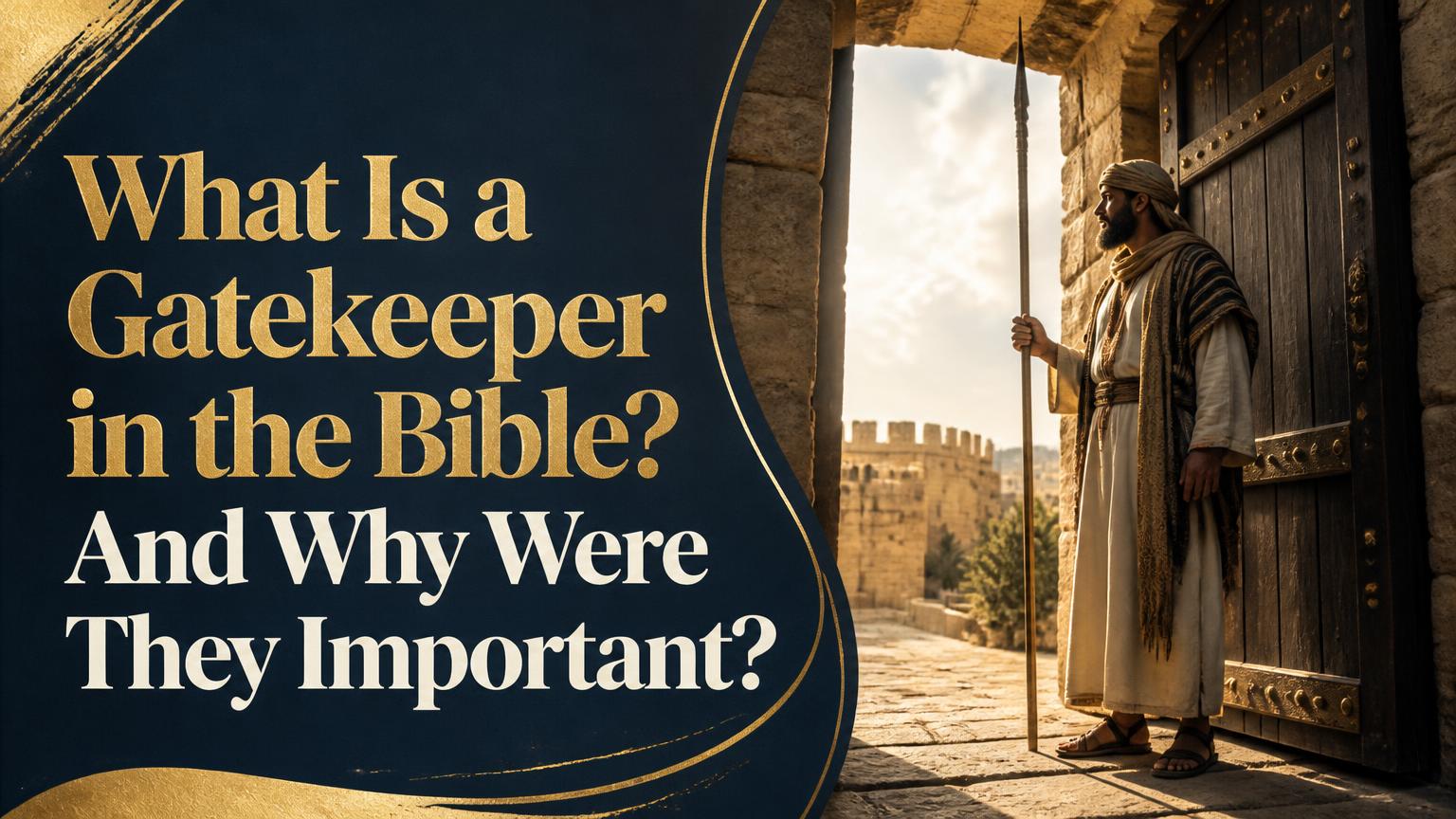
A gatekeeper in the Bible was a person assigned to guard an entrance, control access, and protect the orderly use of an important place. In Israel, gatekeepers were especially associated with the tabernacle and temple, where many were Levites entrusted with sacred responsibilities. They were not merely doormen. Their work involved protecting holiness, managing worship spaces, safeguarding offerings and treasures, and serving the community faithfully. The role also appears in broader settings, including royal courts and private homes.
What Is a Gatekeeper in the Bible?
The Literal Meaning and Basic Role
A biblical gatekeeper was an appointed guard or attendant responsible for a gate, doorway, or entrance. English Bibles may translate the underlying terms as “gatekeeper,” “doorkeeper,” “porter,” or “keeper of the threshold.” The precise duty varied according to the setting, but the central responsibility remained the same: determine who or what could enter, leave, or pass through.
In Israel’s worship system, gatekeepers were commonly Levites assigned to the tabernacle or temple. Their work supported the priests and protected the sacred area from disorder or unauthorized access. They did not offer sacrifices or perform every priestly duty, but their service was still an official ministry connected with worship.
The Bible also uses the idea in non-temple settings. A gatekeeper might serve at a city gate, royal residence, or private household. Therefore, the word does not always describe a temple official. Context determines whether the role involved religious service, civil security, household responsibility, or palace administration.
Where Gatekeepers Served
Gatekeepers served at the entrances to the tabernacle and later the temple. First Chronicles 9 describes Levites who guarded the entrances and rooms of the house of God. First Chronicles 26 records organized divisions of gatekeepers, including families associated with the Korahites and Merarites. These assignments show that gatekeeping was structured, inherited in some families, and treated as a significant Levitical responsibility.
Gatekeepers also served at Jerusalem’s city gates. After Jerusalem’s walls were rebuilt, Nehemiah appointed gatekeepers along with singers and Levites (Nehemiah 7:1). Their responsibility included controlling access to the city and helping protect the community. Nehemiah 13:19 gives a practical example: guards were placed at Jerusalem’s gates to prevent commercial activity on the Sabbath.
The role could also appear in royal or domestic settings. In John 18:16–17, a woman is described as the gatekeeper at the high priest’s courtyard. This was not the same as the organized Levitical temple office, but it demonstrates that “gatekeeper” could describe an attendant responsible for access to a household or compound.
Gatekeepers Were Not Priests or Mere Doormen
Gatekeepers were usually Levites, but they were not identical to priests. Priests descended from Aaron and performed duties such as offering sacrifices and handling certain holy objects. Other Levites assisted with transportation, music, maintenance, guarding, and practical administration. Gatekeepers belonged primarily to this wider Levitical ministry.
At the same time, reducing them to ordinary doormen misses the importance of their assignment. In the temple, the entrance was connected with holiness, worship, and community order. A gatekeeper’s service helped preserve the boundaries that God had established for Israel’s worship. The work was practical, but it had religious significance because it protected the place where the congregation encountered God through the covenant system.
What Did Biblical Gatekeepers Do?
Guard Sacred Entrances
The most obvious duty was guarding entrances. Gatekeepers watched the doors and thresholds of the tabernacle or temple and helped ensure that people entered appropriately. Second Chronicles 23:19 says that priests and Levites were stationed at the gates of the Lord’s house so that no one who was ceremonially unclean would enter.
This responsibility reflected Israel’s understanding that worship required reverence and order. The gatekeeper did not decide who was spiritually worthy in an ultimate sense, nor did the role give a person power to control access to God’s grace. Instead, the gatekeeper applied the practical regulations governing access to a particular sacred location.
Manage Access and Maintain Order
Gatekeepers helped regulate movement through the temple and city gates. Their work could include opening and closing entrances, assigning watch duties, supervising traffic, and preventing unauthorized or disruptive activity. First Chronicles 9:27 says that some Levites spent the night around the house of God because they were responsible for guarding it and opening the gates each morning.
This made the role continuous rather than occasional. A gatekeeper had to remain alert, follow instructions, and perform routine duties reliably. The importance of such service becomes clear when a failure in access control could expose a sacred building, city, or royal residence to disorder, theft, or defilement.
Protect Treasuries and Support Worship
Some gatekeepers had responsibilities beyond the doors themselves. First Chronicles 9:26 describes four chief gatekeepers who were Levites in charge of the chambers and treasuries of the house of God. First Chronicles 26 likewise connects gatekeeper families with the temple storehouses and dedicated gifts.
These duties required trustworthiness and careful administration. Temple worship depended on supplies, offerings, equipment, and dedicated resources being protected and handled properly. Gatekeepers therefore contributed to worship indirectly but substantially. They preserved the conditions in which priests, singers, and worshipers could carry out their responsibilities.
Why Were Gatekeepers Important in Israel?
They Protected Holiness
The temple was not treated as an ordinary public building. It represented God’s dwelling among his covenant people, so access and conduct within it were governed by religious regulations. Gatekeepers helped protect the distinction between what was holy and what was common.
That does not mean the gatekeepers themselves possessed magical authority or that a physical barrier could contain God. Their function was institutional: they upheld the order God had given Israel for approaching and serving in the sanctuary. Their presence reminded the community that worship was not to be treated casually or approached according to personal preference.
They Made Worship Dependable
Worship required more than priests and sacrifices. It also depended on people who opened the gates, protected the rooms, maintained supplies, organized access, and watched through the night. Gatekeepers provided the practical stability that allowed the larger worship system to function.
This pattern appears throughout Scripture. Visible acts of worship often depend on less visible service. A gatekeeper might not stand at the center of the ceremony, but neglecting the entrance, treasury, or security of the temple could disrupt the entire community’s worship. The role demonstrates that support work can have direct spiritual value even when it receives little public attention.
They Represented Trusted Service
Gatekeeping involved stewardship. A person entrusted with a gate or treasury had to be dependable because others relied on that person’s judgment and vigilance. First Chronicles presents gatekeepers as organized families with assigned responsibilities rather than as random workers recruited for temporary tasks.
Their example connects authority with accountability. A gatekeeper was given a defined responsibility, but that responsibility existed for the good of the worshiping community. Biblical gatekeeping was therefore not a license for personal control. It was service performed under God-ordained arrangements and for the protection of others.
Important Biblical Examples of Gatekeepers
The Levitical Gatekeepers in First Chronicles
First Chronicles 9 provides one of the clearest descriptions of temple gatekeepers after Israel’s return to Jerusalem. It names Shallum and identifies him with the Korahite gatekeepers. The passage explains that these families guarded the entrances to the tent of meeting and that their ancestors had previously been responsible for the entrance of the camp of the Lord.
First Chronicles 26 expands the organization, describing divisions assigned by lot and naming leaders among the gatekeeper families. The chapter also connects them with storehouses, chambers, and dedicated treasures. These passages establish that gatekeeping was a recognized ministry with leadership, schedules, family associations, and financial responsibilities.
Gatekeepers During Temple and City Restoration
The books of Ezra and Nehemiah show gatekeepers working during the restoration of Jerusalem and the temple after the exile. Lists in Ezra 2 and Nehemiah 7 include gatekeepers among the groups returning to the land. Their inclusion indicates that this was not an incidental occupation but part of the restored community’s religious and civic structure.
Nehemiah 7:1 records the appointment of gatekeepers after the city wall was completed. The gates represented more than architecture: they controlled the movement of people and goods and helped define the security of Jerusalem. Nehemiah 13:19 shows gatekeepers enforcing restrictions at the city gates, illustrating how their work could involve protecting communal practices as well as physical entrances.
Gatekeepers in the Psalms and New Testament
Psalm 84:10 says, “I would rather be a doorkeeper in the house of my God than dwell in the tents of wickedness.” The verse expresses humility and devotion. Serving at the threshold of God’s house, even in a lowly position, is portrayed as better than enjoying comfort or status among the wicked. The psalm uses the gatekeeper’s role to communicate the value of nearness to God and faithful service.
The New Testament uses related language in different contexts. In John 10:3, a doorkeeper opens the sheepfold for the shepherd, forming part of Jesus’ illustration about his relationship to his sheep. In Mark 13:34, Jesus compares a servant instructed to watch with a doorkeeper commanded to stay alert while the master is away. These passages use gatekeeping imagery symbolically, but they should not be treated as proof that the Old Testament temple office became a formal Christian church position.
How Should Christians Understand Gatekeepers Today?
A Model of Vigilance and Stewardship
The biblical gatekeeper offers a useful model of faithful responsibility. The role required alertness, consistency, and careful handling of what belonged to God and the community. Christian readers may apply these principles to responsibilities such as protecting vulnerable people, managing church resources honestly, welcoming visitors wisely, or preserving the integrity of a ministry.
This application should focus on the character of the service rather than claiming that every modern security, hospitality, or leadership role is a direct continuation of the Levitical office. The enduring principle is that ordinary duties can serve sacred purposes when they are performed faithfully, wisely, and for the good of others.
A Caution Against Controlling Access to God
The Bible’s gatekeepers protected particular places and followed specific covenant regulations. They were not spiritual gatekeepers who possessed the authority to decide which sincere people could receive God’s mercy. In the New Testament, access to God is centered on Jesus Christ, not on a human official controlling a religious doorway.
For that reason, Christian leaders should not use the gatekeeper image to justify manipulation, unnecessary exclusion, or personal control over people’s relationship with God. Biblical vigilance must be joined with truth, justice, hospitality, and humility. Guarding a community can be faithful; treating people as possessions or making oneself the owner of access is a distortion of the role.
Conclusion
A gatekeeper in the Bible was an appointed guardian of an entrance, especially one serving at the tabernacle, temple, or city gates. Levitical gatekeepers protected sacred spaces, regulated access, guarded treasures, supported worship, and maintained order. Their work was practical but spiritually meaningful because it preserved the conditions for faithful communal worship.
The role also provides a balanced lesson for readers today. Faithful service may involve vigilance and boundaries, but biblical gatekeeping is stewardship rather than domination. Gatekeepers were trusted to protect what had been entrusted to them, not to replace God or control his mercy. Their example honors dependable, humble service carried out for the holiness and well-being of the community.