
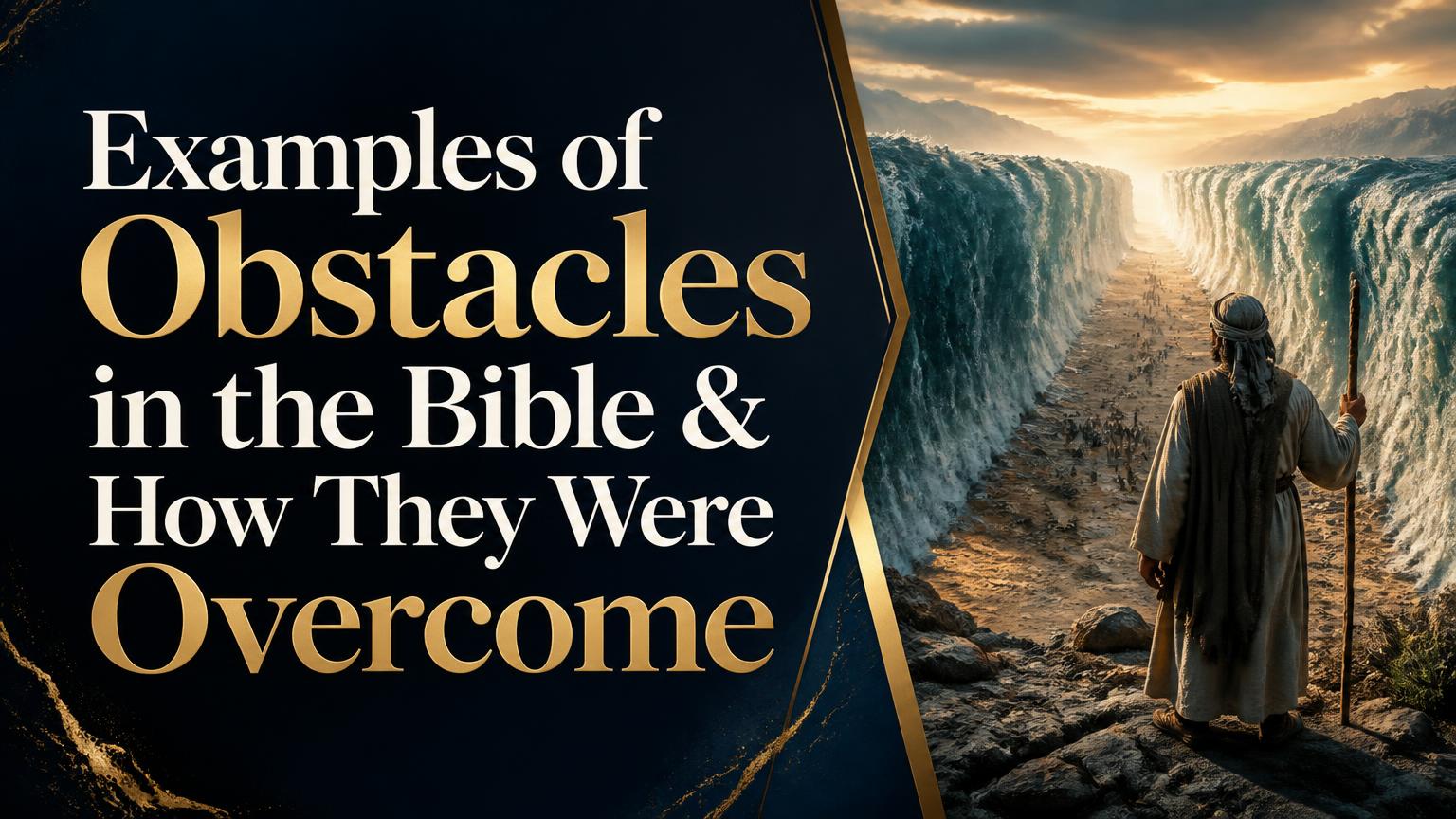
The Bible presents obstacles as real barriers that test faith, wisdom, courage, and endurance. Some obstacles come from personal weakness, while others arise through injustice, opposition, danger, loss, or circumstances beyond human control. Biblical people do not all overcome difficulties in the same way: God sometimes removes the barrier, provides a way through it, changes the person facing it, or sustains faith while the difficulty remains. These examples show how trust in God becomes practical through prayer, obedience, courage, perseverance, wise action, and community.
Examples of Obstacles in the Bible
The following accounts illustrate different kinds of obstacles and the responses that helped people remain faithful. They also show that biblical “victory” does not always mean immediate comfort or complete escape. In some cases, overcoming meant deliverance; in others, it meant continuing faithfully despite suffering.
Moses and Feelings of Inadequacy
Moses believed his limitations made him unfit to lead Israel. When God called him to confront Pharaoh, Moses questioned his authority, his credibility, and his ability to speak effectively (Exodus 3–4). His obstacle was not merely external political resistance; it also involved fear and a deep sense of inadequacy.
God answered Moses by revealing His presence and promising to help him speak. He also provided Aaron as a companion. Moses still had responsibilities, but he was not expected to fulfill them through confidence in his own ability alone. His story shows that feeling inadequate does not automatically disqualify someone from meaningful service. The relevant question is whether fear will control the person or whether trust and obedience will guide the next step.
Joseph and Betrayal, Slavery, and Imprisonment
Joseph faced a chain of obstacles rather than one isolated crisis. His brothers sold him into slavery, he was taken to Egypt, and he was later imprisoned after being falsely accused by Potiphar’s wife (Genesis 37–40). Each event appeared to move him farther from the future he had imagined.
Joseph overcame these setbacks gradually. He worked responsibly, interpreted dreams, and remained faithful despite long delays. Eventually, God raised him to authority in Egypt, where he helped preserve many lives during famine. Joseph did not excuse his brothers’ wrongdoing, but he recognized that God could bring good from their evil actions (Genesis 50:20). His account distinguishes forgiveness and providence from pretending that betrayal was harmless.
Israel at the Red Sea and Impossible Circumstances
When the Israelites left Egypt, they became trapped between the Red Sea and Pharaoh’s approaching army (Exodus 14). They had little ability to defend themselves and responded with fear and anger toward Moses. The obstacle seemed impossible because there was no visible human route to safety.
God provided deliverance by opening a path through the sea, but the Israelites still had to move forward. Moses instructed them to stand firm and trust God, and then to proceed when the way was opened. This event teaches that faith is not passive denial of danger. Biblical trust may involve waiting for God’s action, rejecting panic, and then taking the obedient step that becomes possible.
David and Goliath
Goliath represented a military and physical threat that intimidated the entire Israelite army (1 Samuel 17). David, a young shepherd with no experience as a conventional soldier, faced an opponent who appeared overwhelmingly stronger. His confidence was based neither on personal bravado nor on Israel’s military resources, but on God’s faithfulness.
David used the skills and equipment he understood—a sling and stones—rather than Saul’s armor, which he had not tested. He also interpreted the conflict as an affront to God rather than merely a contest of personal strength. The account does not teach that every problem can be solved by taking a reckless risk. It shows the value of courage grounded in faith, preparation, appropriate means, and a clear understanding of what is at stake.
Esther and the Threat Against Her People
Esther faced a dangerous obstacle when Haman plotted to destroy the Jewish people in the Persian Empire. As queen, she possessed unusual access to the king, but approaching him without being summoned could result in death (Esther 4–7). Her challenge required courage, timing, wisdom, and willingness to accept personal risk.
Esther prepared by calling for fasting among the Jewish people, then approached the king and used carefully planned invitations to expose Haman’s plot. Her response shows that faithfulness can require both prayerful dependence and strategic action. Mordecai’s warning that Esther might have come to her position “for such a time as this” did not remove the danger, but it clarified her responsibility within it.
Nehemiah and Persistent Opposition
Nehemiah encountered opposition while rebuilding Jerusalem’s walls. Sanballat, Tobiah, and others mocked the work, threatened violence, spread accusations, and attempted to lure Nehemiah away from the project (Nehemiah 4–6). The obstacle was persistent rather than temporary, which made discouragement and distraction especially dangerous.
Nehemiah responded with prayer, practical preparation, organized labor, and vigilance. The workers built while remaining prepared to defend themselves, and Nehemiah refused invitations designed to pull him away from his responsibility. His example holds spiritual trust and prudent action together. Prayer did not replace planning; planning did not replace dependence on God. The work advanced because the people maintained a shared purpose under pressure.
Daniel and Pressure to Compromise
Daniel and his friends were taken into exile and placed within a foreign imperial system that sought to educate and reshape them (Daniel 1). Daniel later faced a law designed to criminalize prayer to God (Daniel 6). His obstacle was pressure to compromise his convictions in order to gain safety, acceptance, or advancement.
Daniel responded with steady faithfulness rather than theatrical defiance. He continued praying as he had done before, even when the consequences were clear. God did not prevent Daniel from being thrown into the lions’ den, but He preserved him there. Daniel’s story shows that overcoming may mean refusing compromise, accepting legitimate consequences, and trusting God with the outcome rather than assuming obedience guarantees immediate protection.
Paul and Suffering That Did Not Immediately Disappear
The apostle Paul endured beatings, imprisonment, shipwrecks, rejection, danger, and other hardships in his ministry (2 Corinthians 11:23–28). He also described a persistent “thorn in the flesh” that he repeatedly asked God to remove (2 Corinthians 12:7–10). In this case, overcoming did not mean receiving the specific relief Paul requested.
God’s answer emphasized sufficient grace and strength made visible through weakness. Paul therefore learned to serve without treating suffering as proof that God had abandoned him. This account corrects the belief that strong faith always produces a painless life. Sometimes God delivers a person from an obstacle; sometimes He gives endurance, perspective, and sustaining grace within it.
What These Biblical Obstacles Teach About Overcoming
These accounts reveal several recurring principles. First, biblical courage usually follows a clearer understanding of God’s character and calling. Moses acted because God promised His presence. Esther accepted risk because she understood her responsibility. David confronted Goliath because he viewed the threat in relation to God rather than only in relation to human strength.
Second, faith commonly works through practical means. Nehemiah organized workers and defenses. Esther planned her approach. Joseph developed administrative wisdom. David used a weapon he knew how to handle. Trusting God does not require rejecting preparation, counsel, skill, or prudent action.
Third, overcoming often involves other people. Aaron helped Moses, the Israelites worked together under Nehemiah, Esther relied on communal fasting, and Paul served with fellow believers. The Bible does not present resilience as isolated self-sufficiency. Community can provide encouragement, accountability, protection, and practical assistance.
Finally, the outcome may differ from what a person initially hopes for. Joseph waited through years of injustice before his circumstances changed. Daniel entered the lions’ den before deliverance came. Paul continued with a persistent weakness. Scripture therefore presents endurance as a genuine form of victory when a person remains faithful, grows in wisdom, and refuses to let suffering define the limits of obedience.
How to Apply These Examples Today
A useful way to apply these passages is to identify the kind of obstacle being faced. Fear and inadequacy may call for prayer, wise support, and a willingness to begin with the responsibility immediately in front of you. Opposition may require both courage and boundaries. Temptation to compromise calls for clear convictions established before pressure becomes intense. Grief, chronic hardship, or unanswered prayer may require endurance rather than an expectation of quick removal.
These stories also encourage honest prayer. The biblical characters expressed fear, confusion, frustration, and weakness; faith did not require them to deny their circumstances. Yet their responses moved beyond despair toward obedience. A practical response may include seeking counsel, preparing carefully, asking others for support, refusing unjust retaliation, and taking the next faithful step even when the final outcome remains uncertain.
The examples should not be used to blame people who continue to suffer. Scripture does not promise that every obstacle will disappear because someone prays with sufficient intensity. Nor does every difficulty indicate personal failure. The biblical emphasis is that God remains present and can work through deliverance, wisdom, perseverance, or transformation.
Conclusion
Examples of obstacles in the Bible include fear, betrayal, injustice, physical danger, political oppression, temptation, opposition, and prolonged suffering. Moses, Joseph, David, Esther, Nehemiah, Daniel, Paul, and others overcame through different combinations of trust, obedience, courage, preparation, community, and endurance. Their stories do not guarantee an easy solution to every modern problem. They provide a more durable perspective: faithfulness is possible even when circumstances remain difficult, and God may overcome an obstacle by removing it, opening a path through it, or strengthening a person to endure it without surrendering what is right.