
Oppression in the Bible appears wherever people use power, wealth, law, violence, or social status to exploit and silence others. Scripture describes forced labor, economic exploitation, abuse of authority, sexual violence, unjust courts, and neglect of the vulnerable. These accounts do not present oppression as merely unfortunate suffering; they treat it as a moral offense that God sees, hears, judges, and commands His people to resist. The biblical response joins compassion for victims with accountability for oppressors and practical demands for justice.
Examples of Oppression in the Bible
The Bible’s examples of oppression involve both individual wrongdoing and broader social systems. Some oppressors act through direct violence, while others manipulate laws, debts, courts, labor arrangements, or religious authority. The recurring pattern is the misuse of power against people with fewer resources or less ability to defend themselves.
Israel’s Forced Labor in Egypt
The oppression of Israel in Egypt is one of Scripture’s clearest examples. Pharaoh enslaved the Israelites, appointed taskmasters over them, and burdened them with hard labor for state building projects. When their population continued to grow, he ordered the killing of Hebrew male infants, turning economic exploitation into an attempt at ethnic destruction (Exodus 1:8–22).
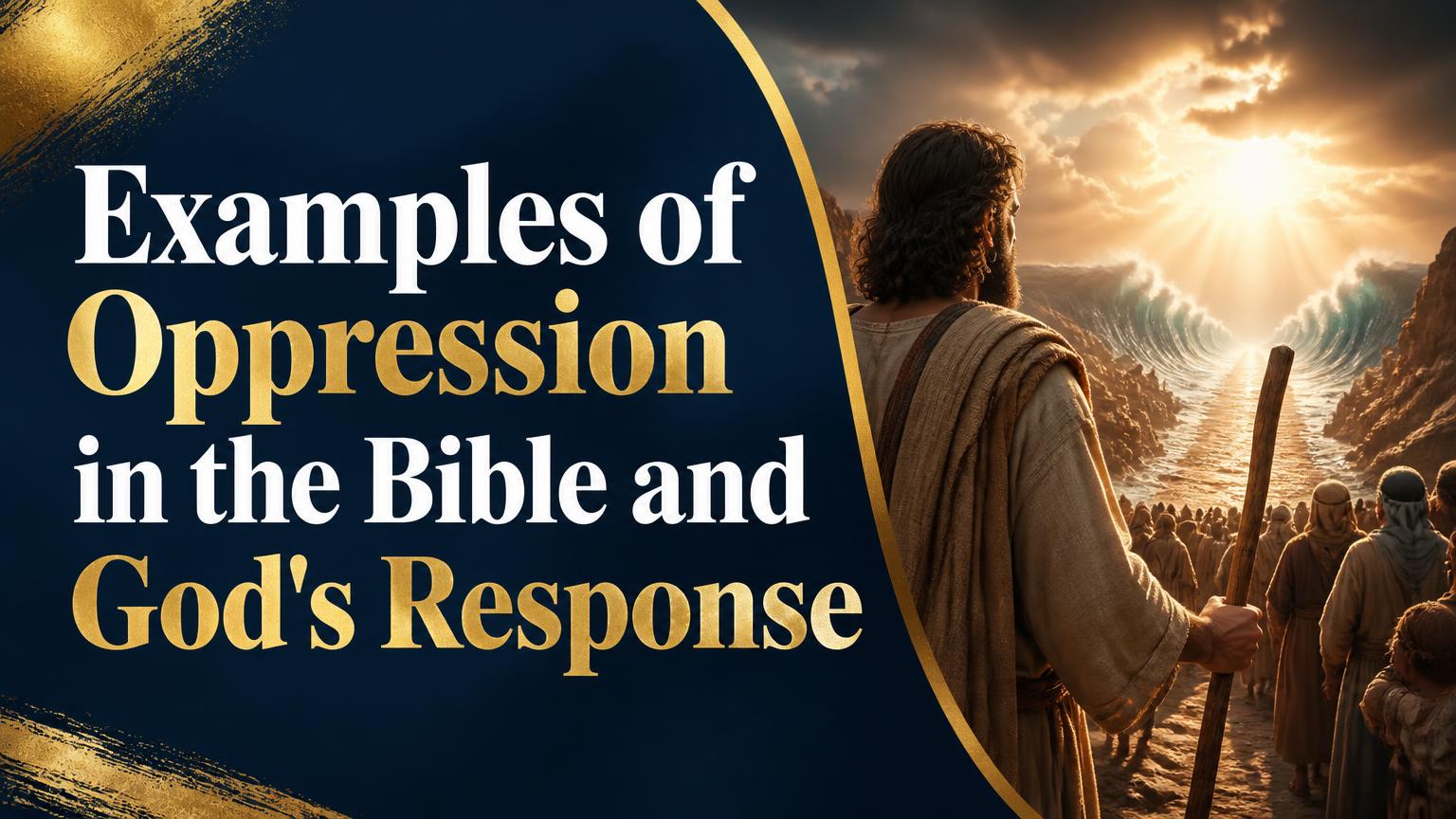
God’s response begins with attention: He heard Israel’s groaning, remembered His covenant, and saw their suffering (Exodus 2:23–25). He then confronted Pharaoh through Moses and brought Israel out of slavery. The Exodus establishes a central biblical principle: because Israel had experienced oppression, God repeatedly commanded them not to oppress foreigners, widows, or the poor (Exodus 22:21–27; Deuteronomy 24:17–18).
Economic Exploitation of the Poor
The prophets frequently condemned people who became wealthy by exploiting laborers and manipulating the marketplace. Amos denounced merchants who longed for religious festivals to end so they could resume dishonest selling, reduce measures, raise prices, and purchase the poor for silver (Amos 8:4–6). He also condemned those who trampled the needy and accepted bribes in court (Amos 5:11–12).
These passages show that oppression is not limited to physical violence. Fraud, withheld wages, predatory debt, dishonest business practices, and legal favoritism can also deprive people of dignity and basic security. Biblical law therefore required honest scales, fair treatment of workers, gleaning provisions for the poor, and protection for widows, orphans, and resident foreigners (Leviticus 19:9–10, 35–36; Deuteronomy 24:14–15).
Naboth and the Abuse of Royal Power
In 1 Kings 21, King Ahab wanted Naboth’s vineyard. Naboth refused to sell it because the land represented his family inheritance. Ahab’s wife, Jezebel, arranged false testimony against Naboth, secured his execution through a manipulated legal process, and then took possession of the vineyard.
This account illustrates how oppression can hide behind official procedures. Naboth was not merely robbed; the legal system was corrupted to make theft appear lawful. God sent Elijah to confront Ahab and announced judgment on the royal household. The story warns that rulers and powerful institutions are not morally exempt. Authority becomes oppressive when it treats people, property, and justice as tools for satisfying the desires of the powerful.
Tamar and the Failure to Protect Victims
Second Samuel 13 describes Tamar’s rape by her half-brother Amnon. Amnon used deception and royal privilege to isolate and assault her. Afterward, Tamar was left desolate, while the royal household failed to provide meaningful justice. The passage exposes both the original violence and the damage caused when leaders respond inadequately to abuse.
Tamar’s story is especially significant because it shows that oppression can occur within a family and community, not only under foreign rulers. Social position does not eliminate vulnerability, and a victim’s outward silence does not make the harm insignificant. The narrative condemns the misuse of power and the failure of those responsible to protect the vulnerable, even though it records David’s anger without showing a sufficient legal response.
Oppression in New Testament Communities
The New Testament continues the Bible’s concern with oppression. James condemns wealthy landowners who withheld wages from laborers, saying that the unpaid workers’ cries had reached the Lord (James 5:1–6). Jesus criticized religious leaders who placed heavy burdens on others while failing to help carry them (Matthew 23:4). He also rebuked practices that allowed religious tradition to undermine care for parents and those in need (Mark 7:9–13).
The early church faced a practical dispute when Greek-speaking widows were being neglected in the distribution of food (Acts 6:1–6). The apostles responded by establishing a more accountable form of service rather than dismissing the complaint. This demonstrates that Christian communities are expected to examine their practices, correct unequal treatment, and organize their common life so that vulnerable members receive fair care.
How God Responds to Oppression
Biblical passages about oppression present God’s response as personal, moral, communal, and sometimes judicial. God does not regard exploitation as a private matter between human beings. He hears the cry of victims, confronts those who abuse power, and gives His people responsibilities that reflect His character.
God Sees, Hears, and Remembers
When Israel suffers in Egypt, God sees their affliction, hears their cries, and knows their suffering (Exodus 3:7). Similar language appears throughout Scripture. The prayers of the oppressed are not treated as irrelevant or invisible; God is portrayed as attentive to those whom powerful people disregard.
“Remembering” in these passages does not mean that God had forgotten information. It means that He acts faithfully on the basis of His covenant and character. This gives victims a theological assurance that their worth does not depend on whether human institutions acknowledge their pain. It also means that hidden wrongdoing remains morally visible to God, even when courts, families, or communities fail to respond.
God Judges Those Who Exploit Power
God’s concern for victims includes judgment against oppressors. Pharaoh faces plagues and the collapse of his power. Ahab and Jezebel are confronted over Naboth’s murder. The prophets announce judgment on rulers, merchants, landowners, and judges who enrich themselves through injustice.
Biblical judgment is not simply an emotional demand for revenge. It recognizes that oppression damages people and corrupts communities, so wrongdoing must be named and answered. Scripture therefore warns against partiality in court, dishonest testimony, bribery, and the assumption that wealth or authority can shield a person from accountability (Deuteronomy 16:18–20; Isaiah 10:1–3).
God Commands His People to Practice Justice
God’s response often works through the conduct He requires from His people. Israel was commanded to defend the rights of the poor, leave harvest portions for those without land, pay workers promptly, and judge fairly. The prophets summarized this calling as seeking justice, correcting oppression, defending the fatherless, and pleading for the widow (Isaiah 1:17).
Jesus expressed the same moral priority when He condemned neglect of “the weightier matters” of the law—justice, mercy, and faithfulness (Matthew 23:23). Christian concern for oppression therefore cannot be reduced to private sympathy. It includes truthful testimony, responsible leadership, material generosity, protection of vulnerable people, and correction of practices that repeatedly produce unequal harm.
God Provides Liberation, Refuge, and Restoration
The Exodus shows God acting as a liberator, while the Psalms describe Him as a refuge for the oppressed (Psalm 9:9–10; 12:5). Jesus announced good news to the poor, liberty to captives, and release for the oppressed in His reading of Isaiah (Luke 4:16–21). These texts connect salvation with restoration, dignity, and release from destructive domination.
Yet Scripture does not teach that every oppressed person is immediately rescued in this life. Job suffers without receiving a quick explanation, many prophets face persecution, and Jesus Himself is unjustly executed. Biblical hope includes present action against injustice, but it also rests on God’s final judgment and the promised renewal of all things. That future hope is not permission for passivity; it strengthens endurance while believers pursue justice now.
Oppression, Suffering, and Biblical Justice
The Bible distinguishes oppression from suffering in general. Suffering can arise through illness, natural events, grief, personal failure, or persecution. Oppression specifically involves wrongful treatment in which one person or group uses power to burden, exploit, exclude, silence, or injure another. The distinction matters because oppression requires more than comfort; it requires truth, protection, accountability, and often structural change.
Biblical justice is also broader than punishment. It includes restoring what was taken, defending those at risk, correcting dishonest systems, and rebuilding relationships on truthful and righteous terms. Repentance by an oppressor must therefore produce changed conduct, not merely regret. Likewise, forgiveness does not require victims to deny harm, abandon wise boundaries, or remove legitimate safeguards. Scripture holds mercy and justice together rather than using one to cancel the other.
What These Biblical Examples Teach Today
These accounts warn against reducing oppression to obviously cruel individuals. Pharaoh is oppressive, but so are the merchants in Amos, the officials who enable Naboth’s death, and the community leaders who neglect vulnerable widows. Oppression can operate through policies, economic arrangements, family hierarchies, religious systems, and institutional silence. Examining outcomes and power relationships helps reveal harm that respectable language may conceal.
The passages also give practical direction. Communities should listen to credible complaints, protect people who face retaliation, investigate allegations honestly, avoid favoritism, pay and treat workers fairly, and ensure that charitable systems distribute help equitably. Leaders bear particular responsibility because authority magnifies both their ability to serve and their ability to harm. Biblical faithfulness requires more than condemning oppression in theory; it requires creating conditions in which vulnerable people can speak, receive protection, and pursue justice.
Conclusion
The examples of oppression in the Bible range from slavery in Egypt and economic exploitation to sexual violence, corrupted courts, abusive leadership, and neglect within religious communities. Across these accounts, God sees what powerful people try to hide, hears the cries of the afflicted, judges exploitation, and commands His people to defend the vulnerable. Scripture does not promise that every injustice will be removed immediately, but it rejects indifference. Biblical faith responds through truthful recognition of harm, practical protection, responsible accountability, compassionate service, and hope in God’s final restoration.