
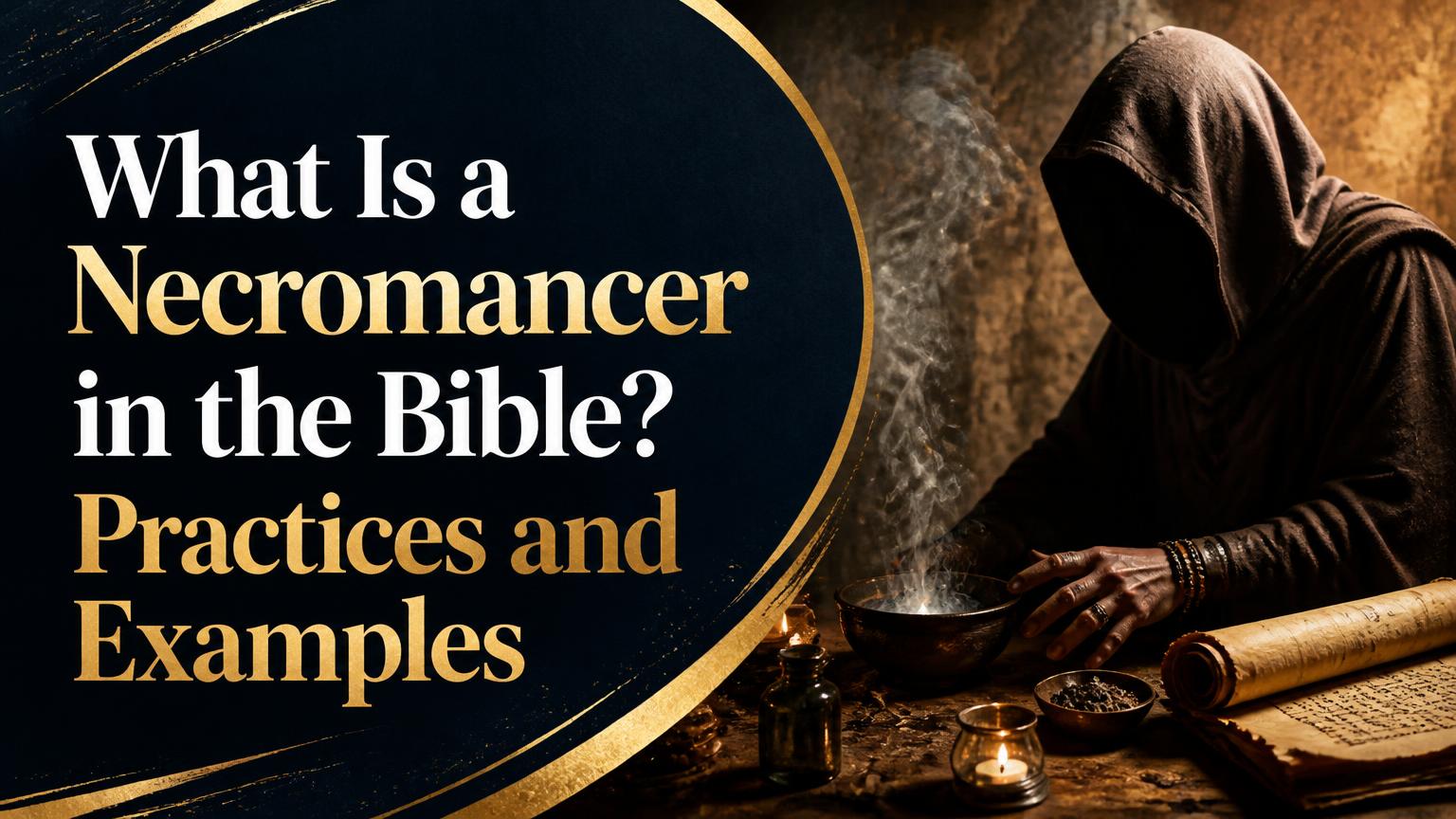
In the Bible, a necromancer is a person who attempts to communicate with the dead or obtain hidden knowledge through spirits, mediums, or related occult practices. English translations also use terms such as medium, spiritist, or “one who consults the dead,” so the exact wording varies by passage. Scripture consistently forbids necromancy because it seeks spiritual guidance apart from God. The most detailed biblical example is Saul’s consultation with the medium of Endor in 1 Samuel 28.
What Is a Necromancer in the Bible?
The Biblical Meaning of Necromancer
A necromancer is someone who attempts to contact the dead for information, guidance, prediction, power, or spiritual assistance. The word is related to the Greek terms for “dead” and “divination,” but the Bible more often describes the practice with phrases such as “medium,” “spiritist,” or “one who inquires of the dead.”
Deuteronomy 18:10–12 lists several forbidden practices, including divination, sorcery, interpreting omens, casting spells, consulting a medium or spiritist, and seeking the dead. The passage groups these activities together because they represent attempts to gain supernatural knowledge or control outside faithful dependence on God.
The biblical category is therefore broader than the fictional image of a wizard who raises corpses. In Scripture, necromancy primarily concerns attempted communication with the dead or with spiritual beings associated with the dead.
Practices Associated With Necromancy
Biblical necromancy could involve consulting a person who claimed to communicate with the dead, seeking messages from deceased relatives, requesting predictions about the future, or relying on a spirit for hidden knowledge. The medium at Endor is described as a woman who had a “familiar spirit” or functioned as a medium, depending on the translation (1 Samuel 28:7).
The phrase “familiar spirit” does not necessarily mean the spirit was genuinely the deceased person the medium claimed to represent. It refers to a spirit associated with a practitioner or consulted through that practitioner. This distinction matters because the Bible condemns the practice without teaching that human beings possess a reliable or legitimate technique for controlling the dead.
Necromancy can therefore include both the practitioner and the act itself. A necromancer is the person who performs or facilitates the practice; necromancy is the attempted contact with the dead or the use of spiritual means to obtain forbidden knowledge.
How Necromancy Differs From Resurrection and Prophecy
Necromancy should not be confused with resurrection. In biblical resurrection accounts, God is the one who restores life. Elijah, Elisha, Jesus, and the apostles do not use occult techniques to control the dead; they act through prayer, prophetic authority, or the power of God. The source and purpose are entirely different.
Necromancy also differs from genuine prophecy. A prophet receives and communicates a message from God, while a necromancer seeks information through forbidden spiritual channels. The issue is not merely whether supernatural information is involved. The decisive question is whether the revelation comes by God’s appointment and authority or through a practice God has prohibited.
Similarly, the appearance of Moses and Elijah at Jesus’ transfiguration was not an act of necromancy (Matthew 17:1–8). The disciples did not summon them, and no one attempted to obtain secret guidance from the dead. The event was initiated by God and centered on the identity and mission of Jesus.
Biblical Passages About Necromancy
The Law of Moses Forbids Consulting the Dead
The clearest legal prohibitions appear in Leviticus and Deuteronomy. Leviticus 19:31 commands Israel not to turn to mediums or spiritists. Leviticus 20:6 warns that God will oppose anyone who turns to such practitioners, and verse 27 describes severe judgment under Israel’s covenant law for a person who functioned as a medium or spiritist.
Deuteronomy 18:9–14 gives the broader framework. Israel was not to imitate the nations by practicing divination, sorcery, interpreting omens, witchcraft, spell-casting, or consulting the dead. These practices were associated with the religious customs of the nations occupying Canaan, but Israel was to seek direction from the Lord rather than from occult specialists.
The prohibition was not an arbitrary ban on curiosity. It established a central covenant principle: God’s people were to receive moral and spiritual direction from God’s revealed word, appointed prophets, and faithful worship—not from attempts to manipulate or access the unseen world independently.
Saul and the Medium of Endor
The best-known biblical example occurs when King Saul seeks out a medium at Endor (1 Samuel 28). Saul had previously removed mediums and spiritists from the land, but when the Philistine army threatened Israel and God did not answer him through dreams, priests, or prophets, he disguised himself and consulted a medium.
Saul asked the woman to bring up Samuel, the prophet who had died. The passage then describes Samuel speaking to Saul and announcing that the Lord would give Israel’s army into the hands of the Philistines. The narrative presents the encounter as a devastating act of disobedience rather than as a legitimate method of receiving guidance.
Interpreters differ over how the appearance should be understood. Some conclude that God permitted the real Samuel to appear for judgment. Others believe the medium encountered a deceptive spirit, while some emphasize that the text reports the event without explaining its supernatural mechanics in detail. The central conclusion is not disputed within the biblical narrative: Saul sinned by consulting a medium. First Chronicles 10:13–14 explicitly connects Saul’s death with his unfaithfulness, including his consultation of a medium, and says that he did not seek the Lord rightly.
Prophetic Warnings Against Spiritists
Isaiah 8:19 presents the issue through a pointed contrast: when people seek guidance, should they not inquire of their God? Why consult the dead on behalf of the living? The question exposes the irrationality of seeking spiritual direction from the dead while neglecting the living God.
The prophet’s concern is both theological and practical. Necromancy redirects trust away from God and toward a human intermediary or an uncertain spiritual source. It also encourages fear, secrecy, and dependence on hidden knowledge rather than obedience to what God has already revealed.
The biblical writers therefore treat necromancy as more than a questionable religious preference. It represents misplaced worship and misplaced trust. Even when a person claims to seek comfort or certainty, the practice remains inconsistent with the covenant relationship Scripture calls God’s people to maintain.
Why Does the Bible Forbid Necromancy?
It Seeks Guidance Outside God’s Revelation
The Bible forbids necromancy because it attempts to answer questions about life, death, the future, or spiritual reality through a source God has not authorized. Deuteronomy 18 places consulting the dead alongside other forms of divination because each practice seeks supernatural knowledge through prohibited means.
This does not mean that every question about the unseen world is wrong. Scripture itself teaches about angels, judgment, resurrection, and life after death. The distinction is between receiving truth through God’s revelation and trying to obtain hidden knowledge through personal techniques, rituals, or spiritual intermediaries.
It Replaces Trust With Control
Necromancy often promises access: access to a deceased person, access to secret information, or access to influence over future events. That promise can turn grief, fear, and uncertainty into a desire for control. The biblical prohibition confronts that desire by calling people to trust God rather than attempt to manage spiritual realities themselves.
In Saul’s case, the pressure of war and God’s silence drove him toward an unauthorized source. His action shows how desperation can weaken moral judgment. Saul did not simply investigate an unusual practice; he abandoned the proper means of seeking God when those means did not give him the answer he wanted.
It Confuses Spiritual Experience With Divine Approval
A supernatural experience, vivid message, or apparently accurate prediction does not automatically prove that a practice is approved by God. Biblical discernment evaluates the source, method, message, and allegiance involved. The Bible repeatedly warns that spiritual deception is possible, so unusual experiences cannot serve as their own validation.
This principle also prevents a common mistake: assuming that something must be acceptable because it appears to produce information. In Scripture, the method matters. God’s people are not instructed to pursue every available spiritual experience, but to reject forbidden practices and remain faithful to God’s revealed instruction.
Common Misunderstandings About Necromancy
Is Necromancy the Same as Remembering the Dead?
No. Remembering deceased family members, grieving their loss, preserving their stories, visiting a grave, or studying the history of earlier generations is not necromancy. These activities involve memory and mourning, not attempts to obtain supernatural communication or guidance.
The biblical concern begins when a person seeks contact with the dead or relies on a medium, ritual, or spirit for information and direction. A Christian may honor the life of someone who has died without trying to summon that person or ask them to provide spiritual assistance.
Does the Bible Teach That the Dead Can Be Contacted?
The Bible does not authorize people to contact the dead, and it gives no reliable human procedure for doing so. The account of Saul and the medium of Endor is a warning, not an instruction. Even if one interprets Samuel’s appearance as a genuine act permitted by God, the event does not validate the medium’s practice; Saul is condemned for seeking her help.
Biblical Christianity directs prayer and worship toward God. It does not teach believers to pray to deceased relatives, summon departed saints through occult methods, or seek private messages from the dead. The hope held out by Scripture is not communication through necromancy but resurrection, judgment, and fellowship with God through his redemptive work.
What Does the Bible Say About Modern Necromancy?
Modern practices may use different names, including séances, channeling, spirit communication, mediumship, or attempts to receive messages from deceased people. Their cultural presentation can range from religious ritual to entertainment or therapeutic activity. The biblical evaluation depends on what the practice claims to do: if it seeks contact with the dead or spiritual guidance through an unauthorized intermediary, it falls within the category Scripture forbids.
The Bible also gives reason to approach such practices carefully even when they appear harmless. People may participate because of grief, curiosity, or a desire for reassurance, but those motivations do not establish that the practice is spiritually safe or truthful. A biblical response combines compassion for the grieving with a clear refusal to treat occult communication as a legitimate source of guidance.
For Christians, the alternative is not emotional denial or indifference toward death. Scripture permits lament and promises comfort, while directing believers toward God’s presence, prayer, the Christian community, and the hope of resurrection. Those sources address grief without requiring communication with the dead.
Conclusion
A necromancer in the Bible is a person who attempts to communicate with the dead or obtain supernatural knowledge through a medium, spiritist, or related occult practice. Although translations use different terms, the biblical judgment is consistent: God’s people are forbidden to seek guidance from the dead. Saul’s consultation with the medium of Endor illustrates the danger, especially when fear and desperation replace trust in God. Necromancy is therefore distinct from mourning, remembering the dead, resurrection, prophecy, and God-initiated visions. Scripture directs people away from occult access to the dead and toward faithful dependence on God’s revelation and the hope of resurrection.