
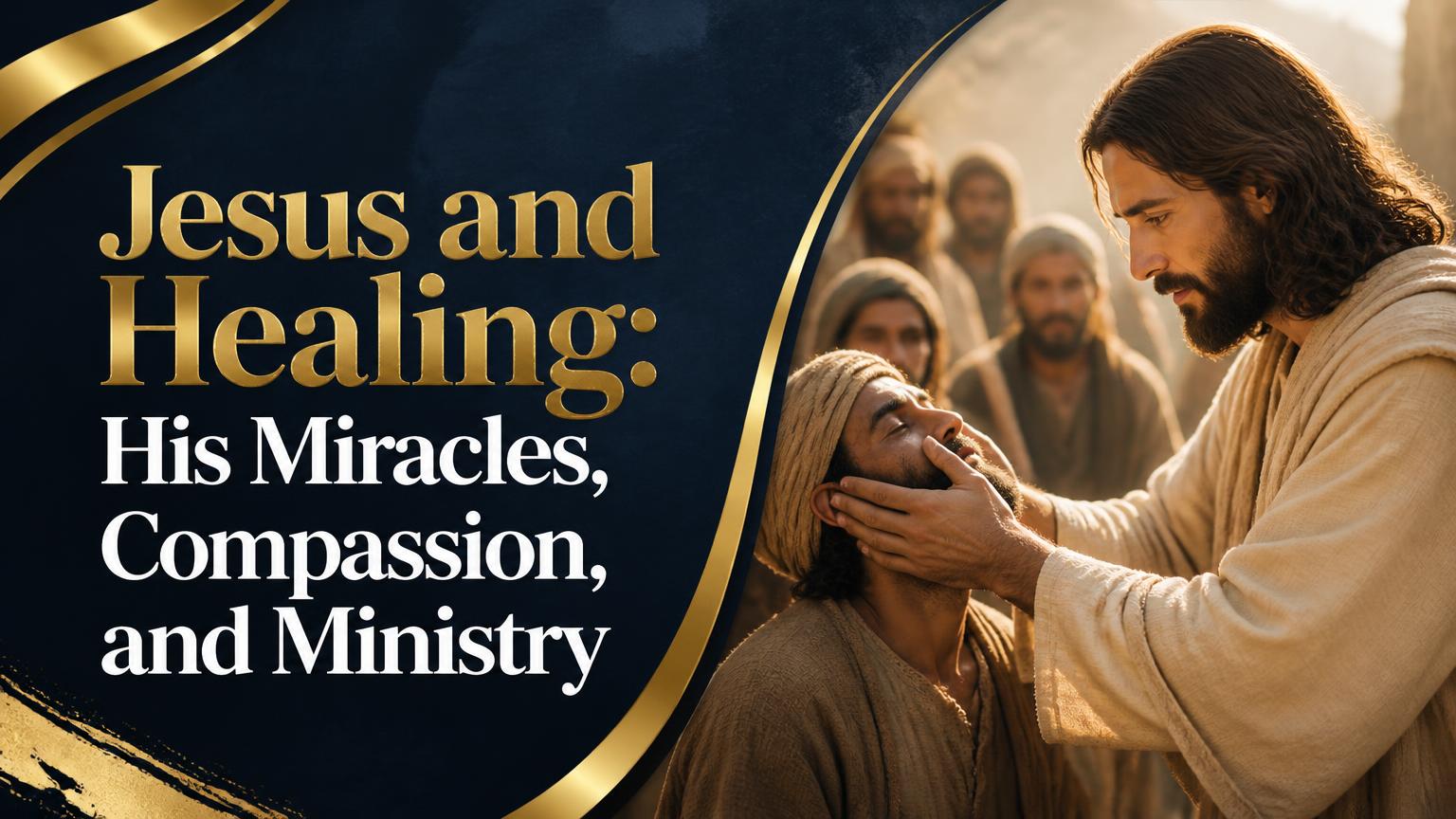
Jesus’ healing ministry is one of the most prominent features of the Gospel accounts. He restored sight, mobility, health, and life, but His miracles were more than demonstrations of supernatural power. They expressed compassion, revealed His authority, welcomed excluded people, and signaled that God’s kingdom was breaking into human suffering. The accounts also require careful interpretation: Jesus did not treat illness as proof of personal sin, faith as a technique for controlling God, or healing as the whole meaning of salvation. His miracles offered real relief while pointing toward the complete restoration God promises.
Jesus and Healing
Jesus healed people as an expression of mercy and as a sign of His identity and mission. The Gospels describe Him cleansing lepers, raising the dead, restoring damaged bodies, freeing people from affliction, and healing illnesses that had resisted ordinary help. These actions showed that the kingdom of God was confronting the effects of sin, suffering, and death.
His healings were neither isolated acts of kindness nor magical displays performed for entertainment. They formed part of His announcement that God was actively restoring His creation. In Luke 4:18–19, Jesus described His mission using language about good news for the poor, freedom for captives, recovery of sight, and release for the oppressed. His healing ministry made that message visible.
Healing Revealed the Arrival of God’s Kingdom
Jesus’ miracles functioned as signs of God’s reign. When John the Baptist’s disciples asked whether Jesus was the promised one, Jesus pointed to what they were seeing: the blind received sight, the lame walked, lepers were cleansed, the deaf heard, the dead were raised, and good news was preached to the poor (Matthew 11:2–6).
These healings did not mean that all suffering had already disappeared. People still died, became sick, and awaited the final resurrection. Instead, Jesus’ miracles were signs of the future entering the present. They gave a preview of the restoration associated with God’s ultimate victory, while also directing people toward faith, repentance, and allegiance to Christ.
The healing of the paralytic in Mark 2 illustrates this connection. Jesus first declared the man’s sins forgiven and then healed his body, demonstrating His authority to forgive sins. The physical miracle confirmed an unseen spiritual authority. Healing, therefore, was closely related to the larger work of reconciliation between God and humanity.
Jesus Healed With Compassion and Personal Attention
The Gospel writers repeatedly connect Jesus’ healing with compassion. He touched a man with leprosy before cleansing him, even though lepers were socially and religiously isolated (Mark 1:40–45). He responded to the cries of blind people, stopped for those others tried to silence, and showed concern for families overwhelmed by illness and death.
Jesus also treated people as individuals rather than as examples of a condition. The woman who had suffered bleeding for twelve years reached for His garment in a crowd, but Jesus stopped to speak with her openly (Mark 5:25–34). He did not allow her healing to remain an anonymous transaction. He called her “daughter,” recognizing her dignity and restoring her publicly to community life.
This personal attention matters because biblical healing includes more than bodily improvement. Jesus restored people to worship, family, work, community, and hope. His actions challenged the belief that the sick or disabled should be treated as burdens or defined only by their condition.
Jesus Used Different Forms of Healing
Jesus healed through spoken commands, physical touch, prayer, and direct personal interaction. He healed the centurion’s servant without being physically present (Matthew 8:5–13), restored sight to Bartimaeus after hearing his cry (Mark 10:46–52), and healed a man born blind through an unusual act involving mud and washing (John 9:1–12). The variety of these accounts shows that no single ritual or technique controlled His power.
Some healings happened in private, while others occurred before crowds. Jesus healed immediate physical conditions such as fever, paralysis, blindness, deafness, skin disease, and severe bleeding. He also raised Jairus’s daughter, the widow’s son at Nain, and Lazarus. These resurrections were extraordinary signs, but they were not the final resurrection promised to all who belong to Christ; those individuals eventually died again.
The Gospels also distinguish healing from deliverance. Some people suffered physical illness, while others were described as oppressed by unclean spirits. Jesus addressed both kinds of need, but the accounts do not reduce every illness to demonic activity or treat every spiritual struggle as a medical condition.
Faith Was a Response, Not a Manipulative Formula
Jesus sometimes said, “Your faith has made you well,” as He did to the woman with the bleeding disorder and to the blind man near Jericho. Faith in these accounts meant trusting Jesus, turning to Him, and receiving His mercy. It was not a method by which people acquired power over God.
The Gospels also show that Jesus healed when the person receiving healing did not clearly express personal faith. He healed the invalid at Bethesda in John 5, and He restored the ear of the high priest’s servant after Peter cut it off (Luke 22:50–51). In several cases, relatives or friends brought someone to Jesus. These examples prevent the conclusion that a person’s level of faith mechanically determines whether healing occurs.
Faith can involve confident expectation, but it also includes dependence when the desired outcome is uncertain. Christian faith trusts Jesus’ character and authority rather than treating positive words, emotional intensity, or a particular prayer method as guarantees.
Healing Pointed Beyond Temporary Relief
Even the people Jesus healed remained mortal. Lazarus was raised but later died; the same is true of the other people restored to life in the Gospels. This does not diminish the miracles. It clarifies their purpose. They were genuine acts of mercy, but they also pointed beyond temporary physical recovery to resurrection and the renewal of creation.
The New Testament’s ultimate hope is not merely longer earthly life or freedom from every present discomfort. It is resurrection, the defeat of death, and life with God in a renewed creation. Revelation 21:4 describes a future in which death, mourning, crying, and pain are no longer present. Jesus’ earthly healings anticipate that promise without pretending that the promise has reached its complete fulfillment already.
Important Biblical Qualifications About Healing
Biblical accounts of Jesus’ miracles should be read with both confidence and humility. They affirm that God cares about bodily suffering and that Jesus possesses authority over disease and death. They do not support simplistic claims that every illness has one spiritual cause, that every believer will be healed in the present life, or that an unsuccessful healing prayer proves a person’s spiritual failure.
Sickness Is Not Always Evidence of Personal Sin
Some people in Jesus’ time assumed that illness or disability directly revealed a person’s sin or the sin of the person’s parents. In John 9:1–3, Jesus rejected that assumption when His disciples asked why a man had been born blind. He did not explain the man’s condition as a punishment for a specific personal wrongdoing.
That teaching does not deny that human sin has brought disorder and death into the world. It rejects the attempt to identify a particular sufferer’s condition as a specific judgment without divine revelation. The book of Job makes a similar point: suffering cannot always be explained by a person’s moral failure. Compassion, prayer, and wise care are more faithful responses than accusation.
Unanswered Healing Does Not Prove Weak Faith
The New Testament includes faithful people who continued to suffer. Paul described a persistent “thorn in the flesh” and recorded that he prayed repeatedly for its removal, yet received sustaining grace rather than the requested relief (2 Corinthians 12:7–10). Paul also advised Timothy about recurring stomach problems (1 Timothy 5:23), showing that early Christian life included practical care for physical conditions.
These passages do not establish that God never heals today, nor do they eliminate the place of urgent prayer. They do show that Christians should not promise healing with certainty or blame sufferers when healing does not occur. God’s grace may be experienced through recovery, medical treatment, endurance, community support, or hope that reaches beyond death.
Miracles Were Signs, Not Spectacles
Jesus sometimes instructed healed people not to publicize the miracle, and He refused demands to perform signs merely to satisfy curiosity or prove Himself on someone else’s terms. His miracles served His mission; they were not religious entertainment.
This distinction remains relevant. Christian healing ministry should protect vulnerable people from manipulation, financial exploitation, shame, and pressure to abandon appropriate medical care. Prayer and medicine need not be treated as rivals. Christians may ask God for miraculous intervention while also receiving diagnosis, treatment, rehabilitation, counseling, and practical support.
Responding to Healing and Suffering Today
Jesus’ example calls Christians to combine prayer with concrete compassion. The church is not meant to celebrate healing while ignoring people whose conditions remain chronic, progressive, or terminal. Ministry shaped by Jesus listens carefully, respects consent and dignity, supports families, visits the sick, and includes people who may never experience physical recovery.
Prayer for healing can be specific and hopeful without becoming presumptuous. Christians may ask God to restore health, wisdom, strength, and peace. They can also pray for physicians, caregivers, accessible treatment, emotional support, and courage. James 5:14–16 presents prayer for the sick within the life of the church, while the broader New Testament emphasizes bearing one another’s burdens and caring for those in need.
The Christian response to suffering therefore holds two truths together: God is compassionate and powerful, yet His final restoration has not arrived in full. That tension is not permission for indifference. It is a reason to serve faithfully, reject blame, and preserve hope even when circumstances remain painful.
Conclusion
Jesus and healing belong together because His miracles revealed both His compassion and His authority. He healed real bodies, restored excluded people, forgave sins, confronted suffering, and demonstrated that God’s kingdom was breaking into the present. Yet the Gospel accounts do not turn healing into a formula or promise that every faithful person will avoid illness and death. They point instead to Jesus as the source of mercy and to the resurrection as the final answer to human brokenness. Christians can therefore pray boldly for healing, care wisely for the sick, reject shame and simplistic explanations, and trust God’s grace whether healing comes now or in the restoration still to come.