
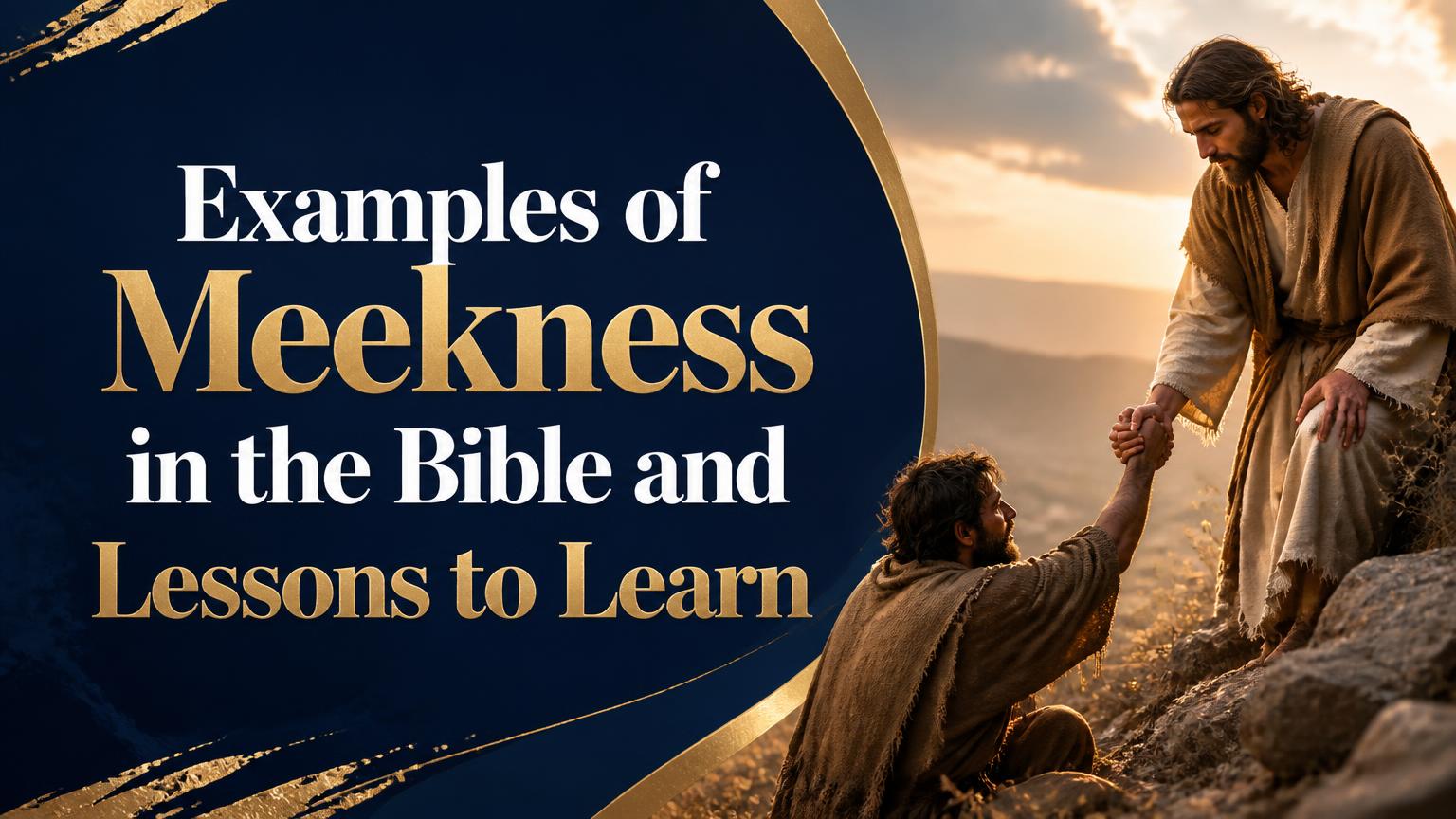
Meekness in the Bible is not weakness, timidity, or the refusal to act. It is strength governed by humility, patience, and submission to God. A meek person may possess authority, courage, or strong convictions while choosing not to use them selfishly or vindictively. Scripture presents meekness through people who respond to mistreatment with restraint, correct others gently, forgive enemies, and trust God to judge rightly. The clearest example is Jesus Christ, who described Himself as “meek and lowly in heart” (Matthew 11:29). Other biblical examples show how this character trait works in leadership, conflict, suffering, and everyday relationships.
Examples of Meekness in the Bible
The Bible illustrates meekness through actions rather than treating it as a merely passive personality trait. These examples show people controlling legitimate strength, responding wisely under pressure, and placing obedience to God above personal revenge or recognition.
Moses Accepted Correction and Carried Authority Humbly
Moses is described as “very meek, above all the men which were upon the face of the earth” (Numbers 12:3, KJV). This description is striking because Moses was also Israel’s leader. He confronted Pharaoh, delivered God’s commands, judged disputes, and guided a difficult nation through the wilderness. Meekness therefore did not prevent him from exercising authority.
Moses’ meekness appeared in his dependence on God rather than self-importance. When Miriam and Aaron challenged him, Moses did not use his position to retaliate. God defended Moses and dealt with the rebellion Himself. His example shows that meekness can mean refusing to promote oneself or answer every personal attack, trusting God to vindicate what is true.
Jesus Combined Gentleness With Moral Courage
Jesus gave the clearest definition and example of biblical meekness when He said, “Learn of me; for I am meek and lowly in heart” (Matthew 11:29, KJV). His meekness included compassion toward the weak, patience with confused disciples, and mercy toward repentant sinners. He did not crush people who came to Him seeking forgiveness.
Yet Jesus was not passive or morally indifferent. He confronted hypocrisy, corrected His disciples, defended the vulnerable, and submitted Himself to the cross without retaliating against those who abused Him. First Peter 2:23 explains that when He suffered, He did not threaten revenge but entrusted Himself to God. Jesus demonstrates that meekness is controlled strength: He had power, but He used it in obedience to the Father and for the good of others.
Abigail Prevented Revenge Through Wise Humility
Abigail provides a practical example of meekness during a dangerous conflict between David and her husband, Nabal. After Nabal insulted David, David prepared to attack the entire household. Abigail acted quickly, brought provisions, acknowledged the seriousness of the offense, and appealed to David’s conscience (1 Samuel 25:14–35).
Her response was neither cowardly nor confrontational. She exercised courage while using respectful speech to restrain violence. Abigail understood that David’s anger could lead him into sin, and she addressed the problem without inflaming his pride. Her example shows that meekness can involve speaking firmly and taking decisive action when peace and justice are at risk.
David Refused to Take Personal Revenge
David showed meekness when he refused to kill King Saul, even though Saul was pursuing him. In the cave at En-gedi, David had an opportunity to strike Saul but chose not to take vengeance into his own hands (1 Samuel 24:4–7). Later, he again refused to kill Saul while he slept (1 Samuel 26:7–11).
David did not pretend that Saul’s persecution was harmless. He recognized the injustice, confronted Saul afterward, and continued to protect himself. However, he distinguished self-protection from personal revenge. David chose to leave judgment with God rather than seize power through violence. His conduct shows that meekness does not require tolerating evil without boundaries; it requires refusing to let anger become an excuse for sinful retaliation.
Joseph Forgave Those Who Had Harmed Him
Joseph’s brothers sold him into slavery, separating him from his family and placing him in circumstances he did not deserve. Years later, Joseph gained authority in Egypt and had power over the brothers who had betrayed him. Instead of using that power to punish them, he eventually revealed his identity and provided for their survival (Genesis 45:4–15; 50:15–21).
Joseph did not call the wrongdoing good. He acknowledged the harm, but he interpreted his suffering within God’s larger providence: “Ye thought evil against me; but God meant it unto good” (Genesis 50:20, KJV). His forgiveness reflects meekness because he possessed the ability to retaliate but chose reconciliation and mercy. He surrendered final judgment to God while still dealing honestly with what had happened.
Stephen Responded to Violence With Prayer
Stephen displayed extraordinary meekness when opponents accused him and arranged his execution. As he was being stoned, he prayed, “Lord Jesus, receive my spirit,” and then asked God not to hold the sin against those attacking him (Acts 7:59–60).
Stephen’s prayer resembles Jesus’ request for forgiveness for His executioners (Luke 23:34). It does not suggest that the violence was acceptable. Instead, it reveals a refusal to answer hatred with hatred. Stephen remained truthful and courageous, but his courage was not fueled by revenge. His example shows how meekness can remain spiritually strong even under extreme injustice.
What Meekness Means in the Bible
Biblical meekness describes a disposition that is gentle, humble, patient, and teachable before God. In the New Testament, the word is related to prautēs, a term associated with gentleness and a properly governed response. It does not mean that a person has no strength or conviction. It means that strength is directed by love, wisdom, and obedience rather than by pride or uncontrolled anger.
This quality appears in several biblical commands. Believers are told to restore someone who has fallen “in the spirit of meekness” (Galatians 6:1), answer opponents with meekness and respect (1 Peter 3:15), and receive God’s word with meekness (James 1:21). These instructions connect meekness with correction, evangelism, learning, and community life. A meek person can disagree, teach, confront sin, or defend truth while avoiding contempt and self-exaltation.
Jesus also included meekness in the Beatitudes: “Blessed are the meek: for they shall inherit the earth” (Matthew 5:5, KJV). This promise does not praise helplessness. It points to people who entrust themselves to God rather than grasping for control through domination. Their future depends on God’s kingdom, not on winning every conflict by force.
How Biblical Meekness Differs From Weakness
Weakness is a lack of ability, courage, or capacity to act. Meekness is the moral choice to govern one’s ability and emotions rightly. A weak person may fail to confront wrongdoing because of fear. A meek person may confront wrongdoing but do so without hatred, arrogance, or a desire to humiliate. Moses confronted Pharaoh, Jesus challenged religious hypocrisy, and Abigail intervened in a crisis; none of them demonstrated weakness by remaining silent.
Meekness also differs from passivity and people-pleasing. Scripture does not require believers to permit abuse, ignore injustice, or surrender responsible boundaries. Jesus sometimes withdrew from hostile crowds, Paul used legal rights when appropriate (Acts 22:25), and biblical leaders corrected serious sin. Meekness asks a different question from “How can I win?” It asks, “How can I respond faithfully, truthfully, and without allowing anger or pride to control me?”
How to Practice Meekness as a Christian
Meekness grows through repeated choices rather than a single emotional experience. Christians can practice it by pausing before responding, listening carefully, admitting when they are wrong, and separating a person’s dignity from the seriousness of an offense. Prayer is essential because self-control becomes difficult when a person believes that personal honor, reputation, or control must be defended at any cost.
Submit Strong Emotions to God
Anger often reveals that something valuable has been threatened, but it does not automatically justify the response it produces. Meekness creates space between emotion and action. Instead of immediately sending a harsh message, returning an insult, or planning revenge, a believer can pray, seek wise counsel, and evaluate what response serves truth and peace.
This does not mean suppressing every strong feeling. David expressed grief and outrage in the Psalms, and Jesus wept over death and confronted wrongdoing. The issue is whether emotion becomes the master. Meekness brings anger, fear, and wounded pride under God’s authority.
Correct Others With Gentleness
Galatians 6:1 instructs spiritual people to restore someone caught in sin “in the spirit of meekness.” Restoration requires more than identifying what is wrong. It requires remembering personal vulnerability and aiming at repentance rather than embarrassment.
A meek correction is clear but not degrading. It does not use truth as a weapon to display superiority. This principle applies in families, churches, workplaces, and friendships. Gentle correction can still include consequences and firm boundaries, but its purpose is recovery, protection, and faithfulness rather than personal domination.
Trust God With Recognition and Justice
Many acts of meekness remain unseen. A person may choose not to defend a reputation, take credit for another’s work, or retaliate against unfair treatment. Such restraint can feel costly when recognition and justice seem delayed.
Biblical meekness rests on the conviction that God sees what people overlook. This does not eliminate the need for honest conversations or appropriate appeals. It prevents the heart from becoming dependent on immediate praise or consumed by the need to punish every offender. Like David and Joseph, the meek person can act responsibly while leaving ultimate judgment and vindication with God.
Conclusion
The examples of meekness in the Bible show a consistent pattern: meekness is strength surrendered to God’s purposes. Moses led without self-exaltation, Abigail prevented violence through wise humility, David refused revenge, Joseph answered betrayal with forgiveness, Stephen prayed for his attackers, and Jesus combined gentleness with perfect moral courage. Biblical meekness is therefore neither weakness nor silence. It is the disciplined ability to act truthfully and courageously without being ruled by pride, anger, or the desire to control others. Christians learn it by looking to Christ and practicing patient, humble, God-directed responses in real conflicts.