
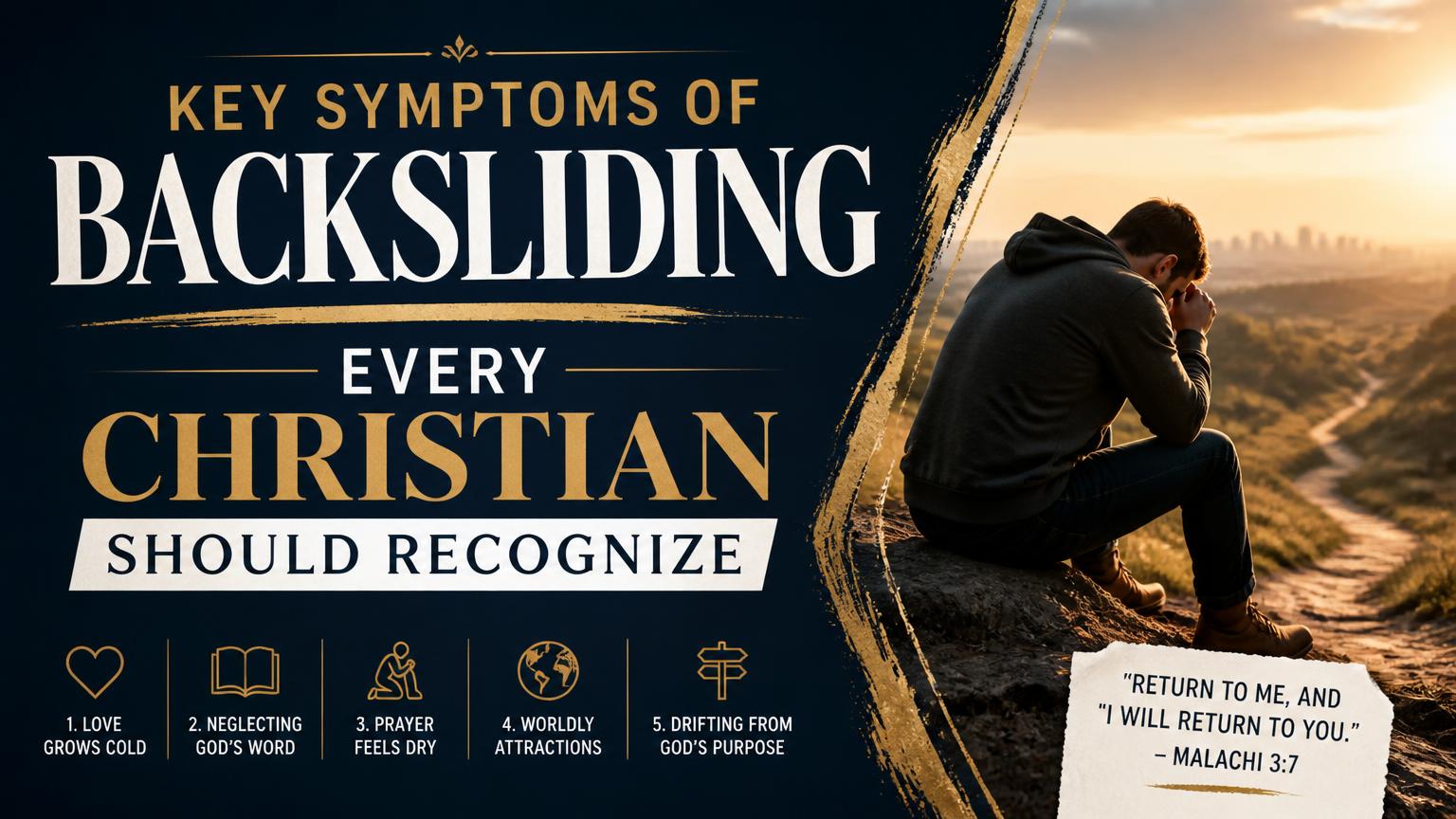
Backsliding describes a Christian’s gradual or deliberate movement away from close fellowship, obedience, and dependence on God. It is more than missing a church service or passing through spiritual dryness. The clearest symptoms of backsliding appear when a person persistently loses spiritual desire, tolerates known sin, resists correction, and begins treating God as peripheral rather than central.
The condition should prompt honest self-examination, not panic or judgment. Spiritual struggle can also result from grief, exhaustion, depression, unanswered questions, or difficult circumstances. The issue is whether a person is turning away from God or seeking Him amid weakness.
What Are the Symptoms of Backsliding?
A Declining Desire for God
One early symptom is a sustained loss of desire for prayer, Scripture, worship, and fellowship with God. A backsliding person may still participate in Christian activities outwardly, but spiritual practices increasingly feel burdensome, irrelevant, or easy to abandon.
This does not mean every dry season proves backsliding. Faith is not measured by constant emotional intensity. However, persistent indifference—especially when a person no longer cares about being distant from God—can reveal a deeper spiritual drift.
Jesus’ words to the church in Ephesus identify a similar problem: they had continued works and doctrinal discernment but had “left their first love” (Revelation 2:1–5). Their activity had not necessarily disappeared; their affection for Christ had weakened.
Neglecting Prayer and Scripture
Backsliding often affects a person’s relationship with the ordinary means by which faith is nourished. Prayer becomes rare, rushed, or purely crisis-driven. Scripture may be ignored, approached only to fulfill an obligation, or avoided because it exposes attitudes and actions the person does not want to confront.
The issue is not maintaining a flawless devotional schedule. Christians can experience busy seasons, illness, distraction, and spiritual fatigue. The warning sign is an ongoing pattern of avoidance combined with little desire to return.
Hebrews 2:1 describes this process as drifting: people do not always reject faith in one dramatic act; they may gradually move away by neglecting what they once valued.
Rationalizing or Tolerating Known Sin
A backsliding Christian may begin excusing conduct that Scripture clearly identifies as sinful. Common rationalizations include:
- “Everyone does it.”
- “God understands, so it does not matter.”
- “I will repent later.”
- “This is just who I am.”
- “I do not need to change as long as I still believe.”
Temptation itself is not proof of backsliding. Christians continue to struggle with sin, and recurring temptation should be met with honesty and dependence on God rather than despair. The more serious symptom is a settled decision to protect a sinful pattern, redefine it as acceptable, or refuse to bring it into the light.
First John 1:9 presents confession as the path of restoration. Repentance is not an attempt to earn God’s forgiveness; it is a return to truth and fellowship with Him.
A Diminishing Sense of Conviction
When a person repeatedly resists correction, the conscience may become less responsive. Sin that once caused grief may eventually produce little concern. The person may still feel shame when exposed, but shame is not the same as repentance. Shame focuses on protecting one’s image; repentance turns toward God and seeks change.
A diminished conscience can develop through repeated compromise. Each decision to ignore conviction makes the next compromise easier to justify. This is why spiritual drift should be addressed early rather than dismissed as insignificant.
At the same time, a tender conscience is not always evidence of backsliding. Some believers experience excessive guilt, anxiety, or scrupulosity and may believe ordinary failures prove that God has abandoned them. Biblical conviction identifies specific sin and leads toward confession, faith, and obedience; vague condemnation that produces hopelessness should not be confused with the Spirit’s corrective work.
Withdrawing From Christian Fellowship
Another symptom is deliberate withdrawal from trustworthy Christian community. A person may stop attending church, avoid mature believers, reject pastoral care, or become defensive whenever someone asks about spiritual well-being.
Solitude is not inherently wrong. Jesus withdrew to pray, and Christians sometimes need rest or quiet. The concern arises when isolation functions as protection from accountability or makes it easier to continue in sin. Christian fellowship matters because believers encourage one another, correct one another, and help one another persevere (Hebrews 10:24–25).
Withdrawal can also result from church hurt, abuse, conflict, or legitimate concerns about a congregation. Such experiences require compassion and careful discernment, not automatic accusations of backsliding. Leaving an unhealthy environment is not the same as leaving Christ.
Reordering Priorities Around Self and the World
Backsliding changes what a person considers most valuable. Career, money, pleasure, status, romance, entertainment, or personal comfort may gradually displace devotion to God. The issue is not possessing material resources or enjoying ordinary created gifts. The issue is allowing them to govern decisions, identity, time, and moral boundaries.
Jesus warned that the heart follows its treasure (Matthew 6:19–21). What a person consistently protects, pursues, and sacrifices for often reveals what has become functionally ultimate. A Christian may still use religious language while practical decisions show that comfort, approval, or success has taken first place.
Resisting Correction and Accountability
A backsliding person often becomes increasingly defensive about spiritual concerns. Instead of considering loving correction, the person attacks the messenger, changes the subject, cites isolated Bible verses, or claims that no one has the right to question them.
Humility does not require accepting every criticism. Correction can be unfair, controlling, or mistaken. Still, a teachable believer is willing to examine the concern before God. Proverbs repeatedly connects wisdom with receiving correction, while persistent refusal to listen reveals a heart becoming resistant to truth.
Galatians 6:1 instructs spiritually mature believers to restore someone gently, with awareness of their own vulnerability. The goal is restoration, not humiliation or control.
Reduced Spiritual Fruit
A continuing departure from Christ commonly affects character and relationships. Patience gives way to irritability, integrity to secrecy, generosity to self-protection, and love to resentment. Patterns of bitterness, dishonesty, envy, pride, or sexual immorality may become increasingly visible.
This does not mean a Christian must display perfect behavior to prove genuine faith. Growth is uneven, and every believer fails. Jesus’ teaching in John 15 connects abiding in Him with bearing fruit, meaning that a relationship with Christ should gradually influence conduct. A persistent lack of repentance and an established pattern of ungodly character deserve serious attention.
What Backsliding Is—and Is Not
Backsliding is best understood as spiritual regression or wandering from faithful dependence on God. It is not simply:
- experiencing sadness or doubt
- struggling with temptation
- missing a spiritual routine for a short period
- asking difficult questions
- needing rest from ministry
- changing churches for sound reasons
- failing repeatedly while still confessing sin and seeking help
The distinction is direction. A struggling believer may feel weak but continue reaching toward God. A backsliding believer increasingly turns away, justifies that distance, and resists returning.
This distinction also protects Christians from judging others too quickly. Only God fully knows the heart. Visible behavior may justify concern and a loving conversation, but it does not give another person permission to pronounce final judgment on someone’s salvation.
Why Do Christians Backslide?
Backsliding usually develops through several connected influences rather than one isolated event. Unconfessed sin can weaken spiritual sensitivity. Disappointment with God, suffering, unanswered prayer, pride, unhealthy relationships, temptation, or exhaustion can create conditions in which distance grows.
Sometimes a person’s faith was built mainly on emotion, social pressure, or a Christian environment rather than a deep understanding of the gospel. When circumstances change, that shallow foundation is exposed. Jesus’ parable of the soils describes people who receive the word initially but fail to endure or allow competing concerns to choke spiritual growth (Matthew 13:18–23).
These explanations do not excuse sin, but they help identify the appropriate response. Someone trapped in addiction may need confession, accountability, and professional support. Someone wounded by a church may need safety, patient pastoral care, and honest lament. Someone consumed by pride must confront the desire for control. Wise restoration addresses both the sinful choices and the conditions that helped sustain them.
How Should Someone Respond to Backsliding?
The biblical response is not concealment or self-salvation but repentance and renewed trust in God.
- Acknowledge the drift honestly. Name specific attitudes, habits, and choices instead of hiding behind general statements.
- Confess sin to God. Scripture presents God as faithful and just to forgive those who confess (1 John 1:9).
- Return to Christ rather than merely to religious activity. Prayer, Scripture, worship, and church fellowship are means of renewed communion, not ways to purchase acceptance.
- Remove practical sources of compromise. This may involve changing routines, ending an unhealthy relationship, installing accountability, seeking counseling, or making restitution.
- Reconnect with mature believers. A trustworthy pastor, mentor, or Christian friend can provide encouragement and appropriate accountability.
- Continue even when feelings lag behind. Repentance may begin with obedience before emotional warmth returns.
Jeremiah 3:22 captures the heart of God’s invitation: “Return, faithless people; I will cure you of backsliding.” The call exposes sin, but it also offers healing. Likewise, Jesus’ message to the church at Ephesus did not end with rebuke; it called them to remember, repent, and return.
If backsliding is accompanied by severe depression, trauma, compulsive behavior, self-harm, or thoughts of suicide, spiritual care should be combined with qualified mental-health support and immediate safety measures. Seeking professional help is not a failure of faith.
How Should Christians Help Someone Who Is Backsliding?
Approach the person with truth, humility, patience, and concern rather than accusation. Ask questions, listen carefully, and distinguish between a temporary crisis and a settled pattern of rebellion. Specific observations are more helpful than labels: “I have noticed that you have withdrawn and seem burdened” is usually better than “You are a backslider.”
Restoration should aim at repentance and renewed fellowship with God, not merely a return to church attendance or outward respectability. Galatians 6:1 warns those who restore others to watch themselves, because anyone can be tempted. Boundaries may still be necessary when serious sin harms others, especially in cases involving abuse, exploitation, or danger. Forgiveness does not eliminate wisdom, accountability, or consequences.
Backsliding is serious because distance from God affects worship, character, relationships, and eternal priorities. Yet recognizing the symptoms is not a reason for despair. The appropriate response is to stop drifting, turn toward Christ, confess honestly, receive grace, and take concrete steps toward faithful obedience. A season of weakness need not become a settled departure.