
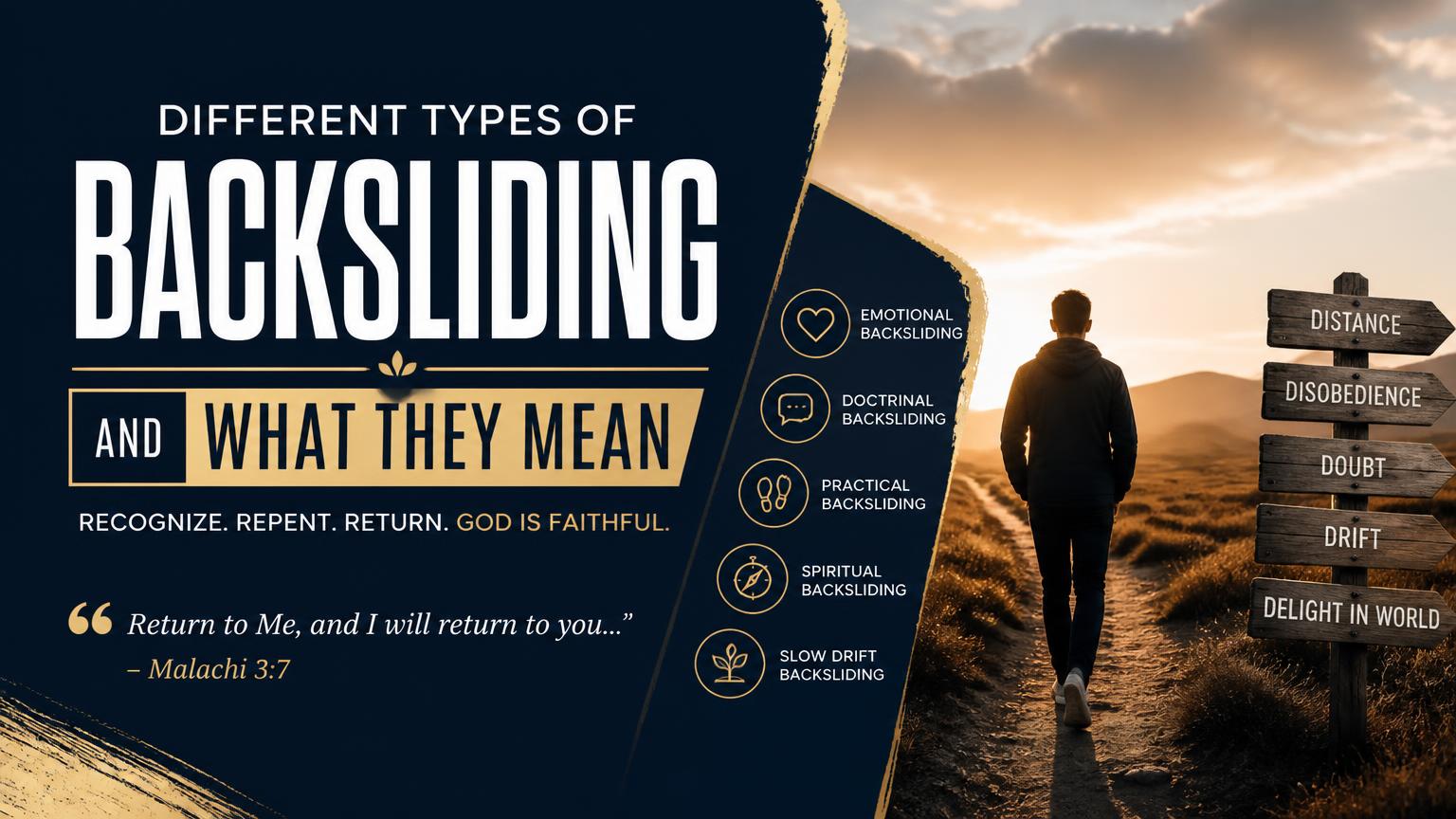
Backsliding generally means turning away from active faithfulness to God after previously professing or practicing Christian faith. It may appear as neglected prayer, persistent sin, rejection of Christian teaching, isolation from the church, or a gradual loss of devotion. The Bible does not provide one official list of “types of backsliding,” so the categories below describe common biblical patterns rather than a rigid theological classification.
Backsliding is also different from a temporary struggle, honest doubt, spiritual dryness, or a single act of sin. The central issue is a sustained direction away from God rather than an isolated failure.
Types of Backsliding
Relational or Devotional Backsliding
Relational backsliding occurs when a person’s fellowship with God becomes increasingly neglected. Prayer, worship, Scripture, repentance, and dependence on God may gradually disappear—not necessarily because the person openly rejects Christianity, but because other priorities take control.
Jesus warned the church in Ephesus that it had abandoned its “first love” even though it remained active in several outward ways (Revelation 2:1–5). This shows that religious activity and spiritual closeness are not identical. A person may continue attending church or serving others while privately becoming distant from God.
This form often develops gradually:
- Private devotion becomes irregular.
- Sin is tolerated rather than confronted.
- Spiritual disciplines feel unnecessary or burdensome.
- Christian commitments become external habits.
- God is treated as peripheral rather than central.
Devotional backsliding matters because faith is not merely agreement with religious ideas. It involves an ongoing relationship of trust, worship, obedience, and love.
Moral or Behavioral Backsliding
Moral backsliding involves returning to, excusing, or persistently practicing conduct that conflicts with Christian teaching. Examples may include sexual immorality, dishonesty, greed, abuse, substance misuse, uncontrolled anger, or deliberate exploitation of others.
The important distinction is not that a backslider has committed a particular sin. Christians can fall into serious sin and still respond with genuine repentance. Moral backsliding refers more specifically to a settled pattern in which a person resists correction, justifies the behavior, or no longer wants to submit it to God.
Galatians 6:1 instructs spiritually mature believers to restore someone caught in sin with gentleness. The goal is restoration, not humiliation. At the same time, gentleness does not mean ignoring harm. Where behavior involves abuse, coercion, criminal conduct, or danger, protection, accountability, and appropriate professional or legal intervention may be necessary.
Doctrinal or Intellectual Backsliding
Doctrinal backsliding occurs when someone moves away from central Christian beliefs or gradually abandons the authority of Scripture and the gospel. It may involve rejecting beliefs once sincerely held, reshaping Christianity entirely around personal preference, or adopting teachings that contradict the message of Christ.
The New Testament repeatedly connects spiritual health with perseverance in sound teaching. Paul warned Timothy that some people would turn away from truth and pursue teachings that confirmed their desires (2 Timothy 4:3–4). Hebrews also warns against drifting away, using the image of a person carried past a safe course by neglect rather than by one dramatic decision (Hebrews 2:1).
Not every question or intellectual struggle is doctrinal backsliding. Christian faith allows serious examination, lament, and honest questions. The concern arises when a person refuses truth because obedience has become inconvenient, or when Christianity is deliberately reconstructed to remove every demanding claim.
Emotional and Volitional Backsliding
Some backsliding is expressed through the will and affections before it becomes visible in conduct. A person may become hardened, resentful, spiritually indifferent, or unwilling to obey God. Bitterness toward God, cynicism about prayer, and loss of concern for righteousness can all signal inward decline.
Feelings alone do not determine spiritual faithfulness. Grief, depression, exhaustion, and emotional numbness can affect a person’s experience of God without proving rebellion. The more significant question is how the person responds to these experiences. A suffering believer may feel distant from God while still seeking Him, as many of the psalms demonstrate. Volitional backsliding, by contrast, involves choosing distance and resisting God’s call to return.
Communal or Ecclesial Backsliding
Backsliding can also appear in a person’s relationship with the Christian community. This may include abandoning fellowship, rejecting all spiritual accountability, refusing correction, or treating the church as irrelevant. Isolation can make spiritual decline worse because it removes encouragement, wise counsel, correction, and practical care.
However, leaving a particular congregation is not automatically backsliding. People sometimes leave churches because of false teaching, abuse, manipulation, discrimination, or serious misconduct. A healthy Christian community should reflect the truth, holiness, humility, and love it teaches. The relevant issue is not mere attendance at one institution but whether a person is deliberately withdrawing from Christian fellowship and accountability altogether.
Gradual and Crisis-Point Backsliding
Backsliding may be gradual or sudden. Gradual backsliding often begins with small compromises, neglected responsibilities, unaddressed resentment, or misplaced priorities. Jesus’ parable of the seed among thorns describes how worldly concerns can choke spiritual fruitfulness over time (Mark 4:18–19).
Crisis-point backsliding follows a major event such as disappointment, persecution, moral failure, grief, unanswered prayer, or a conflict with Christian leaders. The crisis may expose weaknesses that were already present, or it may create a profound spiritual struggle. A sudden departure should therefore be taken seriously, but it should not be analyzed without understanding the person’s pain and circumstances.
These categories can overlap. For example, unresolved bitterness may produce devotional neglect, isolation from church, and eventually moral or doctrinal compromise.
How Backsliding Differs From Similar Spiritual Conditions
Backsliding and Spiritual Dryness
Spiritual dryness describes a reduced sense of God’s presence, enthusiasm, or emotional consolation. It can result from suffering, fatigue, grief, depression, illness, or a season in which faith feels less emotionally vivid.
Backsliding involves a direction of resistance or withdrawal. Spiritual dryness may occur even while a person continues to pray, obey, seek help, and remain faithful. The distinction is therefore not simply how strongly someone feels but what they are doing with the experience.
Backsliding and Temptation
Temptation is an invitation to sin; backsliding is a pattern of yielding to sin or turning away from God. Every Christian faces temptation, and experiencing it does not mean a person has backslidden. Even a serious failure can be followed by genuine repentance.
The Bible distinguishes between falling and refusing to rise. Proverbs 24:16 acknowledges that the righteous may fall repeatedly but continue to get up. Persistent refusal to repent is more spiritually serious than the mere presence of temptation or weakness.
Backsliding and Doubt
Doubt can be part of an honest search for understanding. Biblical figures such as Job, many psalmists, and the disciple Thomas expressed uncertainty or confusion. Doubt becomes spiritually destructive when it is used as a settled excuse for disobedience or when a person closes himself or herself to truth before seeking it honestly.
A questioning believer may still be moving toward God. A backslider is moving away from submission to God. The two conditions can look similar externally, so compassion and careful listening are essential.
Backsliding and Apostasy
Apostasy usually refers to a more decisive repudiation or abandonment of the Christian faith. Backsliding is often used more broadly for spiritual decline, disobedience, or estrangement that may be temporary and reversible.
Christian traditions differ in how they explain the relationship between apostasy, perseverance, and salvation. Some understand apostasy as evidence that a person never possessed genuine saving faith; others regard certain warnings in Scripture as describing a real possibility of abandoning faith. These differences should be acknowledged rather than presented as settled by a single verse.
The practical response is the same: do not treat serious departure lightly, but do not assume that return is impossible. Scripture repeatedly calls those who have wandered to repent and return. Hosea 14:4 presents God as healing Israel’s faithlessness, while Luke 15 portrays the Father receiving the returning prodigal with compassion.
Why Backsliding Happens
Backsliding usually has multiple contributing causes rather than one explanation. Common factors include:
- Unresolved sin: Hidden or tolerated sin reshapes a person’s desires and weakens the conscience.
- Pride and self-sufficiency: Dependence on God is replaced by confidence in personal control.
- Worldly pressures: Wealth, status, pleasure, ambition, or anxiety crowd out spiritual priorities.
- Disappointment with God: Unanswered prayer, suffering, or perceived injustice may produce anger or withdrawal.
- Hurt within the church: Hypocrisy, abuse, manipulation, or betrayal can seriously damage trust.
- Isolation: A person without trustworthy Christian relationships receives less encouragement and correction.
- Intellectual or moral confusion: Unexamined questions or persuasive false teaching can gradually alter convictions.
- Spiritual neglect: What is repeatedly postponed—prayer, Scripture, worship, confession, and service—eventually loses practical influence.
Understanding causes is not the same as excusing conduct. It helps identify what must be addressed. A person who has backslidden because of bitterness may need honest lament and reconciliation; someone trapped in addiction may need repentance together with medical, pastoral, and therapeutic support.
Signs of Backsliding
No single sign proves that someone has backslidden, and Christians should be cautious about judging another person’s spiritual condition. Still, persistent patterns may warrant concern:
- Loss of desire for prayer, worship, or Scripture
- Deliberate isolation from healthy Christian relationships
- Repeatedly defended or concealed sin
- Hostility toward correction
- Growing indifference to holiness and compassion
- Treating Christian faith as a cultural identity rather than a lived commitment
- Persistent resentment toward God without willingness to bring it honestly before Him
- Rejection of central Christian convictions for the sake of convenience
- A widening gap between public profession and private conduct
These signs should lead first to honest self-examination and compassionate conversation, not accusation. Jesus’ teaching in Matthew 7:3–5 calls people to examine their own faults before attempting to correct others.
The Biblical Path Back From Backsliding
The Bible presents restoration as possible, but it does not reduce restoration to a passing feeling of regret.
Recognize the Direction
A person must acknowledge what has happened rather than minimizing it. Psalm 32 describes the burden of concealed sin and the relief that follows confession. Honest recognition breaks the cycle of denial.
Return to God in Repentance
Repentance means more than feeling guilty. It involves turning from sin and reorienting life toward God. In Jeremiah 3:22, God calls faithless people to return and promises healing. The invitation combines human response with divine mercy: the person must come back, but God is the one who heals.
Confess and Make Necessary Changes
Confession should be directed to God, and where others have been harmed, appropriate confession and restitution may also be necessary. Zacchaeus demonstrated repentance by addressing the financial harm he had caused (Luke 19:1–10).
Change often requires practical boundaries: ending a destructive relationship, seeking addiction treatment, submitting to pastoral accountability, repairing damage, or stepping away from a position of influence until trust is rebuilt.
Rejoin Healthy Christian Fellowship
Restoration is strengthened by trustworthy believers who combine truth with gentleness. The aim is not public shame or permanent suspicion but renewed faithfulness. Churches also have a responsibility to protect vulnerable people and to distinguish forgiveness from immediately restoring someone to authority.
Persevere in Ordinary Faithfulness
A return to God is sustained through prayer, Scripture, worship, obedience, service, and accountable relationships. These practices do not earn forgiveness. They provide ordinary ways for renewed trust to become visible and durable.
Backsliding is best understood as a pattern of turning away from God, expressed through neglected devotion, persistent sin, doctrinal departure, isolation, or hardened resistance. The categories overlap, and none should be applied mechanically. The Bible takes spiritual decline seriously while repeatedly holding out a path of repentance and restoration. The decisive question is not whether a person has failed, but whether that person will continue away from God or respond to His call to return.