
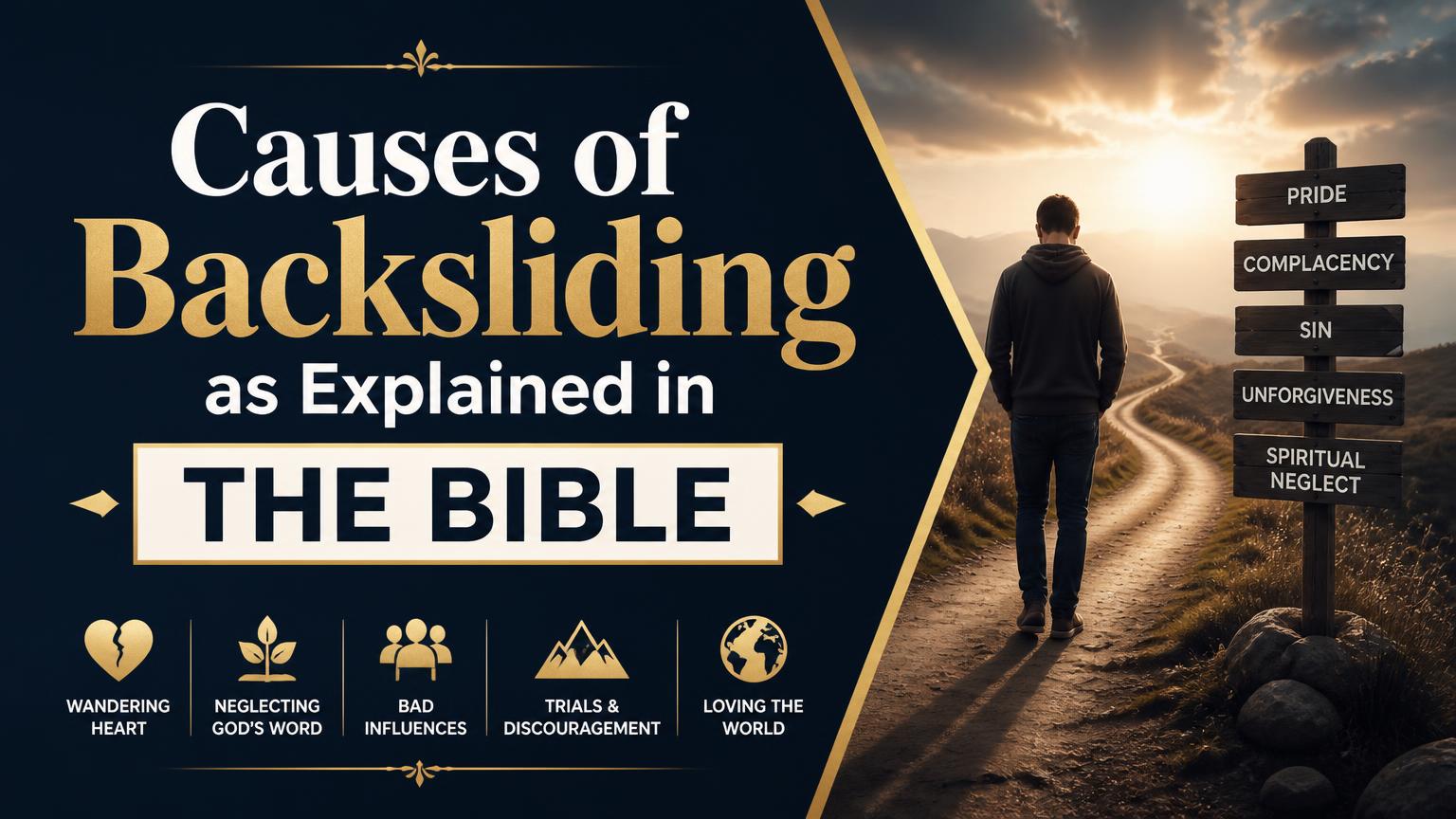
The Bible presents backsliding as a turning away from God after previously knowing, worshiping, or professing faith in Him. It may begin gradually—through neglected prayer, tolerated sin, spiritual distraction, or discouragement—before becoming deliberate resistance or abandonment. Scripture also shows that backsliding is not always irreversible: God repeatedly calls His people to return, repent, and be restored.
Causes of Backsliding in the Bible
The biblical causes of backsliding are interconnected. A person may begin with spiritual neglect, become vulnerable to temptation or false teaching, and eventually develop a hardened or divided heart.
A Divided Heart and Gradual Turning Away
One of the most consistent biblical causes of backsliding is divided loyalty. God’s people may continue to identify with Him outwardly while their affections, trust, and obedience increasingly move elsewhere.
Israel’s repeated unfaithfulness is described as turning away from the Lord and pursuing other gods (Jeremiah 2:19; 3:6–14). The problem was not merely that Israel committed isolated acts of disobedience. Their worship, confidence, and desires had gradually shifted. They wanted the benefits of belonging to God without remaining faithful to Him.
James describes a similar inner conflict when people attempt to maintain friendship with the world while claiming loyalty to God (James 4:4). A divided heart weakens resistance to sin because the person no longer regards obedience to God as the highest good.
Backsliding therefore often begins before a person openly rejects faith. It begins when God’s authority becomes negotiable and competing loves—status, pleasure, wealth, relationships, ideology, or self-interest—receive greater practical loyalty.
Neglect of Scripture, Prayer, and Fellowship
Spiritual decline commonly follows the neglect of the practices through which believers hear from God, depend on Him, and receive encouragement. Hebrews warns Christians not to drift away and urges them to hold firmly to their confession, encourage one another, and continue meeting together (Hebrews 2:1; 10:23–25).
The image of “drifting” is significant. A boat does not need to actively steer away from shore to move farther from it; it only needs to stop maintaining its course. Likewise, a person may not initially intend to abandon faith. But when prayer becomes rare, Scripture is ignored, worship becomes merely external, and Christian fellowship disappears, spiritual resistance gradually weakens.
These practices do not earn salvation or function as religious rituals that mechanically prevent sin. They cultivate attentiveness to God, expose self-deception, strengthen faith, and provide correction. Their neglect removes important means by which a believer recognizes danger and returns to God.
Unrepentant Sin and the Desire for Worldly Pleasures
The Bible repeatedly connects backsliding with sin that is defended, cherished, or left unconfessed. Sin becomes especially spiritually destructive when a person stops treating it as rebellion against God and begins making peace with it.
Jesus compared some hearers of God’s word to seed among thorns. The word is eventually choked by “the cares of the world,” the deceitfulness of riches, and desires for other things (Mark 4:18–19). The issue is not that every possession, responsibility, or pleasure is inherently sinful. The danger arises when these things become so dominant that they suppress obedience and spiritual fruit.
The desire for wealth illustrates this process. Paul does not say that money itself is the root of all evil; he warns that the love of money can lead people away from the faith and bring them into many destructive desires (1 Timothy 6:9–10). Desire becomes a cause of backsliding when it controls decisions, justifies compromise, and displaces trust in God.
Unrepentant sin also hardens the conscience. Hebrews warns against an “evil, unbelieving heart” that turns away from the living God and urges believers to encourage one another so that none will be hardened by sin’s deceitfulness (Hebrews 3:12–13). Sin deceives by promising freedom while producing slavery, promising satisfaction while increasing appetite, and presenting delay in repentance as harmless.
Trials, Persecution, and Discouragement
Pressure can expose shallow faith and become a cause of spiritual retreat. In the parable of the sower, Jesus described people who receive the word with joy but have no deep root. When trouble or persecution comes because of the word, they fall away (Mark 4:16–17).
This does not mean that every person who struggles during suffering has permanently backslidden. Scripture contains faithful believers who experienced fear, grief, confusion, and temporary weakness. The issue is whether hardship leads a person to seek God honestly or to abandon trust and obedience.
Trials can produce backsliding when suffering appears to disprove God’s goodness, when unanswered prayer becomes a reason for bitterness, or when social pressure makes obedience costly. Fear of rejection, loss, imprisonment, or persecution may cause someone to conceal or renounce faith. Jesus warned that some would stumble under persecution, while others would endure to the end (Matthew 24:9–13).
Biblical perseverance is not emotional invulnerability. It is continuing to turn toward God when circumstances are painful and explanations are incomplete.
Pride, Self-Reliance, and False Security
Pride makes backsliding more likely because it persuades people that they are spiritually stronger than they are. A person who assumes that falling away could never happen may stop watching, praying, receiving correction, or avoiding temptation.
Paul used Israel’s wilderness failures as a warning to Christians who felt secure. After recounting Israel’s idolatry, immorality, and testing of God, he wrote, “Let anyone who thinks that he stands watch out that he does not fall” (1 Corinthians 10:1–12). The warning does not encourage constant panic; it rejects careless presumption.
Peter’s denial of Jesus provides a vivid example. Peter sincerely believed he was prepared to die with Christ, yet he underestimated fear and overestimated his own courage (Matthew 26:33–35, 69–75). His failure was serious, but his later restoration also shows that a grievous fall is not identical to final apostasy. Humility, dependence on God, and willingness to receive correction are safeguards against self-deception.
False Teaching and Harmful Influences
False teaching can cause backsliding by distorting the gospel, weakening confidence in Christ, or making disobedience appear spiritually acceptable. The New Testament repeatedly warns believers about teachers who promote another gospel, deny essential truths about Jesus, or use religion for personal gain (Galatians 1:6–9; 2 Peter 2:1–3; 1 John 4:1–3).
Influence does not operate only through formal doctrine. Companionship, cultural values, entertainment, and admired leaders can normalize attitudes that Scripture condemns. Israel’s history shows how surrounding nations and their religious practices repeatedly drew God’s people into idolatry (Judges 2:11–13; Psalm 106:34–39).
The danger is greatest when an influence offers a version of faith without repentance, holiness, self-denial, or submission to Christ. A teaching may sound attractive because it removes uncomfortable demands, but its appeal can conceal a path away from biblical faithfulness.
Love of the Present World
Demas illustrates the personal cost of allowing present desires to become more compelling than Christian commitment. Paul says that Demas deserted him because he loved “this present world” (2 Timothy 4:10). The passage does not explain every detail of Demas’s later spiritual condition, so it should not be used to make claims the text does not make. It does, however, clearly identify worldly love as a force that can pull someone away from costly service and faithful endurance.
The Bible’s concern is not that Christians must withdraw from society or reject every legitimate earthly responsibility. Rather, believers must resist allowing temporary values to define ultimate reality. When comfort, recognition, career, possessions, or pleasure become more precious than obedience, the heart’s direction has changed.
What Backsliding Means in Biblical Language
“Backsliding” is especially associated with Old Testament descriptions of God’s people turning away from Him. Jeremiah calls Judah “faithless” and “backsliding” and records God’s invitation: “Return, faithless people; I will heal your unfaithfulness” (Jeremiah 3:12, 22). Hosea similarly portrays God as calling His wayward people back and promising to heal their backsliding (Hosea 14:4).
The New Testament more often uses expressions such as falling away, drifting, departing from the faith, denying Christ, or returning to former ways (Hebrews 2:1; 1 Timothy 4:1; 2 Peter 2:20–22). These descriptions include both gradual spiritual decline and deliberate rejection.
A necessary distinction is that not every serious sin or period of weakness constitutes final apostasy. David committed grievous sins yet returned to God in repentance (Psalm 51). Peter denied Jesus but was restored and recommissioned (John 21:15–19). By contrast, Scripture gives severe warnings about persistent, defiant rejection of known truth, while Christian traditions differ in how they interpret passages such as Hebrews 6:4–6.
The shared biblical emphasis is clear: people must not treat spiritual drift casually, and genuine repentance involves returning to God rather than merely feeling regret.
Biblical Examples of How Backsliding Develops
Israel’s history in Judges shows a repeated cycle: the people forget the Lord, adopt idolatrous practices, experience oppression, cry out in distress, and receive deliverance. The cycle demonstrates that backsliding often begins with forgetfulness. When people lose sight of God’s past faithfulness, competing loyalties become more persuasive.
Solomon’s later life shows how divided affection can grow even after extraordinary spiritual privilege. His foreign alliances and marriages led his heart after other gods, despite his earlier wisdom and dedication to the Lord (1 Kings 11:1–10). Spiritual knowledge does not automatically produce faithfulness; wisdom must continue to govern desire and worship.
The churches addressed in Revelation also reveal different forms of decline. Ephesus had abandoned its first love, Sardis had the reputation of being alive while spiritually dead, and Laodicea had become lukewarm and self-satisfied (Revelation 2:1–5; 3:1–3, 14–22). These examples show that backsliding may appear as lost devotion, empty reputation, or complacent compromise rather than open denial.
How the Bible Calls People Back
The Bible’s warnings about backsliding are paired with clear calls to restoration. The first response is honest repentance: confessing sin, turning from it, and returning to God’s authority. Proverbs 28:13 contrasts concealment with confession and renunciation, while 1 John 1:9 presents God as faithful and just to forgive those who confess their sins.
Restoration also involves renewed dependence. Jesus told His disciples to abide in Him because fruitfulness depends on continuing connection with Him, not on self-sufficiency (John 15:4–5). Prayer, Scripture, worship, fellowship, and wise accountability help make that dependence concrete.
The Christian community has a role as well. Believers are instructed to restore those caught in sin with gentleness, bear one another’s burdens, and seek those who wander from the truth (Galatians 6:1–2; James 5:19–20). This does not eliminate personal responsibility, but it shows that restoration is not meant to occur in isolation.
Conclusion
According to the Bible, backsliding usually develops through a combination of divided loyalty, neglected communion with God, tolerated sin, worldly desire, pride, false teaching, and discouragement under pressure. The central issue is a heart that is gradually turning away from trust and obedience. Scripture warns against treating that drift lightly, but it also repeatedly announces God’s willingness to heal and receive those who genuinely return.