
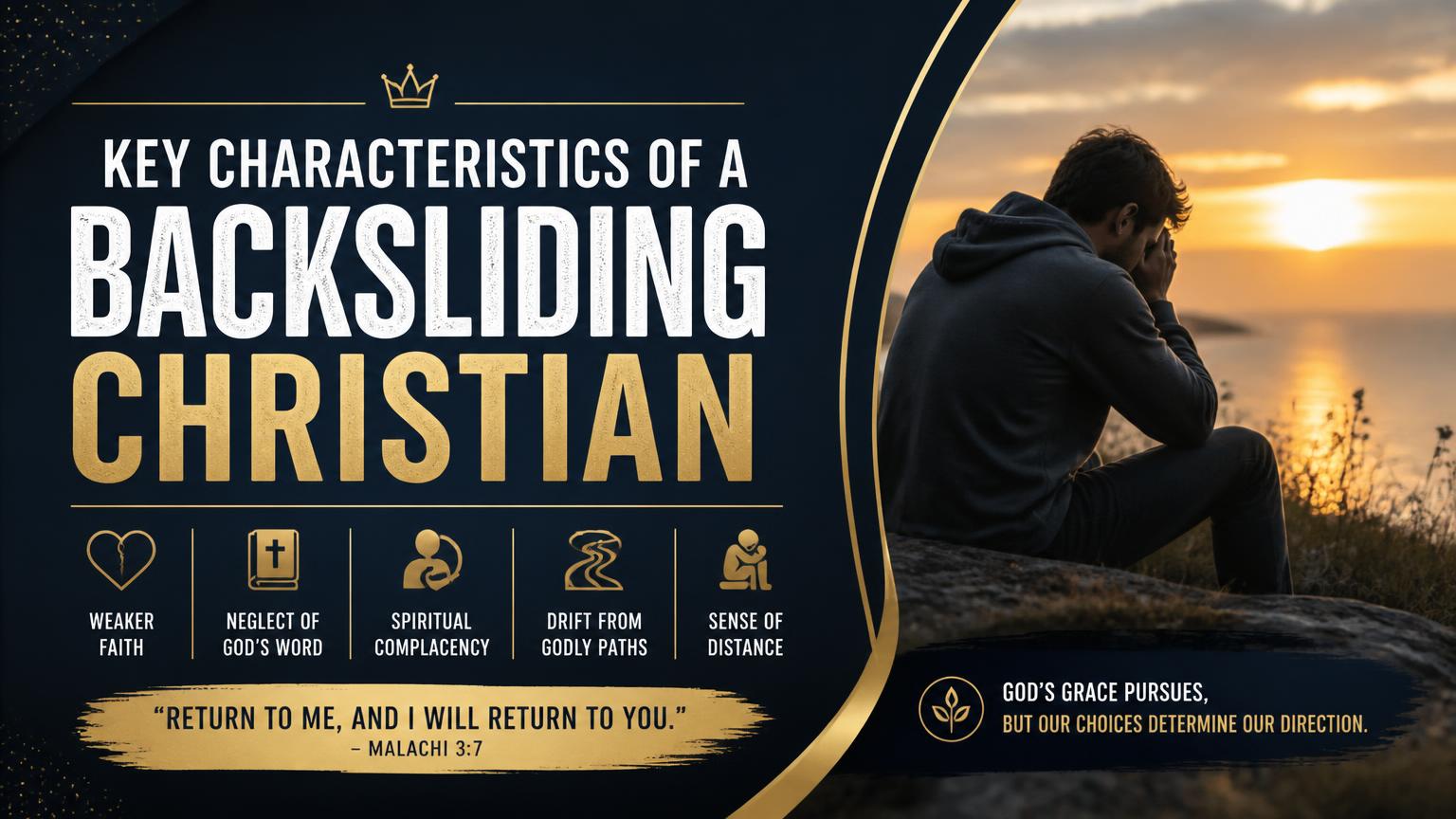
Backsliding describes a Christian who has turned away from a previously active, obedient relationship with God. It may involve persistent sin, spiritual indifference, neglected fellowship, resistance to correction, or a gradual reordering of life around priorities other than Christ. A single failure does not automatically mean someone is backsliding; the deeper issue is an ongoing pattern of resistance, drift, and unrepentance.
Characteristics of a Backsliding Christian
The following characteristics should not be treated as a mechanical checklist for judging another person. Christians can experience grief, doubt, temptation, exhaustion, or spiritual dryness without abandoning God. Backsliding is better understood as a sustained direction of life away from God rather than one isolated mistake.
A Cooling Relationship With God
One of the clearest signs of spiritual decline is the loss of desire for God Himself. Prayer becomes rare or purely formal, worship feels burdensome, and Scripture is avoided because it exposes attitudes or actions the person does not want to confront.
Jesus warned the church at Ephesus that it had abandoned its “first love” and called it to remember, repent, and return to its former works (Revelation 2:4–5). This indicates that outward religious activity can continue while personal love for Christ weakens.
A backsliding Christian may still use Christian language, attend services, or appear committed publicly. The internal relationship, however, has become increasingly distant. The issue is not that every prayer feels emotionally powerful, but that the person has stopped seeking God with sincerity.
Persistent, Unrepentant Sin
Backsliding commonly involves continuing in sin while refusing to confess it, turn from it, or accept its seriousness. Temptation and failure are part of the Christian struggle; deliberate resistance to repentance is different.
First John 1:8–9 distinguishes between denying sin and confessing it. A faithful Christian may fall, grieve over the failure, and seek forgiveness. A backsliding pattern treats sin as acceptable, inevitable, private, or irrelevant to fellowship with God.
This may include sexual immorality, dishonesty, substance misuse, bitterness, greed, abuse of power, uncontrolled anger, or another form of disobedience. The particular sin is not the only issue. The more revealing question is how the person responds when the sin is exposed: with humility and repentance, or with concealment, excuses, and defiance?
Neglect of Scripture, Prayer, and Christian Fellowship
Spiritual practices do not earn salvation, but persistent neglect of them often reveals a weakening relationship with God. A backsliding Christian may gradually stop reading Scripture, avoid prayer, withdraw from a healthy church, and reject relationships that encourage spiritual faithfulness.
Hebrews 10:24–25 connects Christian gathering with encouragement and perseverance. Fellowship is not merely a social activity; it provides correction, support, worship, instruction, and reminders of the gospel. Isolation makes it easier to rationalize sin because no trusted believer is close enough to ask honest questions.
This characteristic must be interpreted carefully. Illness, work demands, family responsibilities, church conflict, or persecution can limit participation without indicating spiritual rebellion. The concern is a deliberate and sustained refusal of spiritual nourishment and accountability.
Worldly Priorities and Diminished Spiritual Fruit
Backsliding often becomes visible in what receives a person’s time, attention, money, ambition, and emotional energy. Career success, possessions, entertainment, romance, status, or comfort may gradually displace obedience to Christ.
In the parable of the sower, Jesus described seed among thorns as being choked by “the cares of the world and the deceitfulness of riches” (Mark 4:18–19). The image explains a mechanism of spiritual decline: competing desires do not always destroy faith through open denial; they can crowd out devotion until it produces little fruit.
The result may be declining love, patience, self-control, generosity, forgiveness, and concern for others. Galatians 5:22–23 describes these qualities as the fruit of the Spirit. No Christian displays them perfectly, but a settled movement away from them—especially without concern or repentance—can indicate serious spiritual drift.
Resistance to Correction and Rationalization
A backsliding Christian often becomes defensive when confronted with Scripture, wise counsel, or the consequences of personal choices. Instead of asking whether change is needed, the person may attack the messenger, redefine sin, quote isolated Bible verses, or insist that private conviction is the only valid standard.
Proverbs repeatedly connects teachability with wisdom and stubbornness with destruction. Hebrews 3:12–13 likewise warns believers to encourage one another so that no one develops a hardened heart through sin’s deceitfulness.
Rationalization is especially dangerous because it makes disobedience appear reasonable. Someone may say, “God understands,” while refusing the repentance God commands, or claim freedom in Christ while using freedom to justify conduct that harms others. Christian liberty does not mean freedom from holiness or responsibility.
Isolation, Secrecy, and Loss of a Faithful Witness
Spiritual decline frequently produces secrecy. The person conceals habits, avoids people who know them well, and maintains a public image that no longer matches private behavior. This divided life creates increasing pressure because energy must be spent protecting an appearance rather than pursuing integrity.
A backsliding Christian may also lose credibility as a witness. This does not mean that every public failure permanently disqualifies someone from serving God. Peter denied Jesus yet was restored and recommissioned in John 21. Restoration, however, involved honest confrontation, love for Christ, and renewed obedience—not simply returning to public activity without addressing the failure.
A damaged witness should lead to humility, accountability, and patient rebuilding of trust. It should not be answered by pretending that the damage did not occur.
What Backsliding Is—and Is Not
Backsliding is not the same as having questions, experiencing spiritual dryness, or struggling with temptation. A Christian can doubt, grieve, feel emotionally distant from God, or endure a season of weak faith while still turning toward God for help.
Nor is backsliding identical to one serious failure. David committed grievous sins, and Peter denied Jesus, but both examples show that failure can be followed by conviction and restoration. The distinguishing issue is the direction of the heart: Is the person resisting God, or seeking forgiveness and help despite weakness?
The term itself is used differently among Christian traditions. Some use “backsliding” for a genuine believer who has temporarily drifted and can be restored. Others reserve stronger language, such as apostasy, for a settled rejection of Christian faith. Warning passages such as Hebrews 6:4–6, Hebrews 10:26–31, and 2 Peter 2:20–22 have received different theological interpretations. Christians should therefore avoid claiming certainty about another person’s spiritual status. God alone fully knows the heart.
Why Backsliding Happens
Backsliding usually develops through accumulation rather than a single moment. Common contributing factors include:
- Unconfessed sin: Concealed wrongdoing weakens sensitivity to conviction and makes further disobedience easier.
- Spiritual neglect: When prayer, Scripture, worship, and fellowship disappear, the person loses regular means of encouragement and correction.
- Unresolved pain or disappointment: Anger toward God, church leaders, or other Christians can harden into withdrawal when it is never honestly processed.
- Worldly distraction: Comfort, wealth, ambition, entertainment, or relationships can slowly become more important than obedience.
- Pride and self-sufficiency: A person may stop recognizing the need for grace, counsel, and accountability.
- False teaching or moral compromise: Distorted beliefs can make sinful behavior appear compatible with Christian faith.
James 1:14–15 describes a progression in which desire is entertained, sin is conceived, and sin eventually produces death. The passage does not imply that every temptation ends in apostasy. It does show why small compromises should be addressed early rather than treated as harmless.
How a Backsliding Christian Can Return
The path back begins with honest repentance, not with the attempt to rebuild a religious image. Repentance includes acknowledging sin, agreeing with God about its seriousness, turning away from it, and accepting the practical consequences of change.
Confess Sin Honestly
First John 1:9 presents confession as an appeal to God’s faithfulness and justice: God forgives and cleanses those who confess their sins. Confession is more than saying “I made a mistake.” It identifies the wrong without minimizing it or blaming others.
Where another person has been harmed, repentance may also require an apology, restitution, changed behavior, or submission to appropriate consequences. Forgiveness does not erase the need for wisdom, safety, or restored trust over time.
Return to God Through Christ
James 4:8 says, “Draw near to God, and he will draw near to you,” while the parable of the prodigal son portrays a welcome homecoming after rebellion (Luke 15:11–32). These passages emphasize that restoration rests on God’s mercy, not on a person’s ability to compensate for past failure.
Returning to God does not require waiting until one feels worthy. The gospel addresses guilt precisely because sinners cannot make themselves worthy through effort. Repentance receives grace while also producing a new direction.
Rebuild Faithful Habits Gradually
A restored relationship with God normally becomes visible through renewed practices: regular prayer, attentive Scripture reading, worship, honest fellowship, and obedience in specific areas. These practices do not purchase forgiveness. They help restore attentiveness and create conditions in which faithful choices can become consistent.
A mature pastor, counselor, or trusted Christian can provide accountability. In cases involving addiction, abuse, compulsive behavior, or mental-health concerns, spiritual support should be combined with appropriate professional help. Restoration should never be used to pressure victims into unsafe contact or to return someone immediately to authority.
How Christians Should Respond to Someone Who Is Backsliding
Galatians 6:1 instructs spiritual people to restore someone caught in sin “in a spirit of gentleness,” while also warning them to watch themselves. The goal is restoration, not humiliation or gossip.
A wise response includes speaking truth clearly, listening carefully, encouraging repentance, setting necessary boundaries, and offering practical support. Love does not excuse destructive behavior, but correction without compassion can drive a struggling person deeper into secrecy. Conversely, compassion without truth leaves the underlying problem untouched.
The church should distinguish between forgiving someone, trusting them immediately, and restoring them to leadership. Forgiveness may be offered freely, while trust and responsibility are rebuilt through demonstrated faithfulness.
Conclusion
The characteristics of a backsliding Christian are best seen as a sustained pattern of spiritual drift: cooling love for God, persistent unrepentant sin, neglected spiritual practices, worldly priorities, resistance to correction, and increasing secrecy or isolation. No single sign proves that a person has abandoned Christ, and Christians should not presume to make final judgments about another’s heart. Yet these patterns should be taken seriously. The biblical response is honest repentance, renewed dependence on God’s grace, accountable change, and patient restoration.