
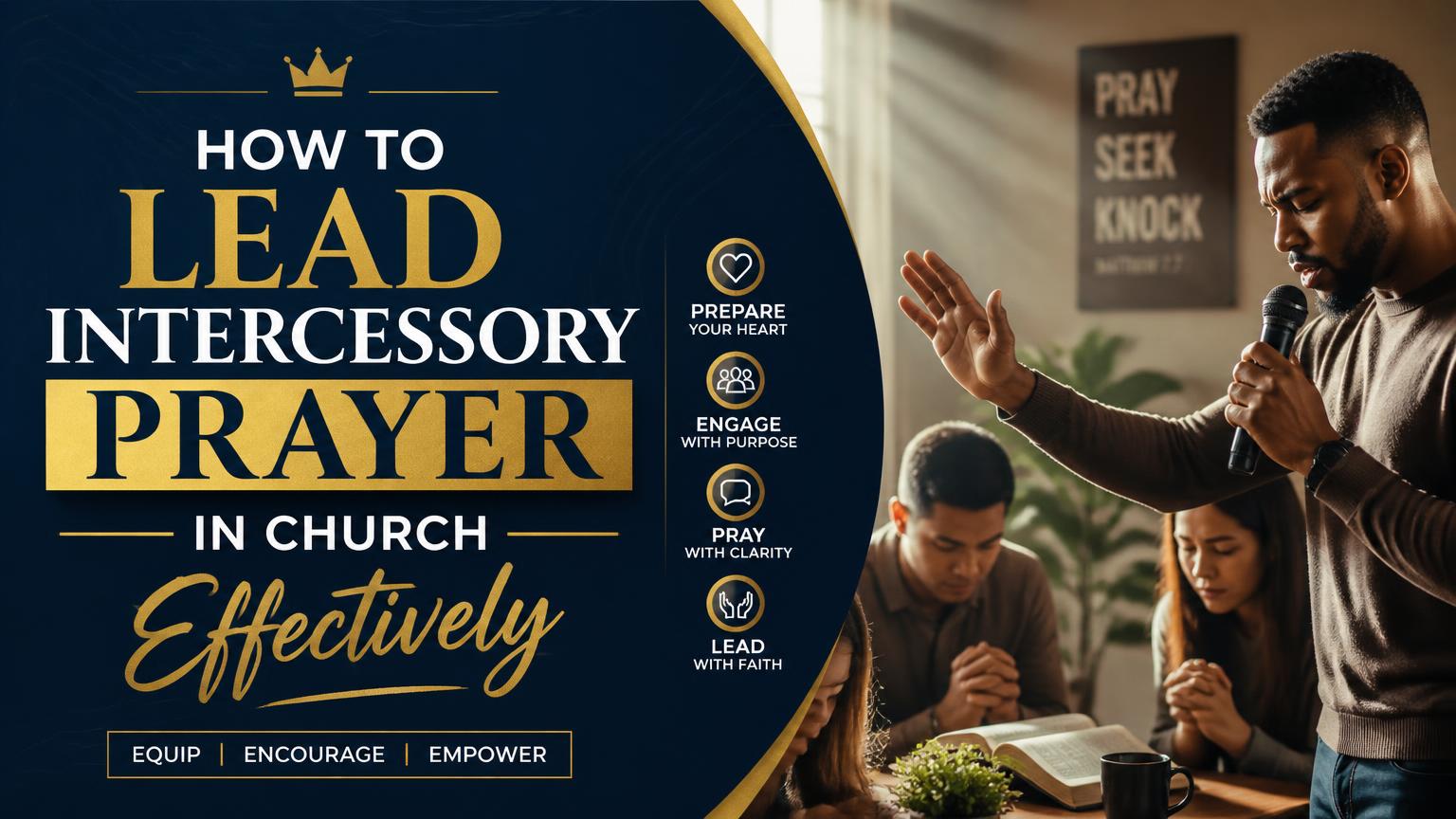
Intercessory prayer is prayer offered on behalf of other people, communities, institutions, and situations. To lead it effectively in church, guide the congregation toward God with clear biblical priorities, specific requests, humility, and enough structure for people to participate. The leader is not performing or trying to control the outcome; the leader helps the church seek God together.
How to Lead Intercessory Prayer in Church
A strong intercessory prayer time usually combines preparation, Scripture, focused prayer themes, congregational participation, and pastoral sensitivity. The following pattern works in a worship service, prayer meeting, small group, or special church gathering.
Clarify the Purpose of Intercessory Prayer
Begin by briefly explaining what the church is about to do. Intercessory prayer means bringing the needs of others before God. It may include prayer for:
- People who are sick, grieving, struggling, or spiritually lost
- Families, marriages, children, and relationships
- The local church and its leaders
- Missionaries and the wider body of Christ
- Government leaders and public institutions
- Justice, peace, mercy, and the needs of the community
- Opportunities to share the gospel and serve others
This explanation helps the congregation distinguish intercession from personal devotional prayer, praise, confession, or general thanksgiving. These forms of prayer may overlap, but intercession deliberately turns attention toward the needs of others.
The leader might say, “We are going to pray for people and situations beyond ourselves, trusting God’s wisdom and mercy. As we pray, listen for how God may be calling us to respond as well.”
Begin With God’s Character and Promises
Intercession should not begin with panic or a long list of problems. Begin by directing attention to who God is: holy, merciful, wise, just, faithful, and powerful. This establishes a biblical posture of trust rather than suggesting that prayer is an attempt to persuade a reluctant God.
Scripture often connects prayer with God’s character. Abraham appealed to God’s justice when praying for Sodom (Genesis 18:16–33). Moses pleaded for mercy after Israel’s sin (Exodus 32:11–14). The early church prayed with confidence because God was sovereign over threats against His people (Acts 4:23–31).
A short Scripture reading can provide this foundation. For example, 1 Timothy 2:1–4 presents prayers for all people, including rulers, and connects such prayer with God’s desire for people to be saved. Philippians 4:6–7 teaches believers to bring requests to God with thanksgiving, placing concern within a relationship of trust.
Organize Prayer Around Clear Themes
Unstructured prayer can become repetitive, confusing, or dominated by the most urgent speaker. Use a few carefully chosen categories and announce each one before praying. A service might follow this order:
- The Church: spiritual maturity, unity, holiness, leaders, and ministry
- People in Need: illness, grief, poverty, addiction, loneliness, and crisis
- Families and the Community: marriages, children, schools, workplaces, and local needs
- Leaders and Public Life: government officials, justice, peace, and wisdom
- Mission and Evangelism: missionaries, unreached people, conversions, and courage for witness
The categories should serve the purpose of prayer rather than become a script that prevents responsiveness. A current tragedy, local crisis, or urgent pastoral concern may deserve more attention than a planned category.
After naming a theme, give a specific focus. Instead of saying, “Let us pray for the community,” say, “Let us ask God to give local teachers patience and wisdom, protect students, and show our church practical ways to serve families.”
Use Scripture to Shape the Requests
Biblical intercession does more than attach a verse to the beginning or end of a prayer. Scripture helps define what the church should ask for and how it should understand the situation.
For example, when praying for church members, Ephesians 3:16–19 can guide requests for inner strength, deeper faith, and a fuller understanding of Christ’s love. When praying for someone facing suffering, Romans 5:3–5 may lead the church to ask for endurance and hope without minimizing the pain. When praying for enemies or opponents, Matthew 5:44 directs believers toward love and blessing rather than vengeance.
Praying Scripture also protects intercession from becoming speculation. The leader does not need to claim to know exactly why suffering has occurred or what God will do. It is appropriate to ask for healing, wisdom, comfort, justice, repentance, protection, provision, and faithful endurance while leaving the outcome to God.
Balance Leader-Led and Congregational Prayer
The leader should guide the prayer without doing all the praying. Depending on the setting, invite the congregation to participate through:
- Silent prayer
- Short spoken prayers from different people
- Congregational responses such as “Lord, hear our prayer”
- Reading a passage together
- Praying in pairs or small groups
- Brief periods of worship between prayer themes
Give clear instructions. For example: “For the next two minutes, pray silently for people in our church who are grieving. Then I will close this section.” Clear boundaries make participation easier, especially for people who are uncomfortable praying publicly.
In a larger service, one leader may need to pray most of the time for clarity and pastoral control. In a smaller prayer meeting, several people may lead different sections. Either approach can be faithful if the prayer remains focused, orderly, and centered on God rather than on the personalities of the participants.
Pray Specifically While Protecting Privacy
Specific prayer is generally more meaningful than vague language, but public prayer requires discretion. Do not share private medical, marital, financial, legal, or mental-health information without permission. A person’s crisis should not become a public illustration.
Use the level of detail necessary for prayer, not curiosity. “Please pray for a member facing a serious medical diagnosis” may be appropriate when naming the person or condition would violate confidentiality. Obtain consent before including identifiable details in a service, livestream, prayer chain, or recording.
The leader should also avoid presenting unverified information as fact. Public intercession should not become a place for rumor, political campaigning, accusation, or indirect criticism of another person.
Leave Room for Lament and Honest Emotion
Intercession does not require cheerful language in every circumstance. Biblical prayers include grief, confusion, repentance, protest, and longing. The Psalms repeatedly show believers bringing suffering honestly before God while continuing to trust Him.
When praying for death, violence, injustice, or prolonged illness, do not rush to a shallow conclusion. The church can ask for God’s intervention while acknowledging sorrow. A prayer may include both lament and hope: “Lord, we grieve what has happened. Bring justice, comfort those who are suffering, restrain further harm, and make us faithful in responding.”
This honesty helps the congregation pray with compassion instead of treating serious needs as abstract topics.
A Simple Structure for Leading a Prayer Time
A leader can prepare a ten- to twenty-minute intercessory prayer using this sequence:
- Invitation: Explain that the church will pray on behalf of others.
- Scriptural Foundation: Read a short passage related to prayer, mercy, wisdom, or mission.
- Adoration: Name God’s character and authority.
- Prayer Themes: Introduce three to five focused areas.
- Participation: Use silence, spoken prayer, responses, or small groups.
- Response: Ask how the church might act on what it has prayed.
- Closing Prayer: Entrust the people and circumstances to God.
The closing prayer should gather the central concerns without repeating every request. It may also include thanksgiving, a confession of dependence, and a commitment to obey. A church that prays for the hungry should also consider how it will help feed them; a church that prays for evangelistic opportunity should remain willing to speak and serve.
What Effective Intercession Is—and Is Not
Intercession Is Dependence, Not Control
Prayer expresses trust in God’s wisdom; it does not give the leader power to dictate God’s actions. Jesus taught His disciples to pray for God’s kingdom and will to be done (Matthew 6:9–13). That pattern combines bold asking with submission.
Faith does not require pretending that every requested outcome is guaranteed. Christians may confidently ask for healing, reconciliation, provision, justice, or protection while recognizing that God’s answer may differ from what they expect.
Intercession Is Service, Not Performance
Jesus warned against praying to gain public admiration (Matthew 6:5–6). Public prayer can easily become a display of vocabulary, emotion, theological knowledge, or spiritual status. Effective leaders use understandable language, avoid unnecessary length, and direct attention to God and the needs being carried before Him.
A leader does not need to sound impressive. Clear, sincere, Scripture-shaped prayer usually serves the congregation better than elaborate language.
Intercession Includes Action
Prayer and practical obedience belong together. First John 3:17–18 challenges believers not to claim love while refusing material help to a brother or sister in need. Intercession should therefore cultivate compassion and responsibility, not replace them.
After praying for a grieving family, the church may provide meals or visits. After praying for refugees or the poor, it may offer tangible assistance. After praying for leaders, it may pursue respectful civic responsibility. Prayer seeks God’s help while also making the congregation attentive to its own calling.
Common Mistakes to Avoid
- Praying without direction: A long sequence of unrelated requests makes participation difficult.
- Turning prayer into announcements: Prayer should speak to God, not merely inform the congregation about events.
- Preaching during the prayer: Brief explanation can help, but extended exhortation shifts the focus away from intercession.
- Using prayer to criticize others: Do not disguise accusations, political attacks, or personal grievances as requests.
- Making promises God has not made: Avoid claiming that a particular outcome is certain unless Scripture clearly supports that promise.
- Ignoring suffering: Do not use clichés that minimize grief or imply that unanswered prayer reflects weak faith.
- Excluding the congregation: A prayer leader should guide corporate prayer, not treat the church as an audience.
- Failing to prepare: Spontaneity can be valuable, but thoughtful preparation improves clarity, biblical balance, and pastoral care.
How to Prepare Before Leading
Preparation begins with listening. Ask pastors or ministry leaders what concerns require prayer, review approved prayer requests, and consider the congregation’s current circumstances. Select a few Scriptures that genuinely shape the requests rather than collecting many disconnected references.
Decide how long the prayer will last, which themes will be included, and how people will participate. If others will pray, explain the focus and time limit beforehand. For a service involving sensitive needs, confirm what information may be shared publicly.
Finally, pray privately before leading publicly. The leader should come as a fellow worshiper who also depends on God—not as someone who has mastered prayer or stands above the congregation.
Conclusion
To lead intercessory prayer in church effectively, combine biblical direction with pastoral wisdom. Explain the purpose, begin with God’s character, pray Scripture-shaped and specific requests, protect people’s dignity, invite appropriate participation, and connect prayer with faithful action. The goal is not impressive speech or guaranteed outcomes. It is a congregation honestly and confidently bringing the needs of others before God while remaining ready to trust and obey Him.