
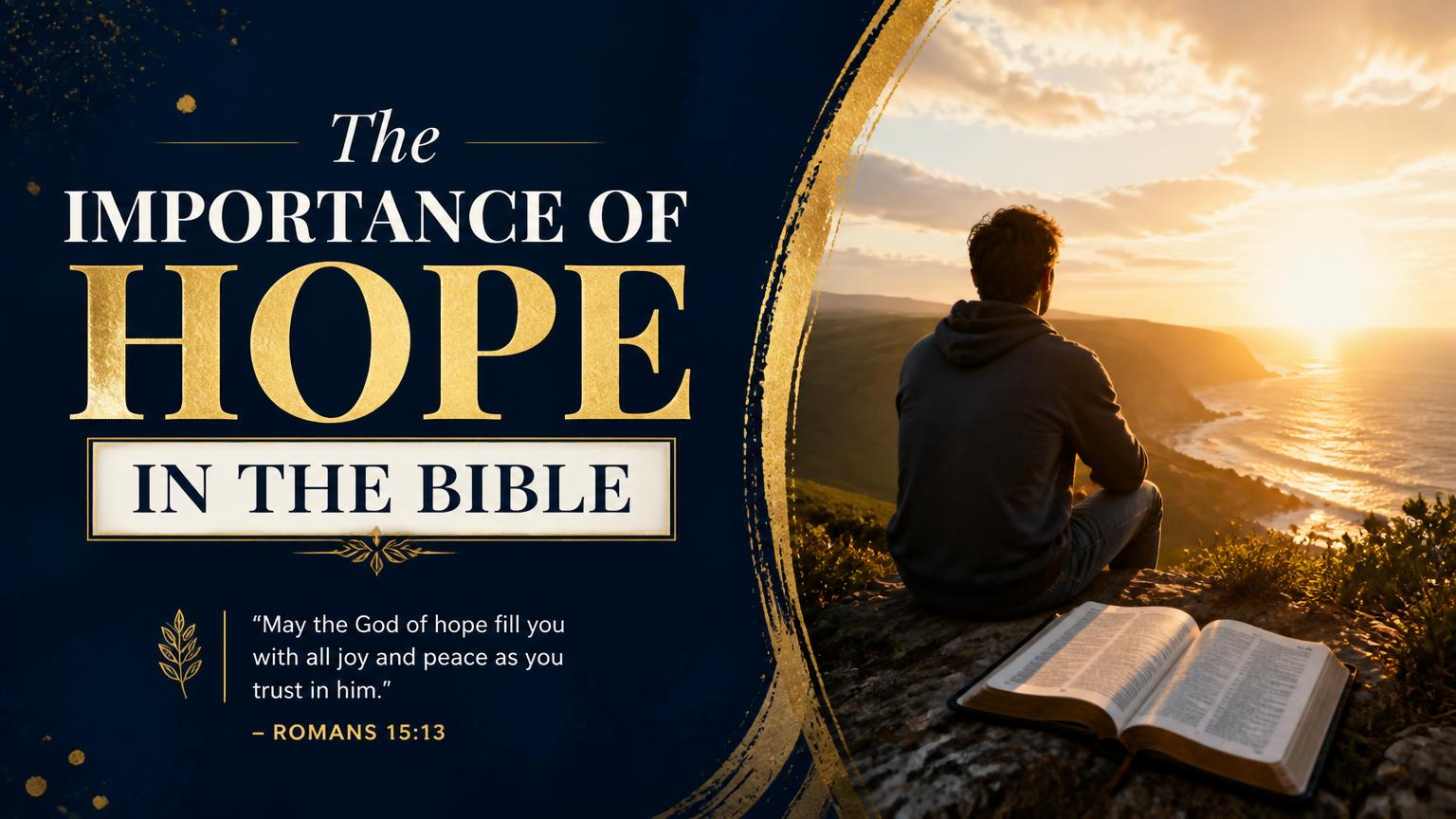
Hope in the Bible is more than optimism or a wish that circumstances will improve. It is a confident expectation grounded in God’s character, promises, and saving work. Biblical hope gives believers strength to endure suffering, patience while waiting, courage to obey, and assurance that present difficulties do not have the final word.
The Importance of Hope in the Bible
The Bible presents hope as essential to a faithful life. It directs a person’s attention beyond present circumstances to God’s faithfulness and the future He has promised. Christian hope is not based on favorable conditions; it rests on the God who remains trustworthy when conditions are painful or uncertain.
What Biblical Hope Means
In ordinary speech, hope can mean an uncertain desire: someone may hope for good news without knowing whether it will come. Biblical hope is stronger. It is a forward-looking trust that God will fulfill what He has promised, even when the fulfillment has not yet appeared.
This does not mean that believers are guaranteed every specific outcome they want. Scripture does not promise that every illness will immediately end, every relationship will be restored, or every plan will succeed. Instead, biblical hope is confidence in God’s ultimate faithfulness, wisdom, presence, and redemption.
The psalmist expresses this posture when he says, “Hope in God” (Psalm 42:5). He is not pretending to feel no sorrow. He is choosing to direct his expectation toward God while still experiencing discouragement. Hope therefore includes honest grief and active trust at the same time.
Why Hope Is Essential to Faith
Hope and faith are closely related but not identical. Faith trusts God in the present; hope looks toward the good God has promised in the future. Hebrews 11:1 connects faith with confidence in what is hoped for, showing that Christian hope is part of how faith understands unseen realities.
Hope gives faith endurance. A person may continue obeying God during hardship because present obedience is connected to a promised future. Without hope, suffering can appear meaningless and faithfulness can seem pointless. With hope, believers understand that God is working toward an outcome beyond what they can currently see.
Hope also protects believers from defining reality only by their immediate circumstances. Paul writes that Christians are saved “in hope” and that hope concerns what is not yet seen; therefore, believers wait for it with patience (Romans 8:24–25). The unseen nature of Christian hope does not make it imaginary. It means the promised outcome has not yet been fully revealed.
How Hope Sustains Believers in Suffering
One of the Bible’s clearest teachings about hope appears in Romans 5:1–5. Paul explains that suffering can produce endurance, endurance produces character, and character produces hope. This does not mean suffering is good in itself or that every painful experience automatically improves a person. Suffering can also produce fear, bitterness, or despair.
The point is that suffering placed in the hands of God can become an arena in which endurance and tested character develop. As believers experience God’s sustaining grace, their hope becomes more deeply rooted. Paul then says that this hope does not put believers to shame because God’s love has been poured into their hearts through the Holy Spirit.
Hope, therefore, is not merely positive thinking used to suppress pain. It enables Christians to face pain without concluding that God has abandoned them. This explains why Paul can describe believers as “sorrowful, yet always rejoicing” (2 Corinthians 6:10). Christian hope does not deny sorrow; it prevents sorrow from becoming the whole story.
What Biblical Hope Is Based On
The reliability of hope depends on its object. The Bible does not tell people to hope in human strength, wealth, political power, or favorable circumstances. Those things are unstable. Psalm 33:16–17 warns that neither a king’s strength nor military power can ultimately save.
Biblical hope rests on several connected realities:
- God’s character: God is faithful, truthful, merciful, and unable to deny His own nature.
- God’s promises: Hope grows when believers remember what God has said rather than interpreting Him only through present events.
- Jesus Christ’s resurrection: First Peter 1:3 describes a “living hope” made possible through the resurrection of Jesus Christ. It is living because Christ is alive and because His resurrection guarantees the future resurrection and renewal of His people.
- The Holy Spirit’s presence: The Spirit gives believers a present experience of God’s future blessing and strengthens them while they wait.
- God’s final redemption: The Christian hope ultimately looks toward resurrection, the return of Christ, the defeat of evil, and life with God.
Hebrews 6:19 describes hope as “an anchor for the soul.” An anchor does not remove a storm, but it prevents a vessel from drifting without restraint. In the same way, hope may not immediately change circumstances, but it holds a believer steady when circumstances are unstable.
Hope Throughout the Story of the Bible
Hope appears throughout Scripture, although its focus becomes clearer as God’s plan of redemption unfolds.
Hope in the Old Testament
Old Testament believers hoped in God’s covenant faithfulness, mercy, justice, and promised salvation. The language of waiting is especially important. To wait for the Lord does not mean passive inactivity; it means trusting God’s timing and continuing to look to Him.
Isaiah 40:31 says that those who hope in the Lord will renew their strength. The passage does not promise a life without exhaustion. It promises that reliance on God can provide strength to continue when human resources are insufficient.
Jeremiah expresses a similar pattern after the destruction of Jerusalem. In the middle of lament, he recalls that God’s mercies are new every morning and declares, “Great is your faithfulness” (Lamentations 3:22–24). His hope is restored not because the devastation has already ended, but because God’s character remains dependable.
The Old Testament also directs hope toward the coming Messiah and the establishment of God’s kingdom. These promises created expectation that God would bring salvation, justice, and restoration in ways that human power could not accomplish.
Hope in the New Testament
The New Testament identifies Jesus Christ as the fulfillment and foundation of biblical hope. His death addresses sin, His resurrection confirms God’s victory over death, and His promised return points toward the completion of redemption.
First Peter 1:3 calls this “a living hope.” Christian hope is alive because it is connected to a living Savior rather than merely to an abstract principle. Titus 2:13 describes believers as waiting for “the blessed hope”—the appearing of Jesus Christ in glory.
The New Testament also teaches that hope reaches beyond individual survival after death. Romans 8 describes creation itself as waiting for liberation from decay. Christian hope includes the resurrection of the body, the renewal of creation, the public triumph of Christ, and the full presence of God with His people.
The Main Content of Christian Hope
Christian hope has both a present and a future dimension. Believers already experience forgiveness, reconciliation with God, the presence of the Holy Spirit, and membership in Christ’s people. Yet these blessings are not complete in their final form.
Hope of Salvation and Resurrection
The resurrection of Jesus is the central foundation of Christian hope. Because Christ was raised, death is not the final authority over those who belong to Him. Paul argues in 1 Corinthians 15 that if Christ has not been raised, Christian faith is empty; but because Christ has been raised, His people have a genuine hope of resurrection.
This hope changes how Christians understand death. It does not require them to deny grief. Paul tells believers not to grieve “as others do who have no hope” (1 Thessalonians 4:13). The distinction is not between grieving and not grieving, but between grief enclosed by despair and grief informed by resurrection.
Hope of God’s Presence and Kingdom
Believers also hope for the complete realization of God’s kingdom. Scripture promises a future in which evil, death, injustice, and suffering will no longer dominate. Revelation 21 portrays God dwelling with His people and wiping away every tear.
This future hope gives moral direction in the present. If God will ultimately establish justice, Christians have reason to practice justice now. If Christ will return, believers have reason to remain faithful rather than surrendering to corruption or apathy.
Hope of Final Transformation
Christian hope includes the transformation of believers into full conformity with Christ. First John 3:2–3 connects the hope of seeing Christ with present purification. Biblical hope is therefore not escapism. It shapes conduct because the future promised by God establishes the kind of people believers are becoming.
Hope, Patience, and Christian Practice
Hope changes behavior because it changes what a person considers possible and worth pursuing. Several practices help believers live within biblical hope.
Remember God’s Faithfulness
Biblical writers frequently recall earlier acts of God as a foundation for present hope. Remembering God’s past faithfulness does not guarantee that the next event will unfold according to personal preference. It does, however, provide reason to trust God’s character in circumstances that remain unclear.
Pray Honestly While Waiting
The Psalms show that hope can coexist with questions, anger, fear, and lament. Prayer does not require emotional pretending. A believer can tell God about pain while still saying, as the psalmist does, “I shall again praise him” (Psalm 42:5).
Persevere in Faithful Action
Hope should lead to endurance rather than passivity. Paul concludes his teaching on resurrection by urging believers to be steadfast and active in the Lord’s work because their labor is not in vain (1 Corinthians 15:58). The future hope of resurrection gives present obedience lasting significance.
Encourage Hope in Community
Christian hope is strengthened through shared worship, Scripture, prayer, and mutual encouragement. Hebrews 10:23–25 links holding firmly to hope with meeting together and encouraging one another. People often struggle to maintain hope in isolation, particularly during grief or prolonged hardship.
False Hope and Important Qualifications
The Bible distinguishes hope in God from false hope. People may place ultimate confidence in money, status, rulers, personal ability, or religious appearances. These objects can offer temporary security but cannot guarantee salvation or withstand death.
Biblical hope also should not be confused with denial. Hope does not require calling evil good, ignoring injustice, refusing medical care, or pretending that loss is painless. The prophets openly condemned sin and lamented national disaster while continuing to trust God.
Nor does Christian hope authorize certainty about every personal prediction. A believer may trust God completely without claiming to know exactly how or when He will act. Mature hope holds confidence in God together with humility about specific outcomes.
The importance of hope in the Bible lies precisely here: hope is strong enough to sustain a person without requiring false certainty about every detail. It anchors the believer in God’s promises while leaving room for patience, lament, wisdom, and submission.
Biblical hope is confident expectation rooted in God rather than in circumstances. It gives meaning to endurance, steadiness to faith, and courage for present obedience. Its ultimate foundation is the death and resurrection of Jesus Christ, and its final content is the complete renewal of life with God. Because that future is secure in God’s faithfulness, Christians can face present suffering honestly without surrendering to despair.