
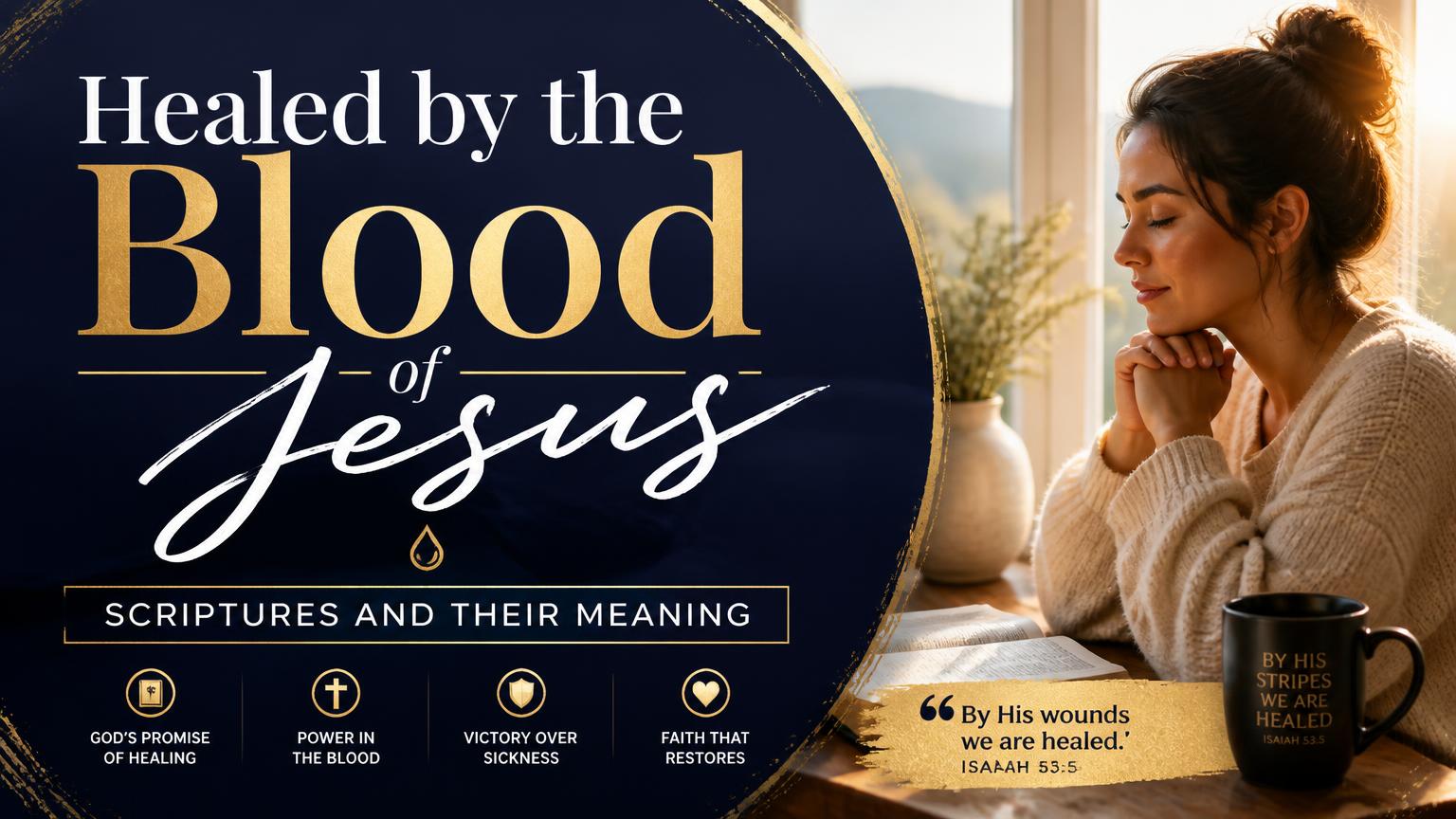
The phrase “healed by the blood of Jesus” expresses a biblical truth, but it should be understood carefully. Scripture teaches that Jesus’ shed blood brings forgiveness, cleansing, reconciliation with God, freedom from condemnation, and victory over sin and death. The Bible also connects Christ’s suffering with physical healing, yet it does not promise that every Christian will experience immediate healing from every illness in this present life. The fullest healing will come in the resurrection.
Healed by the Blood of Jesus Scripture: Key Passages and Their Meaning
The Bible does not contain one verse with the exact sentence “I am healed by the blood of Jesus.” Instead, the expression summarizes several connected teachings: Jesus gave His life as a sacrifice, His wounds provide salvation and restoration, and His resurrection guarantees the final defeat of death.
What Isaiah 53:5 and 1 Peter 2:24 Mean
Isaiah 53:5 prophesies about the suffering Servant: He would be wounded because of human sin, and “by his wounds we are healed.” Christians understand this passage as pointing to Jesus’ crucifixion.
The surrounding context connects this healing directly to sin:
- He was wounded for our transgressions.
- He was crushed for our iniquities.
- The punishment bringing our peace was placed upon Him.
The healing therefore includes restoration to God through forgiveness and reconciliation. It is not merely a promise of physical recovery separated from salvation.
First Peter 2:24 applies the same passage to Christ: Jesus bore our sins in His body on the cross so that believers might die to sin and live in righteousness. In this context, “healing” emphasizes deliverance from sin’s dominion and the restoration of a person’s relationship with God.
This does not exclude physical healing. Matthew 8:16–17 connects Isaiah 53 with Jesus’ ministry of healing the sick. The biblical picture is therefore broad: Christ brings spiritual healing now, grants physical healing according to God’s will and timing, and will complete bodily healing in the resurrection.
What 1 John 1:7 Says About Cleansing
First John 1:7 says that “the blood of Jesus his Son cleanses us from all sin.” This is one of the clearest passages about the present effect of Christ’s blood.
The cleansing described here is not a ritual washing or a temporary improvement in behavior. It is God’s removal of guilt through Christ’s sacrificial death. The verse also places cleansing in the context of walking in the light—living honestly before God rather than hiding sin.
The blood of Jesus heals the deepest spiritual wound: separation from God caused by sin. It gives believers confidence to confess their sins, receive forgiveness, and continue in fellowship with God.
What Revelation 1:5 Teaches About Freedom From Sin
Revelation 1:5 describes Jesus as the One who loves His people and has freed them from their sins by His blood. This passage emphasizes both the source and the result of salvation.
The blood is the source because forgiveness rests on Jesus’ sacrificial death, not on human effort. The result is freedom: believers are no longer defined by condemnation, enslaved to their former guilt, or excluded from God’s presence.
This freedom does not mean Christians never struggle with temptation or fail. It means sin no longer has the final authority over those who belong to Christ. Ongoing spiritual growth flows from a new standing before God rather than from an attempt to earn acceptance.
What Ephesians 1:7 and Colossians 1:20 Explain
Ephesians 1:7 teaches that believers have redemption and forgiveness through Jesus’ blood. Redemption means release through the payment of a price. In the biblical context, it describes God rescuing people from slavery to sin and bringing them into a restored relationship with Him.
Colossians 1:20 adds that God makes peace through the blood of Christ’s cross. This peace is more than an inward feeling. It is reconciliation between sinners and their holy Creator.
Together, these passages show that the blood of Jesus addresses several consequences of sin:
- Guilt: forgiveness removes the charge of sin.
- Alienation: reconciliation restores fellowship with God.
- Slavery: redemption brings release from sin’s dominion.
- Condemnation: believers receive acceptance through Christ rather than through personal merit.
What Hebrews 9 Says About Sacrifice and Cleansing
Hebrews explains why Jesus’ blood is central to Christian salvation. Under the old covenant, sacrifices involving blood pointed to the seriousness of sin and the need for atonement. Hebrews 9:22 summarizes the principle that forgiveness is connected with the shedding of blood.
Jesus fulfills what those sacrifices represented. His sacrifice is not repeated continually, because He offered Himself once for all. His blood cleanses the conscience and opens the way into God’s presence.
The blood of Christ is therefore not a magical substance or a phrase Christians use to control events. It refers to the life Jesus willingly gave in sacrificial death. Its power comes from who Jesus is and from the completed work of the cross.
What Revelation 12:11 Means by Victory Through the Blood
Revelation 12:11 says that God’s people overcome the accuser because of the blood of the Lamb and because they remain faithful to their testimony.
This verse connects Christ’s blood with victory over accusation. Satan’s accusations lose their ultimate force because the believer’s standing before God depends on Christ’s sacrifice, not on a claim of personal perfection.
The verse also includes faithful perseverance. Trust in the blood of Jesus does not produce passive indifference; it gives believers courage to remain faithful even under pressure. Christ’s sacrifice provides the foundation for victory, while faithful testimony expresses that trust in daily life.
Does the Blood of Jesus Guarantee Physical Healing?
The Bible clearly teaches that God can heal the body and that Jesus healed many people. It also teaches that Christ’s suffering is connected with healing. However, Scripture does not support the conclusion that every Christian will be instantly healed from every disease if they use the right words or possess enough faith.
Several truths must be held together:
- God is compassionate toward physical suffering. Jesus repeatedly healed the sick and responded to human need with mercy.
- Christians may pray confidently for healing. James 5:14–16 encourages the sick to call for prayer.
- Faith is not a technique that controls God. Biblical faith trusts God rather than treating a confession or formula as a guarantee.
- Faithful believers may remain sick for a time. Paul referred to bodily weakness, Timothy had recurring stomach problems, and Epaphroditus became seriously ill. These examples warn against assuming that illness automatically proves spiritual failure.
- Final bodily healing is certain for those who belong to Christ. The resurrection will permanently defeat death, decay, and disease.
Physical healing may occur in the present, but the blood of Jesus guarantees something even deeper and more lasting: forgiveness, reconciliation, new life, and resurrection. A person who is not healed immediately has not been abandoned by God, nor does continued illness prove that Christ’s sacrifice is insufficient.
How the Blood of Jesus Brings Healing
In Scripture, blood represents life given in sacrifice. Leviticus 17:11 explains that life is in the blood and that blood is given for atonement. Jesus’ blood therefore points to His surrendered life on behalf of sinners.
The process can be understood in four connected movements:
- Jesus bears sin: He takes upon Himself the judgment and consequences of sin.
- God grants forgiveness: Those who trust Christ are no longer condemned.
- The believer is restored: Separation from God is replaced by reconciliation and fellowship.
- God begins transformation: The forgiven person is enabled to turn from sin and live in righteousness.
This is why the New Testament sometimes speaks of cleansing, redemption, peace, justification, sanctification, and victory in connection with Christ’s blood. These terms describe different aspects of the same saving work.
The blood does not function independently from Jesus. Christians are not placing faith in blood as an impersonal force; they are trusting the crucified and risen Lord whose life was given for them.
How Christians Should Respond
A biblical response begins with faith in Christ rather than with repeating a phrase as a spiritual formula. A Christian may pray for forgiveness, healing, protection, and strength while relying on what Jesus accomplished through His death and resurrection.
That response includes:
- Confessing sin honestly, rather than hiding guilt.
- Trusting Christ’s finished sacrifice, rather than attempting to earn forgiveness.
- Praying for physical healing, while submitting the outcome and timing to God.
- Receiving appropriate medical care, since seeking treatment does not deny faith.
- Rejecting condemnation, because forgiveness rests on Christ’s work.
- Living in obedience and gratitude, because cleansing from sin leads to a changed life.
- Encouraging those who suffer, without blaming them for a lack of faith.
The Lord’s Supper also points believers back to Jesus’ body and blood and calls them to remember His covenant sacrifice. It is not a magical method of obtaining healing, but a solemn proclamation that salvation rests on Christ’s death until He returns.
What Does “Healed by the Blood of Jesus” Mean?
To be healed by the blood of Jesus primarily means to be cleansed from sin, forgiven, reconciled to God, and released from condemnation through Christ’s sacrificial death. The phrase can also include hope for physical healing, because Jesus cares about the body and will ultimately raise His people to imperishable life.
The essential distinction is between present spiritual healing and ultimate bodily restoration. God may heal physically in this life, but every believer who belongs to Christ will receive complete healing in the resurrection. The blood of Jesus guarantees that sin, death, and separation from God will not have the final word.