
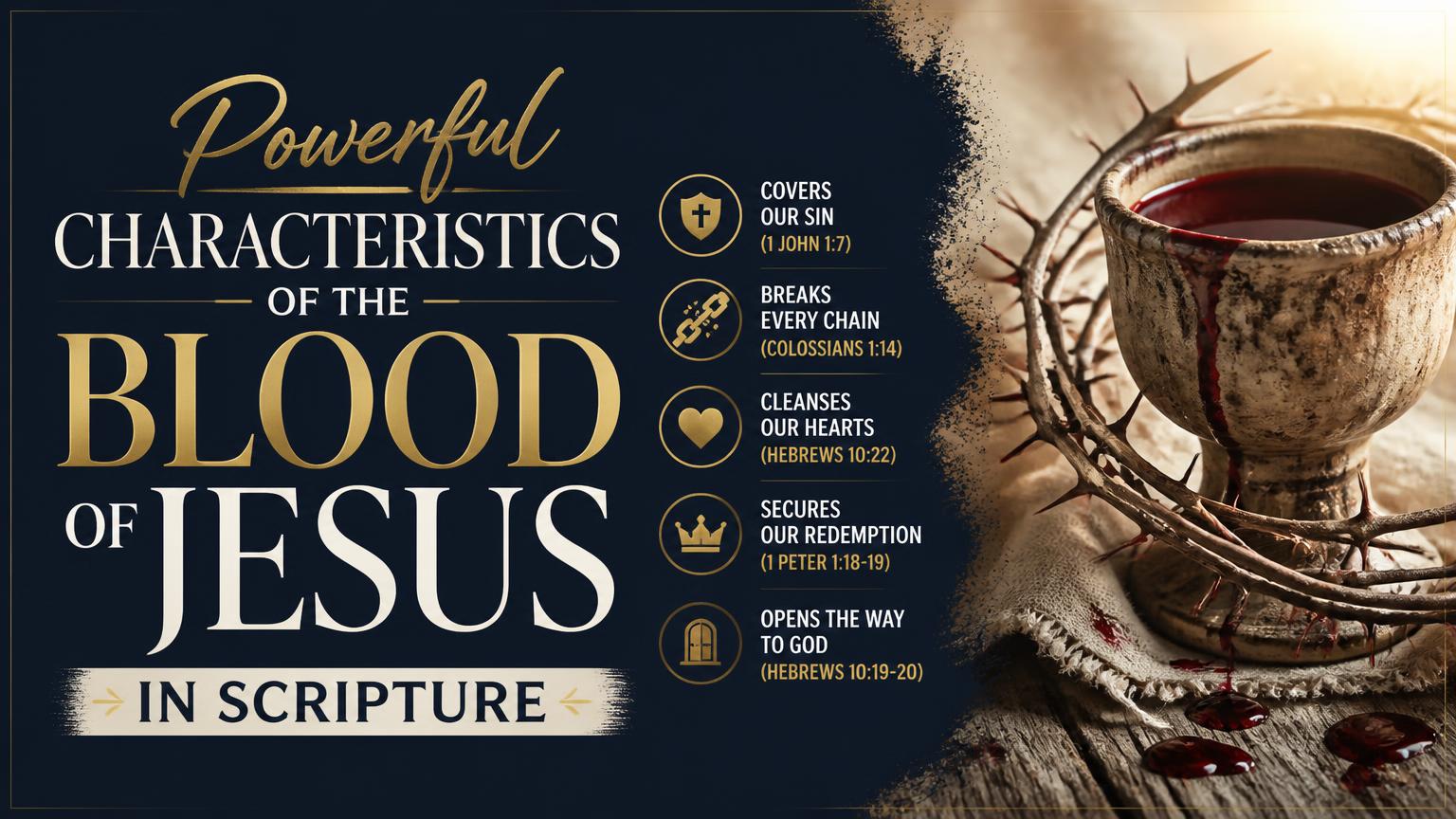
The blood of Jesus is one of the Bible’s central images for His sacrificial death and its saving effects. Scripture presents it as the blood of the innocent Lamb given for sinners, the basis of the new covenant, the means of forgiveness and reconciliation, and the foundation of believers’ confidence before God. These characteristics are connected: Jesus’ blood does not function as a magical substance or independent spiritual formula, but represents His life willingly poured out in obedience to God.
Characteristics of the Blood of Jesus
It Represents Jesus’ Life Given in Sacrifice
In Scripture, blood represents life because “the life of the flesh is in the blood” (Leviticus 17:11). When Jesus’ blood was shed, He was giving His life rather than merely enduring physical injury. His death was a deliberate act of self-offering for others.
Jesus described His mission in sacrificial terms: He came “to give his life a ransom for many” (Mark 10:45). The language of blood therefore points to the complete surrender of His life on the cross. It emphasizes both the cost of redemption and the love behind it.
The New Testament also connects Jesus with the Passover lamb (1 Corinthians 5:7; 1 Peter 1:18–19). In the Exodus account, the blood of the lamb marked the Israelites for deliverance from judgment. Jesus fulfills that pattern in a greater way: His death provides deliverance from sin and brings people into God’s saving covenant.
It Establishes the New Covenant
At the Last Supper, Jesus said, “This cup is the new testament in my blood” (Luke 22:20). His blood establishes a new covenant between God and His people.
The earlier covenant at Sinai was confirmed with the blood of sacrificed animals (Exodus 24:3–8). That blood symbolized the seriousness of the covenant and the cost of fellowship with a holy God. Jesus’ blood inaugurates the promised new covenant because He is the perfect and final sacrifice. Under this covenant, God promises forgiveness, inward transformation, and a restored relationship with His people (Jeremiah 31:31–34; Hebrews 8:6–13).
This means Christianity is not based on repeated animal sacrifices or human attempts to earn acceptance. Jesus’ once-for-all offering is the covenant foundation of salvation.
It Secures Forgiveness and Atonement
The blood of Jesus is directly associated with forgiveness. Paul writes that believers have “redemption through his blood, the forgiveness of sins” (Ephesians 1:7). First Peter 1:18–19 describes Christians as redeemed “with the precious blood of Christ, as of a lamb without blemish and without spot.”
Atonement means that sin is dealt with so that reconciliation with God becomes possible. Jesus’ death addresses the guilt and alienation caused by sin. Romans 3:23–26 presents the cross as the place where God remains just while providing justification for sinners.
This forgiveness is not presented as permission to continue treating sin lightly. The gift is received through faith and is meant to produce repentance, gratitude, and a changed life. The same blood that pardons also calls believers into holiness.
It Cleanses the Conscience and Sanctifies the Believer
Hebrews contrasts the limited cleansing provided by the old sacrificial system with the deeper work of Christ: “How much more shall the blood of Christ…purge your conscience from dead works to serve the living God?” (Hebrews 9:14).
This cleansing involves more than external religious purity. It reaches the conscience—the inner awareness of guilt, shame, and separation from God. Because Jesus offered Himself without sin, His sacrifice can cleanse the worshiper inwardly and restore freedom to serve God.
Hebrews 10:19–22 therefore invites believers to draw near to God with “a true heart in full assurance of faith,” having their hearts “sprinkled from an evil conscience.” The blood of Jesus does not merely change a person’s religious status; it creates a new basis for approaching God without being controlled by condemnation.
Sanctification is also connected with Jesus’ blood. Hebrews 13:12 says that Jesus suffered outside the city “that he might sanctify the people with his own blood.” Sanctification means being set apart for God and increasingly shaped by His character. Forgiveness is the beginning of a transformed relationship, not the end of moral responsibility.
It Brings Access to God and Reconciliation
Sin produces separation from God, but the blood of Christ brings those who were distant near to Him. Paul tells Gentile believers, “But now in Christ Jesus ye who sometimes were far off are made nigh by the blood of Christ” (Ephesians 2:13).
This access is especially emphasized in Hebrews. Because Jesus has entered God’s presence as the perfect High Priest, believers may approach God with confidence (Hebrews 4:14–16; 10:19–22). Their confidence does not come from personal goodness, religious performance, or lack of past failure. It comes from Christ’s completed work.
The blood therefore has a relational effect: it reconciles people to God and, through that reconciliation, helps create peace among people who were formerly divided. In Ephesians 2, Christ’s sacrificial death is the basis for making one new people from Jews and Gentiles.
It Redeems People From Sin and Former Allegiance
To redeem means to release or purchase someone from bondage. Scripture describes humanity as enslaved to sin, corruption, and empty ways of life. Jesus’ blood is the price of liberation.
First Peter 1:18–19 says believers were redeemed from their inherited “vain conversation” not with perishable wealth, but with the precious blood of Christ. Revelation 5:9 praises Jesus because He was slain and redeemed people for God “by thy blood” from every nation.
Redemption is therefore more than cancellation of a debt. God does not merely remove a penalty while leaving people under the same power. Through Christ, believers are transferred into belonging to God. They are freed to live as His people, obey His will, and reflect His holiness.
This is why the apostles connect the blood of Jesus with a new pattern of conduct. Those redeemed by Christ are called to love one another, reject former sinful practices, and offer themselves in faithful service.
It Speaks of a Better Verdict and Secures Victory
Hebrews 12:24 says that Jesus is the mediator of the new covenant and that His blood “speaketh better things than that of Abel.” Abel’s blood cried out for justice after his murder (Genesis 4:10). Jesus’ blood also reveals the seriousness of sin, but it speaks a better word: mercy, reconciliation, and accomplished redemption.
Revelation 12:11 describes believers overcoming “by the blood of the Lamb, and by the word of their testimony.” The blood is the foundation of their victory because Jesus’ death defeats the authority of sin and exposes the failure of Satan’s accusations. Their testimony expresses trust in that victory.
This verse should not be treated as a magical phrase that guarantees protection whenever repeated. Scripture connects victory with Christ’s sacrifice, faithful witness, perseverance, and willingness to remain loyal to God—even at great personal cost.
How the Bible Uses the Language of Jesus’ Blood
Biblical references to the blood of Jesus are both literal and theological. Jesus really shed blood and truly died. At the same time, “the blood” often functions as a concise way of referring to the whole sacrificial meaning of His death: His obedience, substitution, covenant-making, atonement, and victory.
The Bible does not present the blood as detached from Jesus Himself. Salvation comes through the crucified and risen Christ. The resurrection confirms that His sacrifice was accepted and that death did not have the final word (Romans 4:25; 1 Corinthians 15:3–4). Focusing on the blood must therefore never minimize the resurrection, lordship, or present ministry of Jesus.
Scripture also holds together two truths that can appear to conflict:
- Jesus’ sacrifice was offered once for all and does not need to be repeated (Hebrews 9:26–28; 10:10–14).
- Believers continually depend on Christ’s cleansing and confess their sins as they walk in the light (1 John 1:7–9).
The second truth does not mean that Christ must be sacrificed again. It means that the benefits of His completed work continue to shape the believer’s relationship with God.
What the Blood of Jesus Means for Believers
The characteristics of Jesus’ blood have practical consequences for Christian faith and conduct.
It provides assurance. A believer’s standing with God rests on Christ’s sacrifice rather than fluctuating feelings or perfect performance. This does not excuse disobedience, but it gives repentant believers a firm basis for returning to God.
It produces gratitude. Understanding the cost of redemption leads to worship. Christians are not saved by their own merit; they respond to grace because Christ gave Himself for them.
It calls believers to holiness. The blood that forgives also consecrates. First Peter 1:15–19 connects redemption through Christ’s blood with a life of reverent obedience.
It supports reconciliation. Since Jesus’ death brings people near to God and breaks down hostility, Christians are called to pursue forgiveness, unity, and sacrificial love toward others.
It strengthens faithful witness. Revelation 12:11 connects victory through the Lamb’s blood with public testimony and perseverance. Confidence in Christ should produce courageous faithfulness, not passive religious language.
The blood of Jesus is therefore not merely a theological symbol from the crucifixion narrative. It describes the saving significance of His life given for sinners: forgiveness is secured, the new covenant is established, access to God is opened, bondage is broken, and believers are called into a holy and faithful life. Its power is found in the person and completed work of Christ, not in treating the phrase as a spiritual formula.