
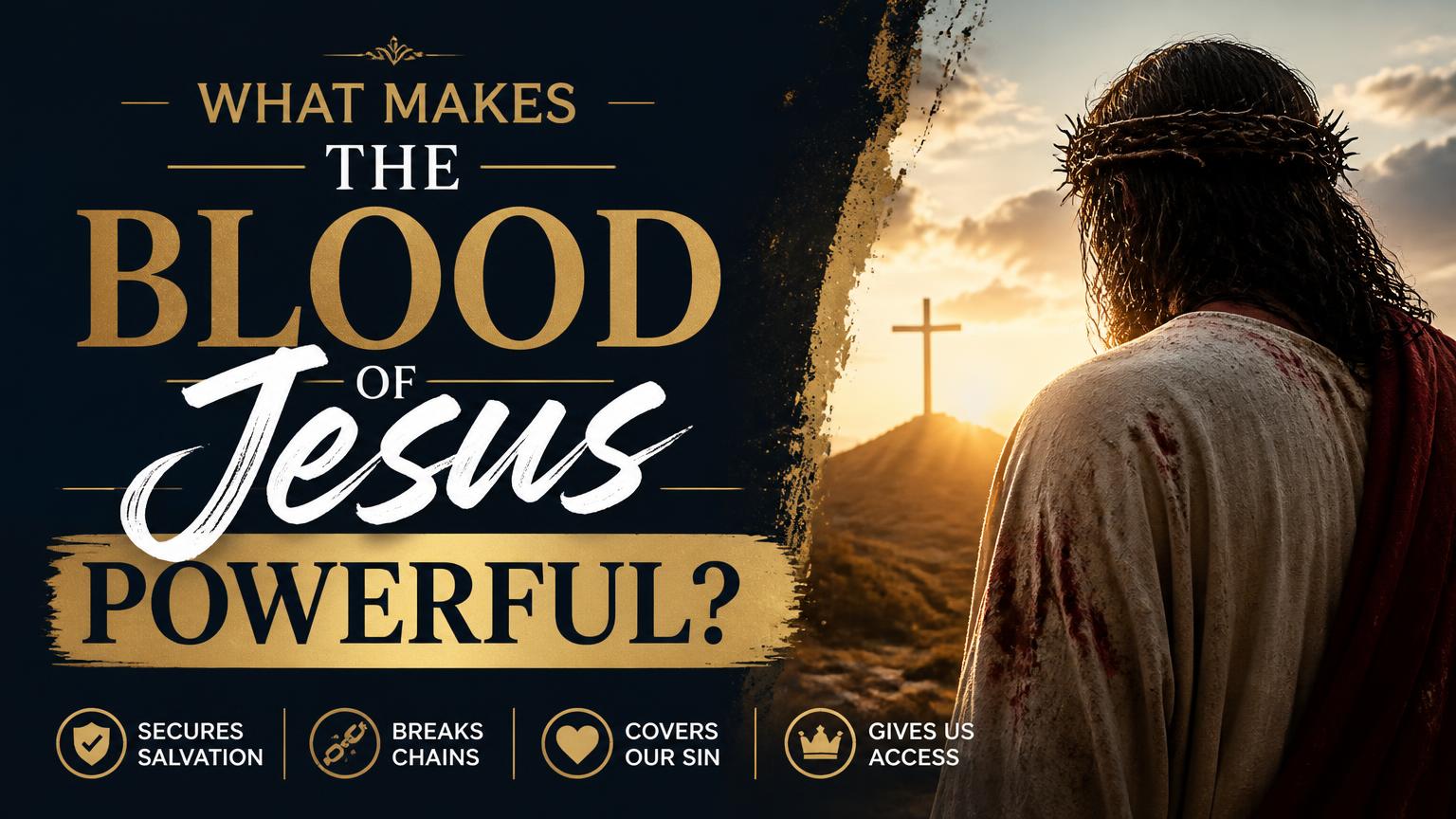
The blood of Jesus is powerful because it represents the sacrificial death of the sinless Son of God. In Christian theology, Jesus did not merely die as a martyr or provide a moral example. He offered himself to deal decisively with sin, reconcile people to God, establish the new covenant, and secure redemption for everyone who trusts in him.
The Bible uses “the blood of Jesus” as a concentrated way of referring to his life given in death and everything accomplished through his crucifixion. Its power does not come from a magical substance or a repeated phrase. It comes from who Jesus is, why he died, and what God accomplished through his death and resurrection.
What Makes the Blood of Jesus Powerful?
It Was the Blood of the Sinless Son of God
The value of Jesus’ sacrifice rests first on his identity. Jesus was fully human, yet he was without sin. Scripture describes him as “a lamb without blemish or spot” (1 Peter 1:18–19) and says that he “knew no sin” (2 Corinthians 5:21).
In the Old Testament sacrificial system, an offering had to be without defect. This pointed toward the need for a truly righteous representative. A sinful person could not finally remove the guilt of other sinners. Jesus could stand in humanity’s place because he shared our humanity without sharing our rebellion.
His blood is therefore powerful not because blood in isolation has supernatural force, but because it was the life of the obedient and righteous Christ, voluntarily given for others.
It Represents a Once-for-All Sacrifice for Sin
The Bible connects sin with death and describes sacrificial blood as a sign that life has been given in place of life. Leviticus 17:11 says, “the life of the flesh is in the blood,” and explains that God gave blood on the altar to make atonement.
The sacrifices under the old covenant anticipated a greater sacrifice. Animal blood could symbolize cleansing and forgiveness, but it could not permanently transform the human heart or remove sin in the fullest sense. Hebrews explains that those sacrifices pointed forward to Christ, who entered the heavenly sanctuary “by means of his own blood” and obtained eternal redemption (Hebrews 9:12).
Jesus’ sacrifice is final because he offered himself once, rather than repeatedly. Hebrews 10:10–14 contrasts the repeated offerings of the old system with Christ’s single offering, which fully accomplishes what those earlier sacrifices foreshadowed.
This does not mean the cross was merely a ritual transaction. Through the cross, Jesus bore sin’s judgment, expressed God’s justice, demonstrated God’s love, defeated the powers opposed to God, and opened the way for reconciliation. These are complementary biblical descriptions of one saving event.
It Establishes the New Covenant
At the Last Supper, Jesus identified the cup with “my blood of the covenant, which is poured out for many for the forgiveness of sins” (Matthew 26:28). His words echo the covenant ceremony in Exodus 24, where blood marked the formal relationship between God and Israel.
The new covenant is not based on humanity’s ability to maintain perfect obedience. It is grounded in Christ’s obedience and sacrifice. Through this covenant, God promises forgiveness, a transformed heart, and a restored relationship with his people. Hebrews 9:15 therefore calls Jesus the mediator of a new covenant.
The blood of Jesus is powerful because it does more than cancel an isolated offense. It establishes a new relationship with God. Those who belong to Christ are not merely pardoned criminals; they become members of God’s covenant people.
It Secures Forgiveness and Redemption
The New Testament repeatedly connects Jesus’ blood with forgiveness and redemption. Ephesians 1:7 says, “In him we have redemption through his blood, the forgiveness of our trespasses.” Redemption means release at a cost. Humanity is enslaved to sin and unable to purchase its own freedom, but Christ gives himself to rescue and reclaim his people.
Forgiveness is not God pretending that sin does not matter. The cross shows that sin is serious while also showing that God provides the sacrifice himself. Romans 3:23–26 presents the cross as the place where God remains just while justifying those who have faith in Jesus.
This is why Christian assurance does not rest on personal performance. A believer’s standing with God is not secured by having an uninterrupted record of success. It rests on Christ’s completed work, received through repentance and faith. First John 1:7 expresses this continuing confidence: “the blood of Jesus his Son cleanses us from all sin.”
It Cleanses the Conscience
Jesus’ blood addresses more than a person’s legal guilt. It also addresses the inner burden of shame, defilement, and condemnation. Hebrews 9:14 says that Christ’s blood cleanses the conscience from dead works so that believers may serve the living God.
A guilty conscience can lead either to despair or to attempts at self-justification. People may try to compensate for wrong actions through religious activity, moral achievement, or punishment of themselves. The gospel offers a different foundation: Christ’s sacrifice provides real forgiveness, so believers can stop trying to earn acceptance and begin serving God from acceptance.
This cleansing does not mean that Christians never remember past sins or that every emotional consequence disappears immediately. It means that sin no longer has the final authority to define their relationship with God. Repentance may still require confession, restitution, counseling, or changed behavior, but the believer’s hope rests in Christ rather than self-repair.
It Gives Access to God
Under the old covenant, access to the innermost place of worship was restricted. The high priest entered the Most Holy Place only under specific conditions. The death of Jesus changes this relationship to God. Hebrews 10:19–22 says that believers have confidence to enter God’s presence “by the blood of Jesus.”
This access is not casual entitlement. It is confident approach based on a mediator. Christians can pray, worship, confess sin, and seek mercy because Jesus has opened the way.
The tearing of the temple curtain at Jesus’ death symbolized this change (Matthew 27:51). The barrier was not removed because sin became unimportant; it was removed because Christ dealt with sin through his sacrifice. The result is direct fellowship with God rather than dependence on repeated temple offerings or a human priesthood to provide final access.
It Brings Reconciliation and Peace
Sin alienates people from God, but the blood of Christ brings reconciliation. Ephesians 2:13 says that those who were once far away have been brought near by the blood of Christ. Colossians 1:20 connects the cross with making peace and reconciling all things to God.
Reconciliation means restored relationship, not merely a change in legal status. Through Christ, people who were separated from God can belong to him. The cross also creates a reconciled community: Ephesians 2 uses Christ’s blood to explain how divided groups are made one.
This has practical consequences. Anyone who has been reconciled to God is called to pursue reconciliation with others, forgive, reject hostility, and treat fellow believers as members of one redeemed people. The blood of Jesus cannot be separated from the life of love and peace that it creates.
It Defeats the Powers of Sin, Death, and Satan
The cross is also presented as a victory. Revelation 12:11 says that God’s people conquered the accuser “by the blood of the Lamb and by the word of their testimony.” Jesus’ death appears to be defeat from a human perspective, but God uses it to overthrow the authority of sin and expose the failure of the powers opposed to him.
The resurrection confirms this victory. The blood refers to the sacrificial death, but the death of Jesus cannot be separated from his resurrection. A dead savior could not provide living hope. The risen Christ demonstrates that sin’s penalty, death’s finality, and the accuser’s condemnation do not have the last word over those who belong to him.
This is why believers can resist accusation. They do not claim sinlessness; they appeal to Christ’s finished work and confess their dependence on him.
How the Bible’s Blood Imagery Fits Together
The Bible uses several related images to explain what Jesus accomplished:
- Sacrifice: Jesus gives his life for sinners.
- Substitution: He bears what sinners deserve and acts on their behalf.
- Cleansing: His blood removes guilt and defilement.
- Redemption: He frees people from slavery to sin at a cost.
- Covenant: His death establishes a new relationship between God and his people.
- Victory: His cross defeats the powers of evil, sin, and death.
- Reconciliation: His sacrifice brings estranged people back to God.
These images should not be forced into competition. No single metaphor exhausts the meaning of the cross. Together they show why Jesus’ death is both a sacrifice for sin and the beginning of a transformed life with God.
What Does It Mean to Be “Covered by the Blood”?
To be covered by the blood of Jesus means to trust in Christ and receive the protection, forgiveness, and covenant standing secured by his sacrifice. The phrase draws on biblical themes such as Passover, where the blood of the lamb marked households for deliverance (Exodus 12), and on the New Testament’s teaching about forgiveness through Christ.
It does not mean that a person becomes immune to hardship, temptation, sickness, or every earthly consequence of sin. Nor does it mean that saying “I plead the blood” functions as a spiritual formula. Scripture directs believers to trust in Christ, pray in his name, resist evil, confess sin, and stand in the truth of the gospel.
The appropriate response is faith expressed through repentance and obedience. The blood of Jesus provides assurance, but it does not encourage careless living. First Peter 1:18–19 says believers were redeemed with the precious blood of Christ; the surrounding passage therefore calls them to holiness and reverent conduct.
How Christians Should Respond to the Power of Jesus’ Blood
Christians respond to Jesus’ sacrifice in several connected ways:
- Trust Christ rather than personal merit. Acceptance with God rests on Jesus’ work, not moral performance.
- Confess sin honestly. The promise of cleansing gives believers a reason to approach God rather than hide from him.
- Reject condemnation. Conviction can lead to repentance, but the gospel does not require believers to keep paying emotionally for sins Christ has forgiven.
- Practice holiness. Grace does not make sin harmless; it creates gratitude and a desire to live differently.
- Extend forgiveness and reconciliation. Those brought near to God are called to pursue peace with others.
- Worship with gratitude. Communion, prayer, and Christian worship point back to Christ’s self-giving death and proclaim its continuing significance.
The phrase “the blood of Jesus” should therefore produce confidence and humility at the same time: confidence because redemption is accomplished, and humility because it was received as grace rather than earned.
The blood of Jesus is powerful because it is the life of the sinless Son given in a once-for-all sacrifice. Through it, God provides forgiveness, redemption, cleansing, covenant relationship, access to his presence, reconciliation, and victory over sin and death. Its power is not magical or detached from faith and obedience. It is the saving power of Christ’s completed work—received by faith and expressed in a life transformed by grace.