
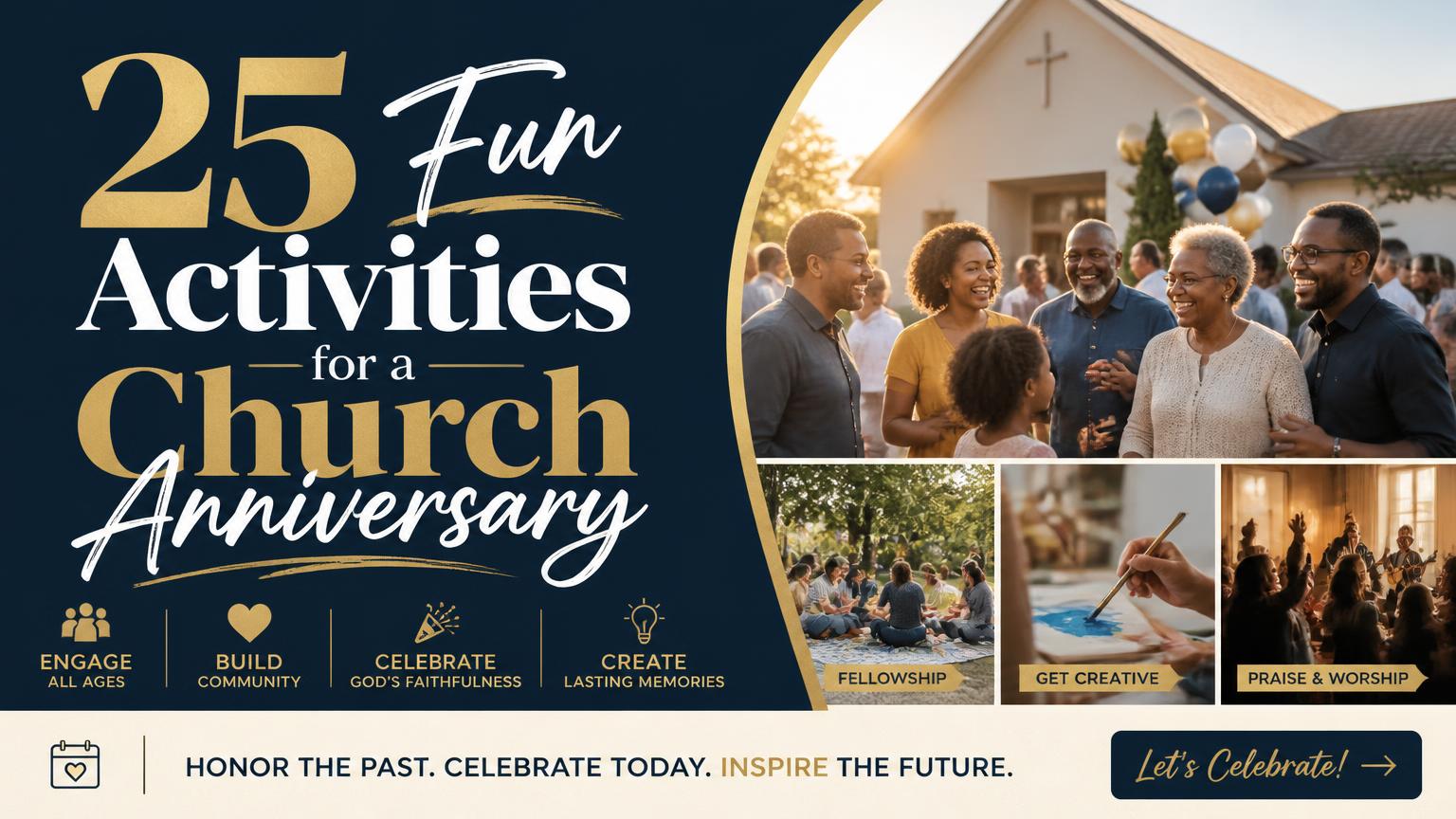
A church anniversary can celebrate the congregation’s history while strengthening relationships, welcoming the community, and pointing people toward the church’s mission. The best activities for a church anniversary include a mix of worship, storytelling, food, games, service, and opportunities for every generation to participate.
25 Activities for Church Anniversary
1. Hold a Special Anniversary Worship Service
Begin with a service centered on gratitude for God’s faithfulness and the church’s ministry. Include Scripture, worship, a sermon reflecting on the congregation’s history, and prayers for its future. Invite former pastors, founding members, ministry partners, and community leaders when appropriate.
2. Create a Church History Exhibit
Display historic photographs, founding documents, old bulletins, building plans, ministry items, and significant milestones. Add short descriptions so visitors can understand how the church developed. A timeline can show changes in leadership, location, ministries, and community involvement.
3. Host a Testimony Celebration
Invite members to share brief stories about how the church has influenced their faith, family, or community. Set reasonable time limits and provide an alternative for people who prefer to submit written or recorded testimonies. Personal stories often connect the congregation’s history with its present mission.
4. Organize Intergenerational Bible Trivia
Prepare questions from the Bible, church history, worship traditions, and memorable events in the congregation’s past. Form teams with children, youth, adults, and older members together. This format encourages conversation between generations instead of separating participants by age.
5. Lead a Hymn Sing Across Generations
Ask members to nominate favorite hymns and worship songs from different eras. A choir, worship team, or rotating group of volunteers can lead the music. Briefly explain why certain songs matter to the congregation, while allowing room for both traditional and contemporary expressions of worship.
6. Present a Congregational Talent Showcase
Invite members to perform music, poetry, dance, drama, comedy, or another appropriate talent. Keep the emphasis on participation rather than professional ability. A showcase can help people discover gifts that are not always visible during regular church programs.
7. Plan a Multigenerational Family Picnic
Hold a picnic after worship or during a separate anniversary gathering. Provide lawn games, shaded seating, simple food, and activities suitable for children and older adults. Assign teams to setup, food service, cleanup, and hospitality so the event does not depend on one small group.
8. Host an International or Regional Food Festival
Invite families to contribute dishes that reflect their cultural, regional, or family backgrounds. Label ingredients clearly and include vegetarian, allergy-conscious, and non-spicy options. Food can become a meaningful way to celebrate the diversity of the congregation rather than merely serving as refreshments.
9. Complete a Community Service Project
Choose a project that reflects a real local need, such as assembling food packages, cleaning a public area, supporting a shelter, visiting care-home residents, or preparing school supplies. Explain the purpose of the project so the anniversary becomes an expression of service, not only an inward-looking celebration.
10. Hold a Community Open House
Invite neighbors to tour the building, meet ministry leaders, learn about programs, and enjoy refreshments. Offer clear information about worship times, children’s programs, counseling, small groups, and community services. The event should feel welcoming without pressuring visitors to make immediate commitments.
11. Set Up an Anniversary Photo Booth
Create a simple backdrop using the church name, anniversary year, historic photographs, or a theme verse. Provide appropriate props and designate someone to help with photographs. Obtain permission before posting images publicly, especially when children are involved.
12. Organize a Church Anniversary Scavenger Hunt
Design clues around the church building, Bible knowledge, ministry history, and important people or places. Make separate versions for children and adults if needed. Avoid areas that are unsafe, private, or inaccessible, and make the activity cooperative rather than excessively competitive.
13. Create Activity Stations for Children
Offer several short activities, such as crafts, Bible story games, coloring, building challenges, and supervised outdoor play. Connect each station to the anniversary theme without making every activity a lesson. Use age-appropriate supervision and follow the church’s child-safety procedures.
14. Plan a Youth Sports Tournament or Field Day
Volleyball, basketball, relay races, soccer, and cooperative field games can involve youth and adults together. Provide noncompetitive alternatives for people with mobility limitations. Clear rules, water, shade, first-aid supplies, and trained supervisors matter more than elaborate equipment.
15. Premiere an Anniversary Video
Combine archival photographs, interviews, worship footage, and messages from former leaders or members who moved away. Keep the video focused and readable, with captions where possible. A five- to ten-minute presentation is usually easier for a congregation to watch than a lengthy historical documentary.
16. Invite Former Members and Leaders to a Reunion
Set aside time for people connected with the church in earlier years to reconnect. Include a reception, group photograph, or informal conversation with current members. Make invitations specific and personal, since former members may not see general announcements.
17. Present Appreciation Awards
Recognize long-term volunteers, ministry founders, community partners, musicians, teachers, custodians, and behind-the-scenes servants. Explain the contribution associated with each recognition. Keep the list thoughtful and balanced so the presentation honors service without creating the impression that only public roles matter.
18. Lead a Prayer Walk
Provide a simple prayer guide covering the church, surrounding neighborhoods, schools, local authorities, families, and future ministry. Participants can walk in small groups or pray from designated areas for those with limited mobility. This activity connects celebration with dependence on God and concern for the community.
19. Hold an Anniversary Cake Decorating Contest
Invite individuals, families, or ministry groups to decorate cakes or cupcakes around the anniversary theme. Establish categories such as most creative, best historical design, or best team effort. Include a non-food craft option for participants with allergies or dietary restrictions.
20. Present an Anniversary Choir, Musical, or Drama
A choir presentation, short play, or dramatic reading can tell the story of the church’s faithfulness and mission. Use Scripture, congregational memories, or fictional characters inspired by the church’s history. Rehearsals should remain manageable so the activity builds fellowship rather than exhaustion.
21. Host a Ministry Fair
Give each ministry or small group a table or display area. Include photographs, brief descriptions, upcoming opportunities, and an interactive element such as a craft, quiz, or demonstration. Visitors should be able to learn how the church serves different ages and needs in one place.
22. Create an Anniversary Passport Challenge
Give attendees a card with stations to visit, such as the history exhibit, children’s area, prayer table, ministry fair, and community-service display. Participants receive stamps or marks at each station and can enter a modest prize drawing. This helps people interact beyond their usual circle.
23. Hold a Scripture Art or Banner Contest
Invite participants to create artwork, lettering, photography, or banners based on a selected Scripture passage or anniversary theme. Display the entries during the celebration. Judges can recognize creativity, clarity, and thoughtful use of the theme without making artistic skill the only measure of value.
24. Create a Church Time Capsule
Ask members to contribute photographs, letters, prayers, newspaper clippings, ministry summaries, and predictions for the church’s future. Record the date it should be opened and store it in a secure, documented location. Avoid including confidential information or personal details that could create future privacy concerns.
25. Organize a Mission Giving Challenge
Set a clear, achievable goal connected to a specific mission or local need. Encourage friendly participation between ministry groups, age groups, or worship services, but keep the emphasis on generosity rather than competition. Report the result and explain how the funds will be used.
How to Choose the Right Anniversary Activities
A successful anniversary does not require all 25 activities. Select a balanced group based on the church’s size, budget, facilities, volunteer capacity, and purpose. A useful combination might include:
- One worship-centered activity: a special service, hymn sing, or prayer walk
- One history activity: an exhibit, video, reunion, or time capsule
- One relationship-building activity: a picnic, food festival, or talent showcase
- One activity for children and youth: games, crafts, or a sports event
- One outward-focused activity: an open house, service project, or mission challenge
The schedule should also allow unstructured time for conversation. If every minute is filled with presentations and competitions, guests may leave without forming meaningful connections.
Practical Planning Considerations
Assign a coordinator for each major activity and establish deadlines for publicity, supplies, rehearsals, food, transportation, and cleanup. Use a written schedule so volunteers know where they need to be and when they can participate as guests.
Design activities for different abilities and ages. Provide accessible routes, seating, quiet spaces, large-print materials, clear signage, and alternatives to physically demanding games. Check food labels and communicate allergy information clearly.
Keep the spiritual purpose visible without forcing every activity into the same format. Worship, prayer, testimony, service, fellowship, and recreation can all contribute to a faithful anniversary celebration when they reflect gratitude and love for people.
A church anniversary is strongest when it remembers the past without becoming trapped in it. The celebration should honor those who served before, include the congregation today, welcome the wider community, and direct attention toward the church’s continuing mission.